


Orange Blue Ceramic Platters
These orange blue ceramic platters bring together the striking palette of Imari porcelain and English Delft and ironstone wares.
Orange Blue Ceramic Platters
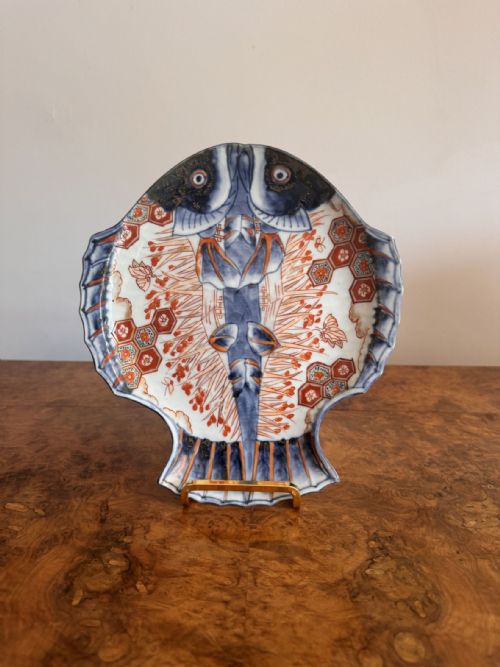
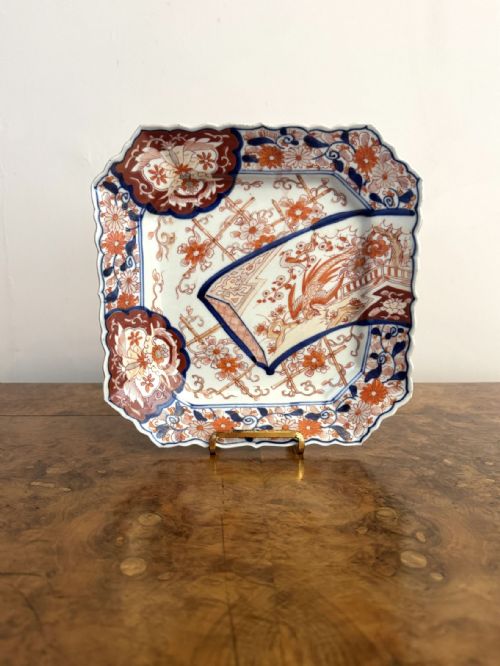
These orange blue ceramic platters span centuries of production, encompassing Japanese Imari wares from the Edo and Meiji periods alongside English ironstone and delft chargers. You will regularly encounter large chargers and decorative plates shaped as fans, squares, ovals, and fish.
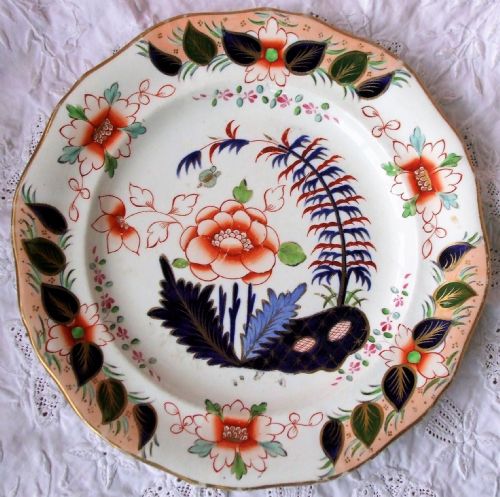
The Japanese examples draw directly from the traditional Imari palette, whilst English makers such as John Davenport and Mason’s produced their own interpretations of these robust ironstone and polychrome patterns. The forms range from standard circular display dishes to substantial ashets and fruit display plates intended for formal dining tables.
How they were made
Potters shaped these pieces in porcelain, ceramic, and ironstone before applying hand-painted designs in rich cobalt blue, iron red, and occasional gold leaf or gilding. Enamel glazes were fired onto the body to create the hard, glossy finish characteristic of both Japanese porcelain and English earthenware.
Many of the larger chargers required careful construction to prevent warping during high-temperature kiln firings. The combination of underglaze blue and overglaze iron red pigment gave these platters their distinctive dual-tone visual impact.
The listings span wares from the seventeenth century through to the early twentieth century, incorporating Victorian interpretations alongside Edo period porcelain.
What varies in quality
The distinction between standard domestic wares and exceptional pieces rests upon the crispness of the hand-painted brushwork and the complexity of the moulded shapes. Unusual forms such as fish or fan-shaped plates demonstrate higher ambition from the potter than simple circular dishes.
The brilliance of the glaze and the preservation of the polychrome palette and gilding dictate the visual strength of each charger. Pieces carrying identifiable attribution to makers like John Davenport or specific periods such as the Edo era command particular attention from collectors.
John Davenport of Longport·Mason’s Ironstone China
The Orange Blue Ceramic Platters Glossary
- Imari palette
- A decorative scheme typically featuring underglaze cobalt blue, iron red, and supplementary gilding. This distinctive colour combination originated in Japan before being adopted by European potteries.
- Charger
- A large decorative plate or platter originally used for ceremonial dining or to serve meat courses. These substantial pieces frequently measure over forty centimetres in diameter.
- Ironstone
- A type of durable heavy earthenware patented in England to rival Chinese porcelain. It provides a robust body well-suited to colourful transfer-printed and hand-painted patterns.
- Ashet
- A Scottish and northern English term for a large meat platter or serving dish. These oval or rectangular vessels form part of larger dinner services.
- Delft
- Tin-glazed earthenware produced in England and the Netherlands during the seventeenth and eighteenth centuries. It is characterised by a white opaque glaze painted with cobalt blue and other pigments.
Orange Blue Ceramic Platters: Frequently Asked Questions
How do I date an Imari charger?
Dating relies upon body weight, glaze texture, and the specific vibrancy of the cobalt blue and iron red pigments used by the potter. Edo and Meiji period pieces display distinct hand-painting characteristics distinct from later nineteenth-century adaptations.
Examining the foot ring and any minor kiln stilt marks provides further clues regarding the era of manufacture and the firing techniques employed by the workshop.
Were these platters used for food?
Many large chargers were designed primarily for display on sideboards or walls rather than for daily dining use. Substantial ironstone ashets and fruit display plates, however, saw practical service on formal dining tables.
The presence of surface wear often indicates the boundary between ornamental display items and functional serving vessels.
How do Japanese and English pieces differ?
Japanese examples are typically fashioned from fine porcelain or dense ceramic bodies utilising traditional Imari motifs such as the Seven Lucky Gods. English interpretations by makers like Davenport and Mason's rely upon heavy ironstone and distinct earthenware bodies.
The application of polychrome enamel and gilding also reflects the regional techniques available to the nineteenth-century potteries.
Can I hang these heavy chargers on walls?
Hanging large chargers requires specialised wall fixings and properly fitted wire brackets that distribute the weight evenly across the base and rim. Due to the substantial mass of porcelain and ironstone bodies, standard picture wire is unsuitable.
Consulting a professional framer ensures the platter remains secure without placing undue pressure on the antique ceramic rim.