

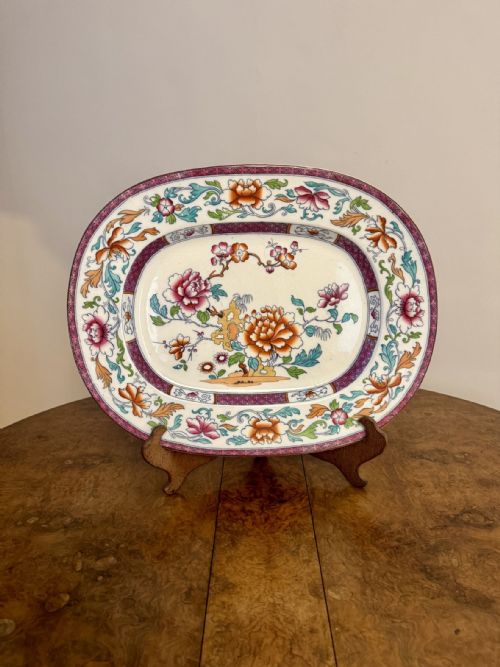


Vintage Ironstone Serving Dish
A vintage ironstone serving dish brings robust weight and dependable utility to the table, forged from heavy earthenware to endure decades of family dinners.
Vintage Ironstone Serving Dish
A vintage ironstone serving dish encompasses heavy earthenware platters, tureens, ashets, and comports designed for practical hospitality. These utilitarian vessels emerge predominantly from the nineteenth century, reflecting the robust domestic requirements of Victorian dining.
The pieces on this page showcase substantial serving platters alongside lidded tureens and footed fruit comports. Buyers frequently encounter large meat platters and specialised vessels intended for generous culinary displays.
Origins span standard nineteenth century production as well as specific creations bearing makers' marks. The selection privileges durable ceramic tableware intended for heavy household use rather than fragile cabinet display.
How they were made
Potters shaped ironstone china and standard earthenware into heavy forms, applying transfer prints or hand-painted enamel details before firing. Certain pieces received judicious gilding or gold leaf highlights to enhance the surface pattern.
Glaze seals the porous ceramic body, protecting the underlying ironstone china against staining during service. Transfer printing techniques allowed intricate chinoiserie and imari motifs to adorn meat dishes and tureens efficiently.
Vintage Ironstone Serving Dish Retail Price Guide 2026
Typical asking prices for vintage ironstone serving dish among the pieces listed under this phrase on Sellingantiques today, from the lower quarter to the upper quarter. They describe what is for sale here now, not the wider market.
Listings feature nineteenth century ironstone china, earthenware, and ceramic pieces incorporating transfer print, enamel, and gold leaf.
What varies in quality
The clarity of transfer print application and the precision of hand-painted enamel colours distinguish standard items from superior examples. Richness in gilding or gold leaf accents elevates the visual weight of a platter or comport.
Structural heft and the preservation of the original glaze surface govern the desirability of each dish. Pieces retaining crisp pattern registration demonstrate superior workmanship during the original manufacturing process.
Masons ironstone china
The Vintage Ironstone Serving Dish Glossary
- Ironstone
- A heavy, durable type of earthenware patented to create a tough ceramic body resembling porcelain. It resists chipping better than standard pottery.
- Ashet
- A regional term for a large meat platter or serving dish used for joint presentation at the table. These oval vessels dominate nineteenth-century dining arrangements.
- Comport
- A footed bowl or dish elevated on a pedestal, traditionally used for serving fruit or sweets. They add vertical dimension to a table setting.
- Imari
- A decorative style featuring rich blues, iron red, and gold leaf, inspired by Japanese export wares. Victorian potteries adapted these patterns for ironstone body shapes.
- Tureen
- A deep covered vessel designed for serving soup, gravy, or vegetables. Lidded examples often include matching ladles for practical service.
Vintage Ironstone Serving Dish: Frequently Asked Questions
What is a vintage ironstone serving dish used for?
These sturdy ceramic vessels served as meat platters, tureens, and comports for family meals and large feasts throughout the nineteenth century.
Today, collectors use them for serving food at gatherings or displaying them on dressers and dining room walls.
How do I identify nineteenth century pieces?
Nineteenth century examples feature heavy ironstone bodies, characteristic blue and white transfer prints, or rich imari and chinoiserie enamels.
Examining the weight, glaze depth, and any maker stamps helps confirm the nineteenth century production period.
Can I use these dishes for daily dining?
Ironstone china was originally engineered for heavy domestic service and robust everyday use in Victorian households.
Modern owners often continue to use large platters and ashets for serving food, provided they handle the heavy ceramic with care.
What patterns appear on these serving dishes?
Common surface treatments include blue and white transfer printing, pagoda motifs, and intricate Indian grasshopper or old school house designs.
Victorian makers also applied regency imari palettes and rich enamel scales to elevate the visual appeal.