
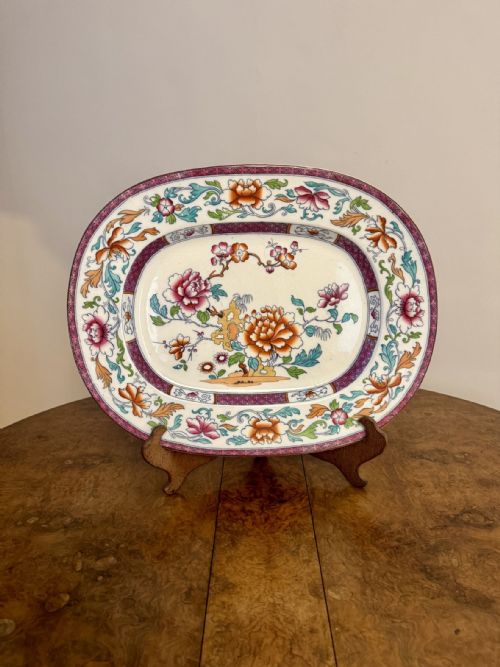


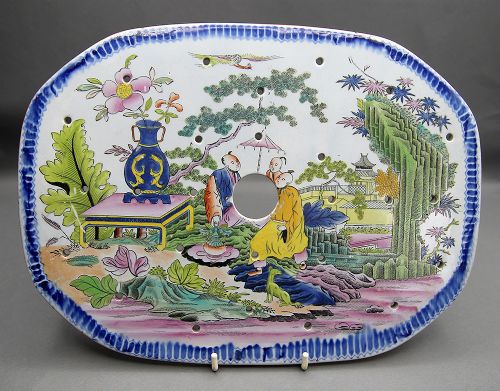


Ironstone Meat Platter
An ironstone meat platter is a heavy, durable serving dish designed for carving at the table, offering both practical utility and bold decorative patterns.
Ironstone Meat Platter
An ironstone meat platter represents a sturdy and capacious category of tableware designed for domestic hospitality during the nineteenth century. When you search for an ironstone meat platter, you encounter substantial serving vessels produced across the Georgian, Regency, and Victorian periods.
The pieces appearing on this page range from plain white kitchen workhorses to brightly decorated examples featuring transfer-printed scenes. You are most likely to meet large rectangular serving platters, occasionally accompanied by internal drainers or well-and-tree reservoirs for collecting juices.
Origins span English earthenware traditions, with prominent output from makers such as Mason's. Forms vary from simple blue and white landscapes to elaborate Chinoiserie and Imari pattern work executed in enamels and gold leaf.
Materials and production methods
Makers produced these heavy serving vessels using a dense ceramic body known as ironstone china, which combined earthenware clay with feldspar and flint to achieve stone-like durability. This robust ceramic body resisted chipping far better than standard porcelain, making it ideal for heavy joints of meat.
Potters applied decoration using a mix of underglaze transfer printing and hand-painted overglaze enamels, sometimes finishing details with gold leaf. A thick, glossy glaze sealed the surface, protecting the absorbent earthenware body beneath from staining during use.
Listings here feature ironstone platters spanning the Georgian, Regency, and Victorian periods, executed in glazed ceramic earthenware.
Factors determining quality
Quality in these heavy dishes rests upon the crispness of the transfer print and the precision of any hand-applied enamel work. Superior examples display sharp lines, vibrant colours that have not blurred in the kiln, and minimal firing faults in the glaze.
Mason's Ironstone China
The Ironstone Meat Platter Glossary
- Ironstone china
- A dense, durable type of earthenware patented in the nineteenth century. It mimics porcelain through its strength and weight while remaining cheaper to produce.
- Transfer printing
- A method of applying intricate designs to ceramics using an engraved copper plate and tissue paper. This technique allowed potteries to produce detailed patterns consistently across large services.
- Well and tree
- A carved channel system running around the surface of a platter, sloping towards a central well. This feature collects meat juices during carving.
- Platter drainer
- A perforated ceramic insert that fits inside a meat dish to keep joints elevated above accumulated juices. These scarce inserts were often sold alongside the main platter.
- Imari
- A decorative style inspired by Japanese export wares, featuring iron red, cobalt blue, and gold. Victorian potteries frequently adapted this palette for heavy ironstone bodies.
Ironstone Meat Platter: Frequently Asked Questions
What is an ironstone meat platter?
An ironstone meat platter is a heavy ceramic serving dish created in the nineteenth century for presenting roasted joints at the dining table.
These durable vessels combine the utility of thick earthenware with decorative patterns influenced by Asian and European art.
How do I date an ironstone platter?
Dating relies on examining the maker's mark stamped underneath, the style of the printed pattern, and the weight of the ceramic body.
Earlier Regency examples often display softer blue transfer prints, while later Victorian pieces embrace multi-colour enamels and gilding.
How do I care for antique ironstone?
Wash these robust dishes gently by hand using warm water and mild soap to protect the old glaze and any surface gilding.
Avoid dishwashers and harsh scrubbers, which can dull the glossy finish and damage nineteenth-century enamel decorations.
Can I use them for serving food?
These platters function well for serving food today, provided the glaze is intact and free from deep staining.
Many collectors use them for holiday feasts or display them upright on plate racks when not in active service.