


Victorian Transferware Plate
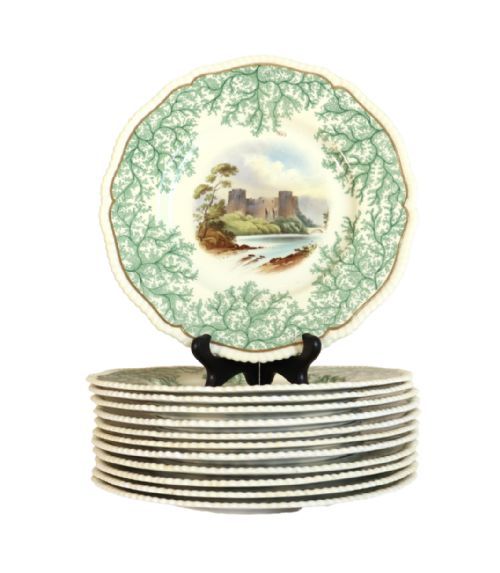
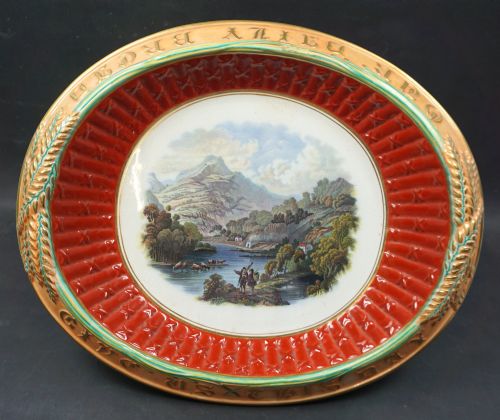
These Victorian transferware plate examples bring printed topographical scenes and botanical motifs into focus through durable nineteenth century earthenware.
Victorian Transferware Plate
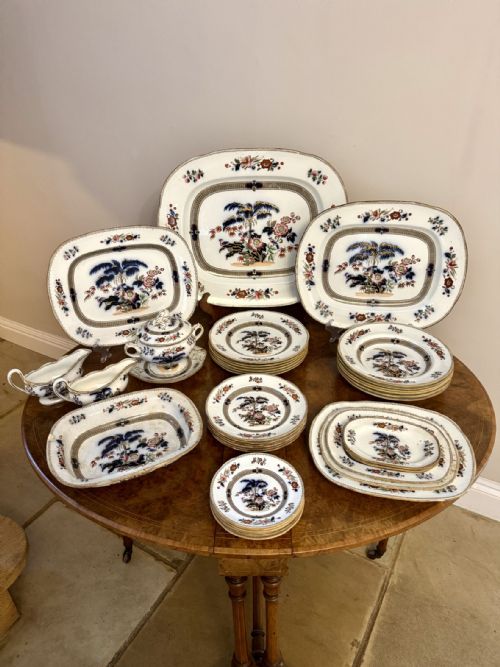
A victorian transferware plate is a ceramic tableware piece decorated by transferring a printed design from an engraved copper plate onto the pottery surface before glazing. Buyers encounter various forms on this page, including dinner plates, dessert plates, meat platters, and serving dishes.
The objects span the nineteenth century, with specific pieces originating from the Georgian, Regency, and Victorian periods. Makers employed styles such as Victorian Chinoiserie, botanical studies, and blue and white pictorial landscapes to decorate the ceramic body.
Materials and Transfer Printing Technique
Potters shaped the wares using earthenware, ironstone, creamware, and stoneware, applying a clear ceramic glaze to seal the body. Many items incorporate enamel colours alongside traditional blue and white printing.
The transfer printing technique involved pulling an inked impression from a copperplate onto tissue paper, then pressing that paper onto the unglazed or biscuit ceramic surface. Firing in a kiln set the pigment permanently beneath a glossy glaze layer.
Listings feature earthenware, ironstone, creamware, and stoneware bodies decorated with blue and white or enamel transfer printing.
Assessing Quality in Transferware
Quality depends on the crispness of the engraved transfer line and the alignment of the printed design across the ceramic surface. Smudging during the tissue transfer process diminishes the visual clarity of intricate scenes.
The weight and refinement of the underlying earthenware or ironstone body set apart standard utility pieces from higher grade service plates. Well potted ceramics display even thickness and a smooth, unblemished glaze coat.
Spode·Wedgwood·John Ridgway·Copeland and Garrett·Minton·Elkin and Newbon·Elkin Knight and Bridgwood·Mason's Ironstone
The Victorian Transferware Plate Glossary
- Transferware
- Pottery decorated by applying a printed design from an engraved copper plate onto the ceramic body. This technique allowed potteries to produce complex pictorial patterns efficiently.
- Earthenware
- Porous ceramic fired at a relatively low temperature, forming the primary body for much nineteenth century tableware. It required a vitreous glaze to hold liquids.
- Ironstone
- A heavy, durable type of feldspathic stoneware patented in the nineteenth century for sturdy dinner services. It resisted chipping better than standard creamware.
- Creamware
- Light coloured refined earthenware developed in the eighteenth century with a warm yellowish hue beneath the glaze. Potters continued utilising it into the Victorian era.
- Glaze
- A glassy coating fused to the ceramic surface during firing to render the porous body waterproof and glossy. It protected the underlying transfer print from wear.
Victorian Transferware Plate: Frequently Asked Questions
How do I date a transferware plate?
Dating relies on recorded potter marks, registration stamps, style periods, and the specific blue and white palette used on the ceramic body. Examining the backstamp often reveals the exact manufacturing decade or registered design date.
Changes in clay composition, from early creamware to later ironstone and dense earthenware, also help narrow down the production era alongside stylistic clues within the printed border.
Can I use these plates for dining?
While these ceramics remain physically robust, historical transferware frequently contains lead in the early glaze formulas. Modern usage for food is generally discouraged by collectors and dealers.
Displaying them on walls, in cabinets, or utilising them purely for decorative dry service preserves the nineteenth century glaze from modern detergents and cutlery scratching.
What caused the blue colour variations?
Cobalt oxide served as the primary pigment for blue and white transfer printing, yielding different tonal depths depending on the concentration and firing temperature. Slight shifts in the kiln atmosphere altered the cobalt from deep indigo to soft slate.
Engravers also varied line thickness on the copper plates to control how much ink transferred into the porous earthenware biscuit during production.
How should I clean my transferware?
Cleaning requires gentle hand washing in lukewarm water with mild soap, avoiding abrasive scouring pads that might scratch the soft nineteenth century glaze. Soaking these antique ceramics for extended periods is strictly avoided.
Prompt drying with a soft cloth prevents moisture from reaching any microscopic crazing lines within the ceramic body or damaging the historic enamel highlights.