
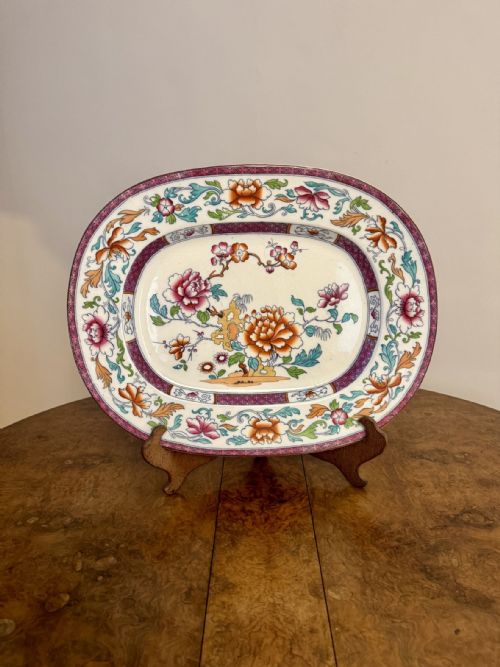


Vintage Turkey Platter
These vintage turkey platter selections offer substantial service for grand feasts, bringing enduring nineteenth-century character directly to the modern table.
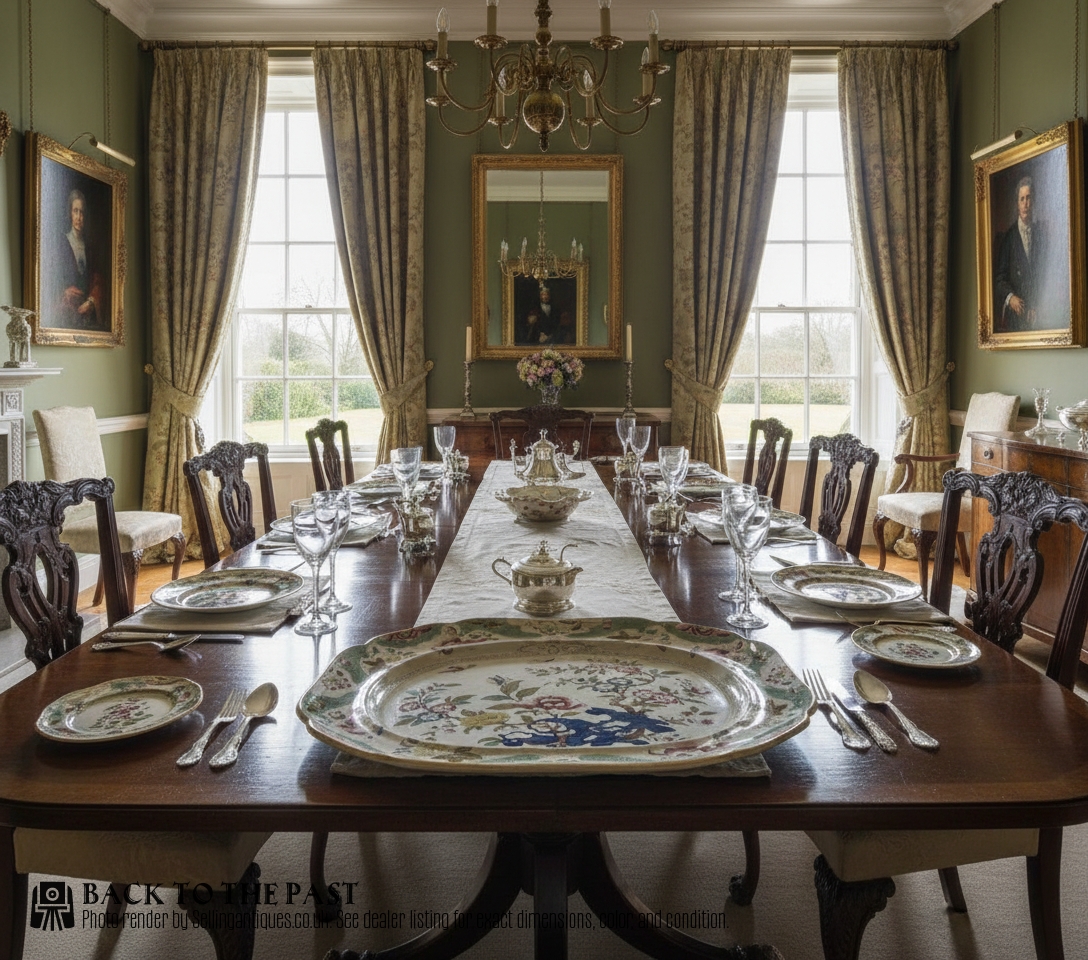
Vintage Turkey Platter
When you search for a vintage turkey platter, you encounter large serving dishes designed for carving and presenting large joints of meat at the table. These generous vessels belong primarily to the nineteenth century, spanning decades from eighteen fifty to eighteen ninety.
The pieces you meet most often on this page are Victorian serving platters and meat plates in blue and white. They appear in styles such as Victorian Chinoiserie alongside robust ironstone bodies.
Origins trace through nineteenth-century British production centres, encompassing earthenware forms and silver-plated warming trays. Each item serves the practical requirement of holding substantial quantities of food while providing a decorative centrepiece.
How they were made
Potters formed these pieces using earthenware, ceramic, and heavy ironstone bodies designed to withstand regular domestic use and substantial weight. Ironstone provided exceptional durability, allowing manufacturers to produce large platters that resisted cracking under heavy loads of meat.
Decoration relied heavily on blue and white transfer printing to apply intricate patterns such as Chinoiserie and Chinese Garden designs onto the ceramic surface. Lead glaze and enamel finishes sealed the transfer prints and provided a smooth, glossy surface for food presentation.
Alternative materials include silver plate and wood, seen in warming trays and serving trays from the nineteenth century. These metal and wooden items utilised specialised joinery and plating techniques to retain heat and support heavy serving dishes.
Blue and white transfer printing dominates the decorative styles, showcasing Victorian Chinoiserie and Chinese Garden patterns.
What varies in quality
The refinement of the transfer print defines the visual appeal of a ceramic platter. Crisp outlines and deep, even blue tones separate superior items from blurred or faded prints.
Weight and body thickness indicate the quality of the ceramic paste, with dense ironstone representing a sturdier manufacture than porous earthenware. The depth of the well and the presence of integrated gravy drains also distinguish standard platters from higher-tier serving dishes.
Mason s Ironstone
The Vintage Turkey Platter Glossary
- Ironstone
- A dense, durable type of earthenware patented in the nineteenth century. It resists chipping better than standard pottery and forms the body of many large meat dishes.
- Transfer print
- A decoration method where an engraved copper plate applies ink to tissue paper, which is then pressed onto the ceramic biscuit before glazing. This technique allowed intricate patterns to be reproduced consistently.
- Chinoiserie
- A European decorative style reflecting Chinese artistic motifs, popular during the Victorian era. It appears frequently on blue and white meat plates.
- Warming dish
- A specialised serving tray designed to hold hot water beneath the platter. This feature kept meat warm throughout long nineteenth-century meals.
- Biscuit
- The initial state of fired pottery before the application of glaze. Understanding this stage helps identify the base ceramic material.
Vintage Turkey Platter: Frequently Asked Questions
What were vintage turkey platters used for?
These large vessels served as the primary serving dishes for carving and presenting large joints of meat, poultry, and game at the nineteenth-century dining table. Their generous dimensions accommodated whole birds and substantial roasts alongside their accompanying juices.
Beyond formal dinners, households utilised them for daily family meals where hearty portions needed central presentation. The inclusion of recessed wells in certain models helped collect pan juices for easy ladling.
How do I care for a vintage platter?
Wash these ceramic and ironstone pieces by hand using warm water and mild soap to protect the nineteenth-century glaze and transfer prints. Avoid soaking silver-plated warming trays for extended periods to preserve the metal finish.
Store the platters flat or supported securely in vertical racks to prevent edge chipping. Sudden temperature changes should be avoided to protect the aged ceramic body from thermal shock.
Can I use my platter for food?
Most nineteenth-century ceramic and ironstone platters remain suitable for serving dry foods and cooked meats. Older lead glazes require consideration if used frequently for acidic foods over many years.
Silver-plated warming trays function well for presentation, though tarnished surfaces benefit from gentle polishing before food contact. Inspect each piece to ensure the glaze remains stable and intact.
How do I date a Victorian platter?
Examine the ceramic body, glaze characteristics, and any maker marks stamped into the underside of the earthenware or ironstone. Nineteenth-century pieces often display registration marks or specific blue and white transfer styles typical of eighteen fifty to eighteen ninety.
Style indicators such as Victorian Chinoiserie motifs provide additional chronological context. Comparing the weight and transfer print crispness against known period examples helps narrow the production era.