






Antique Military Ceramics
These antique military ceramics record the generals, campaigns and regiments that shaped history in glazed earthenware and porcelain.
Antique Military Ceramics
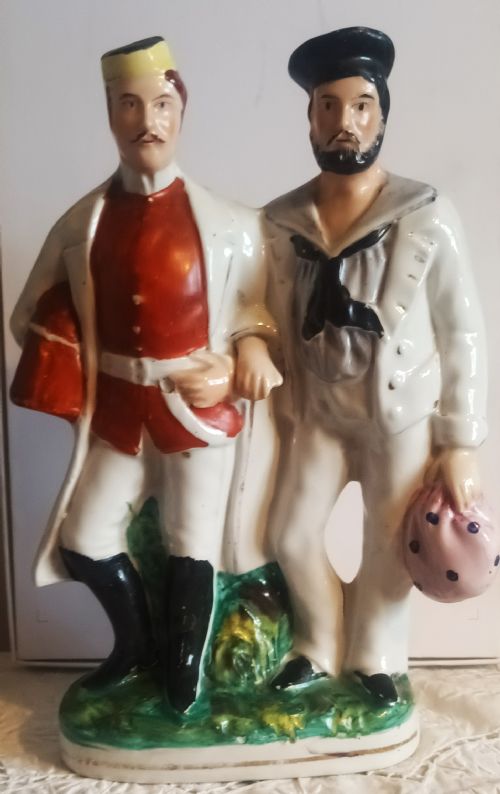
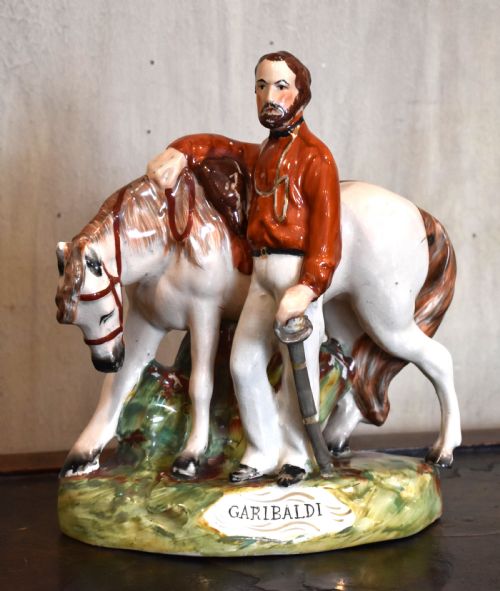
The subjects span naval commanders, military heroes and allied leaders such as Admiral Sir Charles Napier, Lord Kitchener and Giuseppe Garibaldi. These commemorative items served as patriotic parlour ornaments and mess table fixtures for households and regiments eager to display their allegiance during times of war.
Materials and methods
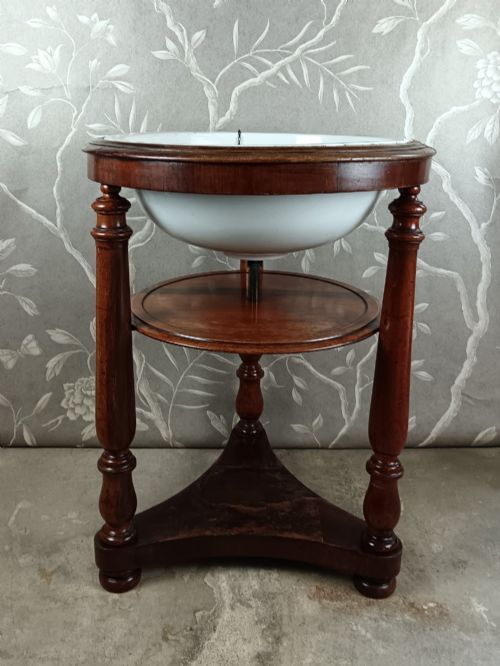
The wooden washstands and mahogany furnishings associated with campaign life utilise traditional cabinet-making skills alongside ceramic components. Each piece reflects the standard workshop practices of nineteenth-century potteries and regional makers.
The listings feature earthenware and porcelain materials, encompassing items from Victorian Staffordshire alongside early twentieth-century character jugs.
Judging quality and execution
Quality in these ceramics rests upon the crispness of the moulding and the skill of the hand-painting on the uniforms and facial expressions. Superior pieces capture likeness and detail sharply before glazing, whilst lesser examples suffer from blurred transfers or thick, obscuring glazes.
The depth of historical association and the clarity of titling inscriptions further separate standard production items from significant portrait figures. Well-executed pieces maintain vibrant enamel colours and careful gilt highlights without excessive fading or glaze pooling.
The Antique Military Ceramics Glossary
- Earthenware
- A porous pottery body fired at lower temperatures, requiring a glaze to render it waterproof. Most nineteenth-century portrait figures utilise this material.
- Staffordshire pottery
- Ceramics produced in the Staffordshire Potteries region, famous for producing portrait figures and commemorative jugs during the Victorian era.
- Mess bowl
- A communal vessel used in naval or military officers' messes for dining or drinking during service.
- Lead glaze
- A glossy coating containing lead oxide applied to pottery before firing to give a smooth, protective finish.
Antique Military Ceramics: Frequently Asked Questions
What periods do these pieces cover?
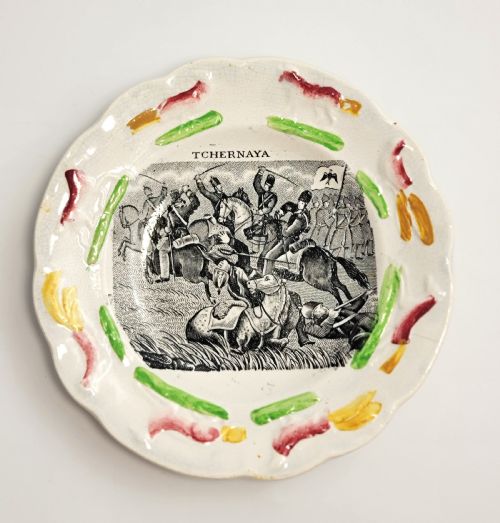
The listings encompass items primarily from the nineteenth century, stretching from the Georgian era through the Victorian period and into the early twentieth century. This timeline covers major conflicts like the Crimean War and the First World War.
Maker dates and styles reflect the specific reigns and historical events of each period, from mid-century Staffordshire portrait figures to early twentieth-century character jugs.
How were mess bowls used?
Naval and military officers utilised mess bowls within their shared dining quarters aboard ships or in barracks for communal meals and toasts. These vessels often bore inscriptions relating to specific regiments or royal navy messes.
Such items sat at the centre of the mess table, functioning both as practical tableware and as objects of institutional pride.
How do I identify a Staffordshire portrait figure?
Staffordshire portrait figures typically depict named military leaders, royals or historical figures on raised bases with hand-painted or gilt lettering. They are modelled in earthenware and finished with bright lead glazes and enamel colours.
Examining the base and the style of the hand-painted titles helps distinguish genuine nineteenth-century examples from later reproductions.
Where should I display ceramic wall plaques?
Porcelain wall plaques require secure mounting away from areas of high humidity or direct sunlight to protect their enamel decoration. They work best hung at eye level on neutral walls where their detailing remains clearly visible.
Ensure the hanging mechanism safely supports the weight of the ceramic piece without placing undue strain on the body.