


19th Century Meat Dish
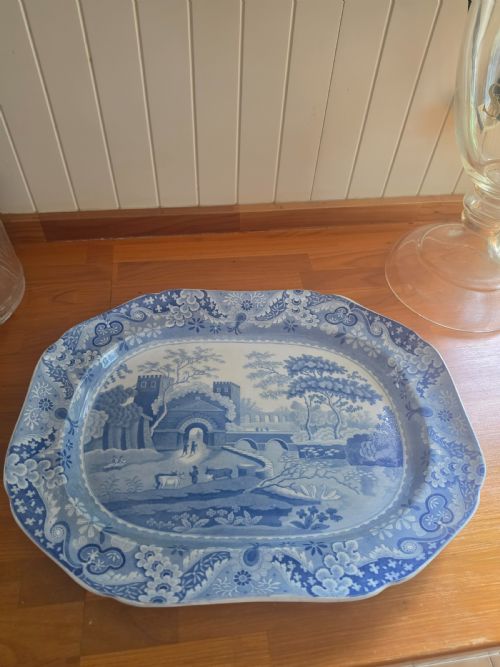
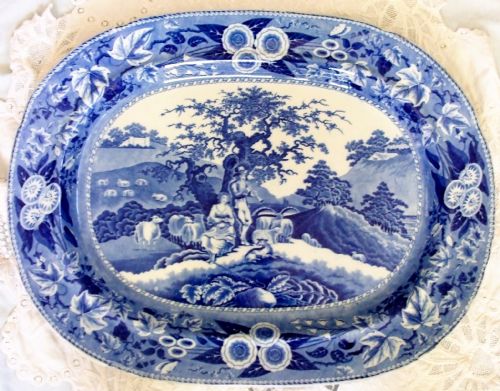
A 19th century meat dish brings grand scale and blue and white transfer printing to the dining table.
19th Century Meat Dish
When searching for a 19th century meat dish, a buyer encounters large serving platters, massive platters with drainers, and warming dishes designed for substantial joints of meat. These pieces span the Georgian, Regency, and Victorian periods, often decorated with cobalt pigment under a glazed ceramic surface.
The forms on this page range from heavy ironstone dishes to earthenware platters and silver plated warming vessels. Transfer-printed patterns depicting landscapes, shipping scenes, and architectural views dominate the ceramic examples, alongside substantial metal domes and plate warmers.
How they were made
Potters shaped earthenware, pearlware, and ironstone into large platters before applying detailed blue and white transfer prints using copper plates and cobalt pigment. A protective glaze sealed the design before firing in the kiln to achieve a durable surface suitable for heavy carving.
Metal versions utilise silver plating over copper or Sheffield plate techniques, forming meat domes and warming dishes with fitted mazarines or draining trays. These required skilled metalworking to construct hollow bases that held hot water to keep joints warm at the table.
Listings for a 19th century meat dish frequently feature blue and white transfer-printed earthenware alongside heavy ironstone and silver-plated warming vessels.
What varies in quality
Quality rests in the crispness of the transfer print and the depth of the cobalt pigment against the white earthenware or ironstone body. Richly detailed pictorial scenes show superior engraving on the original copper plates compared to softer, blurred impressions.
Substantial weight, the inclusion of original draining inserts or matching metal domes, and crisp maker marks elevate certain pieces. The overall balance and retention of a clear, glossy glaze without excessive wear distinguish the finest examples.
Spode·Henry Wilkinson·Copeland and Garrett·Don Pottery·Minton·Mason·Dan Holy
The 19th Century Meat Dish Glossary
- Ironstone
- A dense, vitreous ceramic patented in the early nineteenth century to provide a durable, heavy alternative to porcelain. It resists chipping and staining.
- Transferware
- Pottery decorated by applying a printed design from an engraved copper plate onto tissue paper, which was then transferred onto the unglazed ceramic body. Cobalt pigment was the standard colour used for these scenes.
- Mazarine
- A draining tray or insert placed inside a meat dish to allow juices to pool away from the carved joint. These ceramic or metal plates often feature pierced patterns.
- Pearlware
- A refined earthenware developed by Josiah Wedgwood that featured a subtle blueish tint in the glaze. It served as a transitional body between creamware and later white ironstone.
19th Century Meat Dish: Frequently Asked Questions
How were 19th century meat dishes used?
These large platters served large joints of meat at the dining table, often incorporating wells, reservoirs, or draining mazarines to catch juices. Metal warming dishes utilised hot water compartments beneath the platter to keep food warm throughout long meals.
Dome covers were placed over the meat at the table to retain heat until carving began. The substantial scale accommodated heavy roasts for large households and gatherings.
How do I tell Georgian from Victorian pieces?
Georgian and Regency examples tend to feature lighter pearlware bodies with romantic topographical or classical transfer prints in deep cobalt blue. Victorian pieces often utilise heavier ironstone ceramics and bolder industrial transfer patterns, sometimes with brighter polychrome glazes.
Maker marks and registration diamonds on the reverse help narrow the production decade precisely. Stylistic cues in the border patterns also shift from delicate floral swags toward busier, eclectic Victorian motifs.
Can I use these platters for serving food?
Most ceramic and ironstone platters remain robust enough for serving dry foods at the dining table today. Historic glaze surfaces should be washed by hand rather than placed in modern dishwashers to protect the finish.
Silver plated metal versions require gentle cleaning products appropriate for historic plated wares. Avoid exposing antique ceramics to sudden thermal shocks from very hot liquids.
What is the difference between earthenware and ironstone?
Earthenware is a porous, traditional ceramic body that requires a complete glaze to become waterproof and withstand regular use. Ironstone is a heavily vitrified, dense ceramic material developed to mimic porcelain through superior strength and weight.
Ironstone resists everyday wear much better than standard earthenware, making it common for heavy meat dishes. Both materials accepted blue transfer printing exceptionally well.