
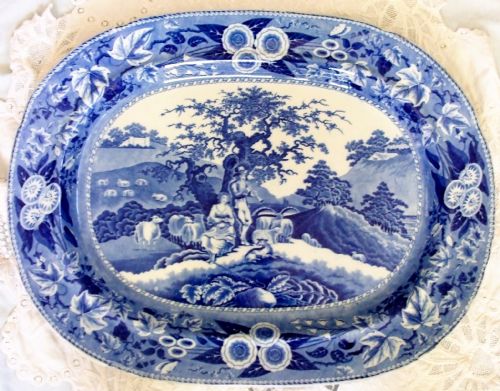


Staffordshire Blue Platter
A Staffordshire blue platter brings nineteenth-century transfer-printed earthenware into a modern interior through robust serving vessels.
Staffordshire Blue Platter
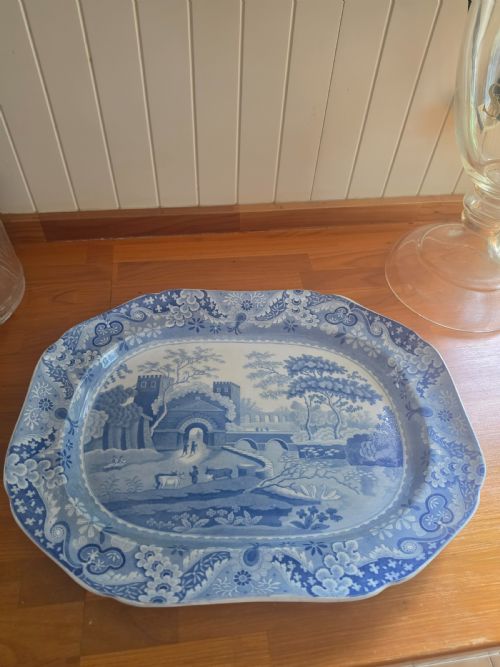
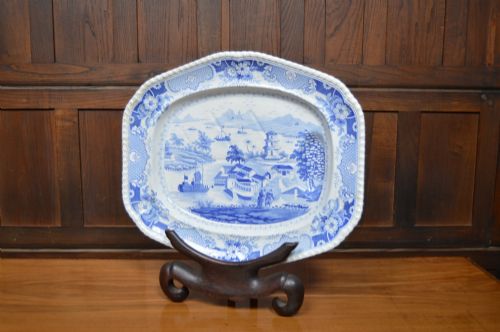
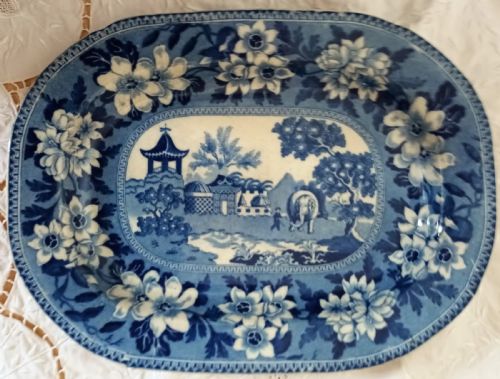
A Staffordshire blue platter is a ceramic serving vessel typically produced across the nineteenth century during the Georgian and Victorian periods. These pieces take the form of large meat plates, chargers, and serving dishes designed for formal dining and food presentation. Collectors encounter varied transfer-printed patterns depicting landscapes, architectural views, and Chinoiserie scenes.
The most common examples on this page are earthenware and ironstone meat platters featuring blue and white transfer prints. Makers utilised specific ceramic bodies like pearlware alongside heavy ironstone to create durable dishes intended for heavy household use. Many surviving examples retain deep wells and drainers designed to catch juices during carving.
How They Were Made
Potters formed these pieces using earthenware, pearlware, or ironstone bodies shaped into large serving platters and chargers. Artisans applied cobalt pigment through transfer printing, pressing engraved copper plates onto tissue paper to transfer intricate scenes onto the damp clay body. A transparent ceramic glaze was then applied over the surface before firing the vessel in a kiln to fix the blue pigment.
Makers integrated practical elements such as gravy wells and ceramic strainers directly into the heavier ironstone and pearlware dishes. Enamel highlights occasionally augmented the blue and white transfer print before the final glaze firing completed the piece.
Listings feature pearlware and ironstone bodies decorated with cobalt pigment transfer prints depicting landscapes and architectural scenes.
What Varies in Quality
Quality in a Staffordshire blue platter rests upon the clarity of the transfer print and the crispness of the cobalt pigment against the ceramic body. Pieces that exhibit sharp lines in complex pictorial scenes demonstrate superior engraving and printing skill during production. The weight and stability of the earthenware or ironstone also distinguish standard utility dishes from heavier, more ambitious chargers and meat platters.
The sophistication of the pattern influences desirability, with topographical views and narrative series commanding greater attention than generic floral borders. Intact structural additions like integral drainers and well-fitted reservoirs elevate the technical achievement of the surviving dish.
Spode·John Rogers And Son·John Ridgway·Stubbs·Brameld And Co·Mason·Elkin Knight And Bridgwood·Minton·Davenport
The Staffordshire Blue Platter Glossary
- Transferware
- Earthenware decorated by printing a design from an engraved copper plate onto paper and transferring it to the unglazed ceramic. This technique allowed factories to produce detailed pictorial patterns consistently across large series of plates and platters.
- Pearlware
- A refined earthenware developed in the late eighteenth century featuring a subtle bluish glaze that pooled in recesses. It bridges the transition between creamware and later nineteenth-century white ironstone.
- Ironstone
- A dense, durable type of ceramic patented in the early nineteenth century to imitate Chinese porcelain. It forms heavy platters and serving dishes capable of resisting chipping during daily service.
- Flow blue
- A style of Staffordshire pottery where cobalt pigment intentionally blurred during the kiln firing process. This created a hazy, atmospheric effect across the transfer-printed pattern.
- Meat drainer
- A perforated ceramic insert placed inside a platter to lift joints of meat above accumulated juices. These removable pieces are frequently found in nineteenth-century serving dishes.
Staffordshire Blue Platter: Frequently Asked Questions
How do I date a Staffordshire blue platter?
Dating relies upon stylistic markers, ceramic bodies, and backstamps where present. Early pieces often utilise pearlware bodies with blue shell edges, while mid-nineteenth-century examples frequently employ heavy ironstone and named topographical patterns.
Changes in transfer printing techniques and registry marks stamped into the ceramic base provide further chronological clues. Comparing the pictorial subject matter against known factory production periods helps narrow down the decade of manufacture.
Were these platters used for everyday dining?
These large ceramic vessels served primarily as meat platters and serving dishes for substantial household meals. Their generous proportions and integrated wells accommodated heavy joints of carved meat during formal dining.
Working kitchens relied on their durable ironstone and earthenware construction for heavy service. Many surviving examples show the honest surface wear of active domestic deployment.
How should I display a large ceramic charger?
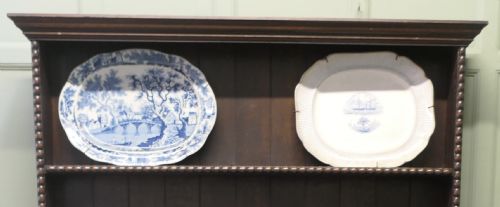
Displaying heavy platters safely requires sturdy wall-mounting brackets or dedicated plate stands designed for deep rims. Earthenware and ironstone dishes possess substantial weight, so any wall display needs secure anchoring.
Placing chargers on plate racks allows the transfer-printed scenes to remain visible while protecting the foot rim and glaze. Direct sunlight should be avoided to prevent any enamel additions from fading over time.
What is the difference between earthenware and ironstone?
Earthenware is a porous, lower-fired ceramic body that requires a complete glaze seal to remain water-resistant. Pearlware represents a refined version of this ceramic type with a characteristic bluish tint in the glaze.
Ironstone is a much denser, heavier, and harder ceramic material developed to resist chipping and heavy kitchen use. Platters made from ironstone typically feel significantly heavier and thicker than standard earthenware plates.