


Antique Beer Pitcher
These antique beer pitcher examples span earthenware, pewter, and silver plate, offering robust historical character for the table.

Antique Beer Pitcher
An antique beer pitcher serves historical drinking vessels designed for pouring ale, stout, and cider in domestic and tavern settings. The selections here include earthenware, pewter, ceramic, copper, stoneware, and silver plate ranging across the eighteenth, nineteenth, and early twentieth centuries.
Makers shaped these utilitarian vessels into diverse forms, from plain Georgian ale jugs and heavy flagons to characterful Toby jugs and salt-glazed stoneware pitchers. Buyers frequently encounter nineteenth-century Staffordshire pottery and German salt-glazed wares alongside formal Old Sheffield plated designs.
How they were made
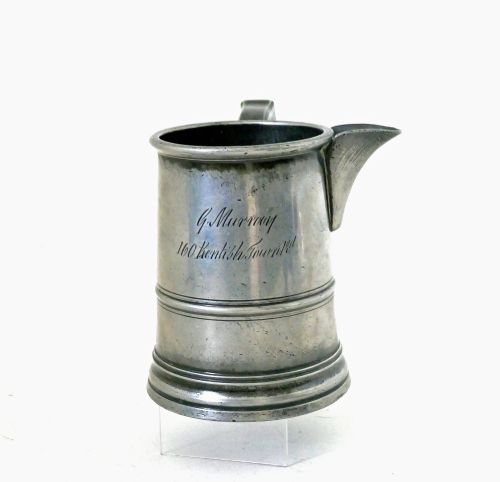
Potters threw stoneware and earthenware on the wheel or cast them in moulds before applying cobalt blue decoration, salt glazes, or polychrome enamel. Metal versions utilised pewter, brass, copper, and Old Sheffield plate, shaped through beating, soldering, and engraving.
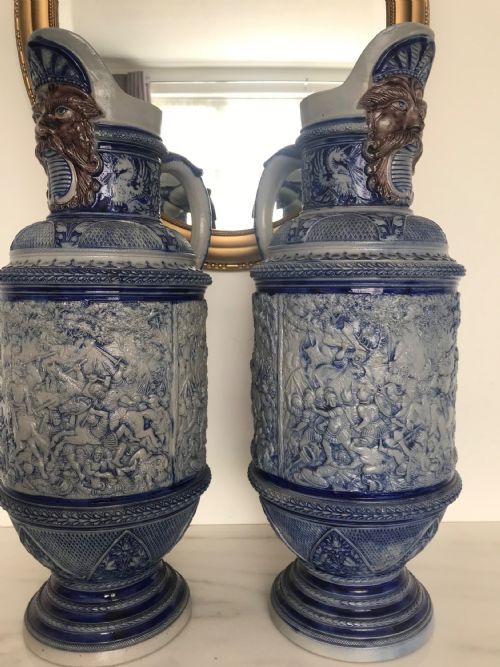
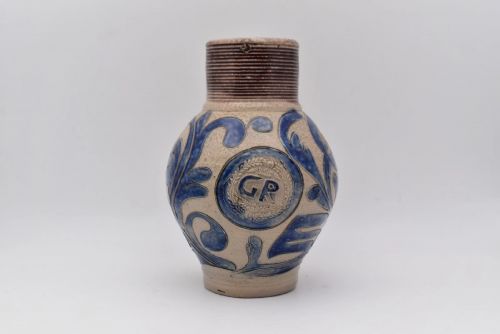
Many stoneware examples feature intricate relief moulding depicting battle scenes or royal ciphers. Metal vessels often incorporated applied rims, hinged lids, and cast handles.
German stoneware makers decorated jugs with roaring Roman battle scenes, ensuring drinkers had plenty to ponder between sips.
What varies in quality
Quality rests in the crispness of relief modeling on ceramic bodies and the weight and finish of metalwork. Finer examples display sharp cobalt detailing, clear maker marks, and well-preserved silver mounts.
The integrity of construction separates standard utility pieces from exhibition examples. Intact pewter lids, secure silver rims, and unblemished salt glazes elevate the standing of a pitcher.
Simon Peter Gerz·Doulton Lambeth
The Antique Beer Pitcher Glossary
- Salt-Glazed Stoneware
- A ceramic body matured at high temperatures where common salt is thrown into the kiln to produce a pitted, orange-peel texture. This dense material proved ideal for holding liquids without additional internal glazing.
- Old Sheffield Plate
- A composite material formed by fusing a thin sheet of silver to a thicker copper base under heat. Pieces created this way show characteristic copper bleed along edges and seams.
- Toby Jug
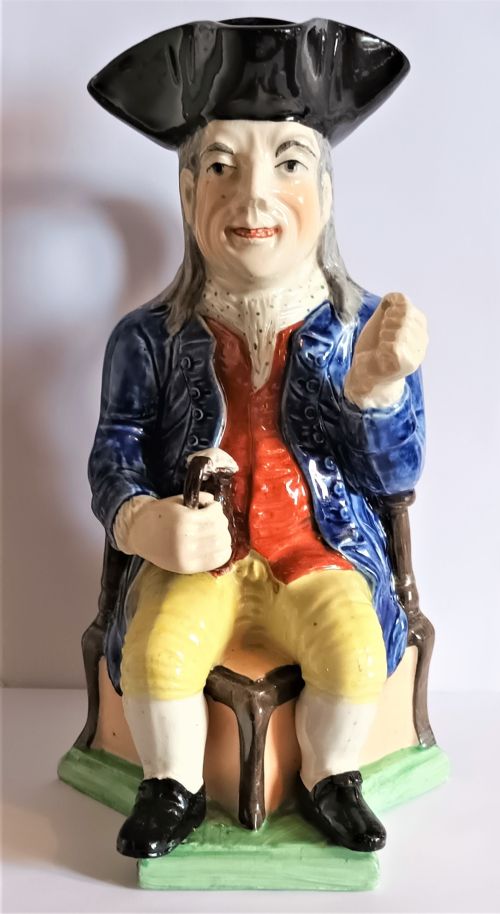
- A pottery jug modeled in the shape of a seated person, usually a stout, cheerful figure holding a mug of beer and a pipe. They became popular in eighteenth-century England and continued through the Victorian era.
- Flagon
- A large drinking vessel with a handle and a lid, typically used for serving beer or ale at communal tables. Many historical examples feature substantial pewter or silver capacities.
- Westerwald
- A German region renowned for producing salt-glazed stoneware characterised by grey bodies and cobalt blue incised ornamentation. These jugs often display royal ciphers or historical scenes.
Antique Beer Pitcher: Frequently Asked Questions
How do I clean an antique beer pitcher?
Wash ceramic and glass pieces gently in warm soapy water using a soft cloth, avoiding harsh abrasives that might damage old glazes.
Metal vessels require specialist metal cleaners applied sparingly to preserve engraved details and historical patination without stripping the surface.
Were these pitchers used daily?
Many of these vessels served practical roles in homes and taverns for pouring ale and beer during meals and gatherings.
Finer silver-plated and decorative salt-glazed pieces likely occupied more formal settings or functioned as display items.
How do I date a stoneware jug?
Examination of the salt glaze texture, cobalt pigment tones, and applied decorative motifs provides reliable clues to the manufacturing period.
Matching stylistic elements such as royal ciphers or specific maker stamps helps narrow down the production decade.
Can I still serve drinks from them?
While structurally sound, historical materials like old pewter and porous earthenware may not meet modern food safety standards for regular use.
Displaying them as decorative objects protects the antique material from degradation while maintaining their historical presence.