


Tin Glazed Earthenware Jug
These tin glazed earthenware jugs span Dutch Delftware, Italian majolica, and English delftware across the seventeenth, eighteenth, and nineteenth centuries.

Tin Glazed Earthenware Jug
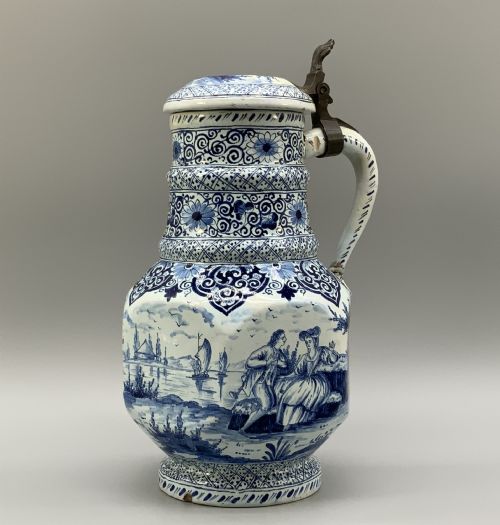
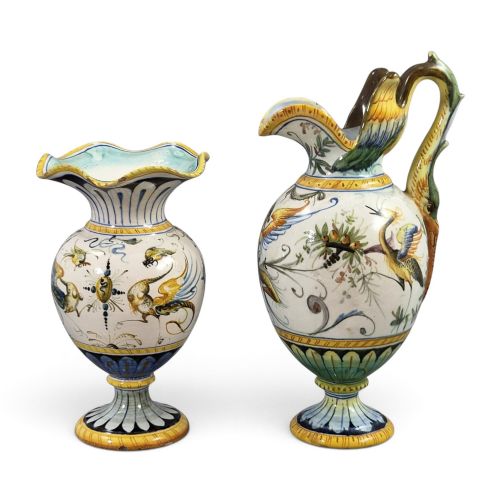
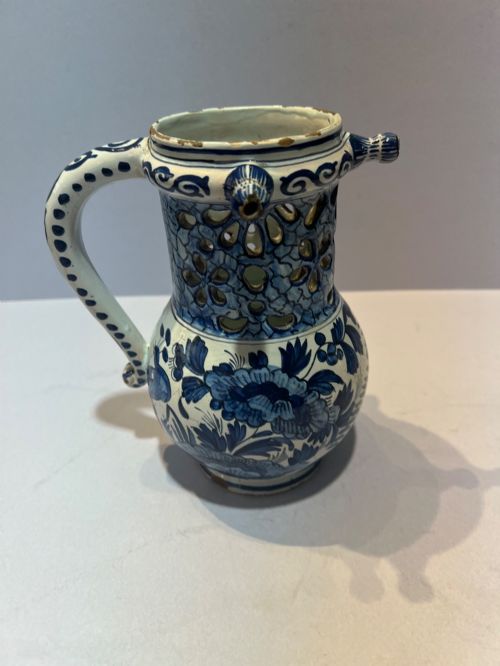
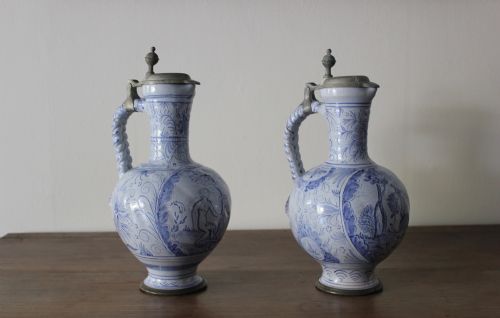
When you search for tin glazed earthenware jug, you encounter vessels produced across several centuries in workshops ranging from English kilns to Dutch and Italian centres. The selection on this page centres primarily upon eighteenth-century Dutch Delftware and nineteenth-century Italian and French examples, taking forms that include puzzle jugs, pharmacy drug jars, and lidded beer steins.
Buyers look for these pieces to acquire historical ceramic forms that display hand-painted blue and white or polychrome decoration. Many feature pewter mounts, mask spouts, or figural designs such as Toby jugs.
The objects here represent both utilitarian kitchen and tavern vessels alongside decorative mantle pieces and pharmacy equipment. Their survival reflects the durable nature of earthenware coated in an opaque tin glaze.

What varies in quality
Quality rests in the crispness of the hand-painted decoration and the fluidity of the brushwork across the tin glaze. Pieces with complex polychrome palettes or detailed figural scenes command greater attention than simple monochrome items.
The condition of the tin glaze surface and the presence of original components like pewter lids influence the integrity of the piece. Clean adherence of the glaze to the earthenware body without excessive flaking distinguishes superior specimens.
Tin Glazed Earthenware Jug Retail Price Guide 2026
Typical asking prices for tin glazed earthenware jug among the pieces listed under this phrase on Sellingantiques today, from the lower quarter to the upper quarter. They describe what is for sale here now, not the wider market.
An eighteenth-century potter shaped a cheeky monkey into a Toby jug, proving historic drinkers enjoyed a sense of humour with their ale.
Cantagalli Florence·Pieter Verburg
The Tin Glazed Earthenware Jug Glossary
- Tin glaze
- An opaque white ceramic glaze containing tin oxide that creates a pale ground for painted pigments. This technique originated in the Middle East before spreading through Italy, the Netherlands, and England.
- Majolica
- A type of Italian tin-glazed earthenware decorated with colourful metallic oxide pigments on an opaque white background. Renaissance Revival examples often emulate these earlier Italian styles.
- Delftware
- Tin-glazed earthenware produced in the Netherlands, particularly in Delft, known for blue and white designs inspired by Chinese porcelain. English kilns also produced similar wares termed delftware.
- Polychrome
- Decoration utilising multiple colours rather than a single hue such as blue or manganese. Potters applied these mineral pigments directly onto the unfired tin glaze.
- Puzzle jug
- A vessel with a perforated neck and multiple spouts designed to challenge the drinker to consume the contents without spilling. These interactive ceramic items date predominantly to the eighteenth century.
Tin Glazed Earthenware Jug: Frequently Asked Questions
How do I clean a tin glazed earthenware jug?
Wash the ceramic gently by hand using lukewarm water and mild soap, avoiding harsh scrubbing or soaking. Dry the piece thoroughly with a soft cloth to protect the historic glaze surface.
Keep these vessels away from modern dishwashers and sudden temperature changes, as the porous earthenware body and tin glaze are sensitive to thermal shock.
What is the difference between delftware and majolica?
Delftware generally refers to Dutch or English tin-glazed earthenware featuring blue and white or polychrome decoration, often influenced by Asian export porcelain. Majolica traditionally describes Italian tin-glazed pottery with rich polychrome painting.
Both categories share the fundamental technique of an opaque tin oxide glaze applied over an earthenware body, though their decorative motifs and regional aesthetics differ significantly.
Were these jugs used for daily drinking?
Many examples served practical roles in taverns and households for holding beer, water, or coffee. Others functioned as pharmacy containers, apothecary wet drug jars, or decorative mantelpiece items.
Utilitarian pieces often feature sturdy earthenware bodies and pewter lids designed for frequent handling during meals or social gatherings.
How can I tell the age of a tin glazed jug?
Examine the wear patterns on the base, the composition of the earthenware body, and the style of the painted decoration. Eighteenth-century pieces typically show different glaze characteristics and potting techniques compared to nineteenth-century revival items.
Reference marks, regional painting styles, and associated hardware like pewter mounts help narrow down the period of production.