


Dutch Delftware Pitcher
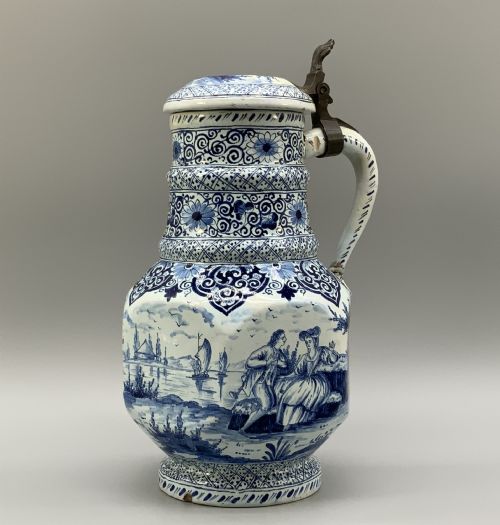
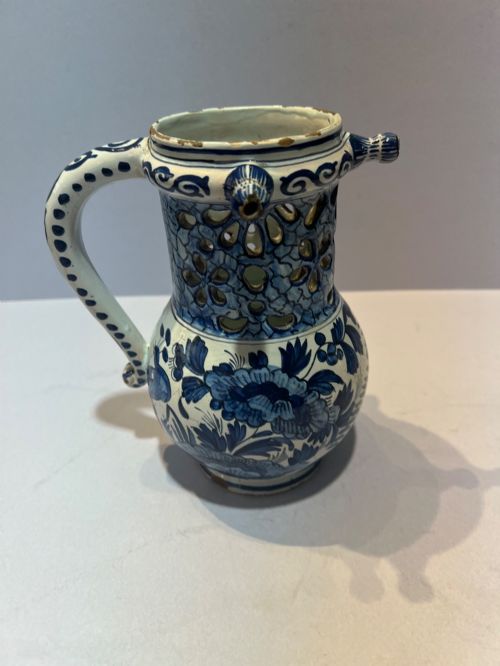
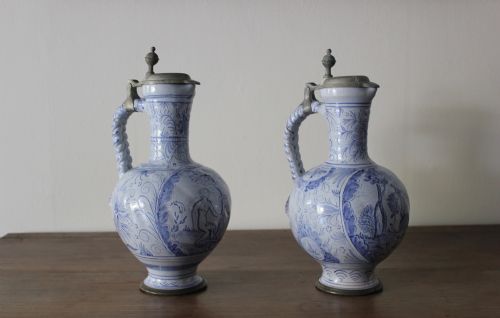
These Dutch delftware pitcher pieces are tin-glazed earthenware jugs and vessels valued for their painted blue and white or polychrome decoration.

Dutch Delftware Pitcher
A dutch delftware pitcher takes the form of a ceramic jug, ewer, or coffee pot shaped for domestic use and display. These vessels emerge primarily from the seventeenth and eighteenth centuries, bearing the distinctive tin-glazed earthenware surface associated with the Netherlands.
The selection here encompasses various utilitarian and decorative forms, including puzzle jugs, Toby jugs, and Chinoiserie vessels. Eighteenth-century examples frequently feature blue and white or manganese and polychrome floral and figurative painting.
Makers and decorators utilised traditional earthenware bodies, occasionally pairing the ceramic containers with pewter lids or mounts. Seventeenth-century pieces present early Dutch Baroque styles alongside intricate Chinoiserie motifs.
How they were made
Potters shaped these vessels from earthenware clay before applying an opaque white tin glaze that provided a smooth canvas for hand-painting. Artisans then brushed cobalt blue, manganese, or polychrome pigments directly onto the unfired glaze.
Certain jugs incorporate fitted pewter lids secured to the ceramic handle and rim by metal hinges and mounts. Firing techniques in Dutch kilns fixed the metallic oxides into the tin glaze, yielding the characteristic gloss.
An eighteenth-century potter once shaped a mischievous monkey into the form of a Toby jug.
What varies in quality
Quality rests in the crispness of the hand-painted decoration and the refinement of the ceramic body. Pieces displaying intricate Chinoiserie or controlled polychrome brushwork demonstrate superior artistic command over simpler output.
The preservation of the tin glaze and the integrity of any associated pewter mounts distinguish finer examples. Potters who achieved balanced forms and steady glaze coverage produced vessels that retain their visual impact.
Pieter Verburg
The Dutch Delftware Pitcher Glossary
- Tin glaze
- An opaque white glaze containing tin oxide that creates a smooth surface for painted ceramic decoration. This coating defines the primary appearance of Dutch delftware.
- Chinoiserie
- European interpretations of Chinese artistic motifs, popular in seventeenth and eighteenth-century pottery decoration. These designs often feature imaginary landscapes and figures.
- Earthenware
- Porous pottery fired at relatively low temperatures, forming the basic ceramic body of these jugs. It requires a glaze to hold liquids.
- Polychrome
- Decoration employing multiple colours rather than a single pigment like blue or manganese. This palette adds complexity to the painted surface.
- Toby jug
- A pottery jug modelled as a stout person, usually seated and holding a mug or drink. Examples appear in nineteenth-century production.
Dutch Delftware Pitcher: Frequently Asked Questions
How were dutch delftware pitchers used?
These vessels served practical roles as jugs, ewers, and coffee pots on European tables, holding liquids or functioning as pouring containers.
Over time, many of these ceramic pieces transitioned into decorative display objects rather than active household implements.
How do I care for tin-glazed earthenware?
Keep these ceramic pieces away from excessive moisture and harsh cleaning agents to protect the delicate tin glaze surface.
Display them on stable surfaces where the delicate edges and any pewter attachments remain safe from knocks.
How can I tell seventeenth-century pieces apart?
Seventeenth-century examples often exhibit Dutch Baroque or early Chinoiserie styles painted in deep blue pigments on earthenware bodies.
Examining the weight, tin glaze texture, and painting style helps distinguish these earlier works from later nineteenth-century revivals.