


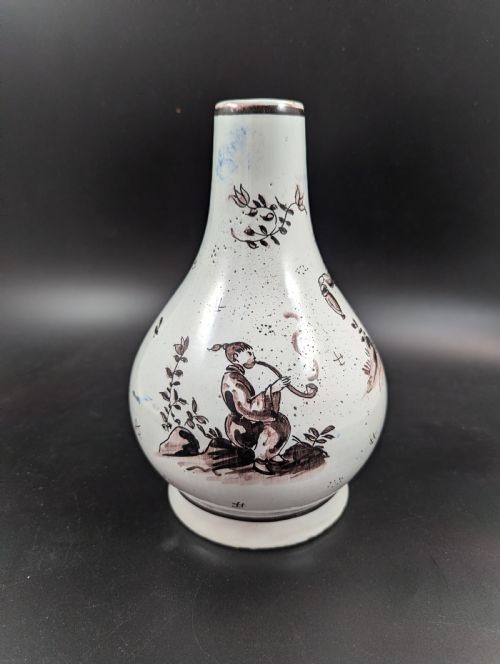


Antique Delftware Vessel
An antique delftware vessel brings tin-glazed earthenware into a room, offering the cobalt pigment and painted surface that collectors seek.
Antique Delftware Vessel
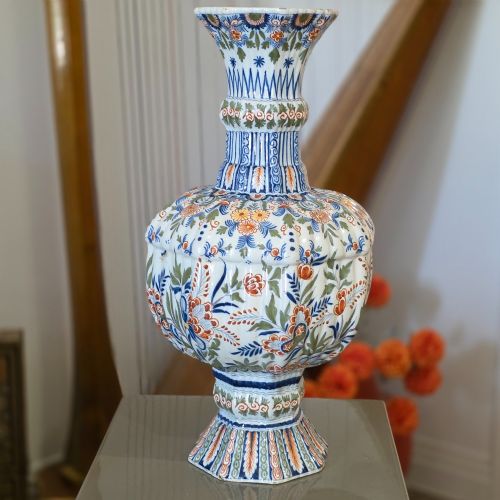
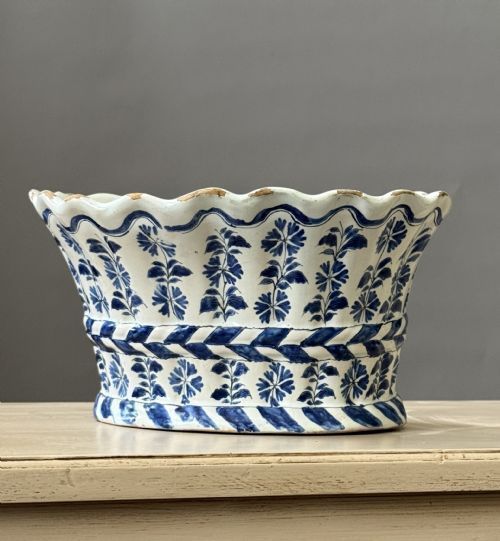
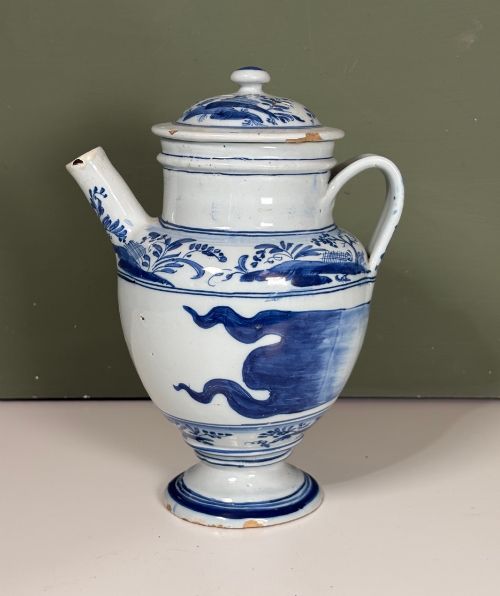
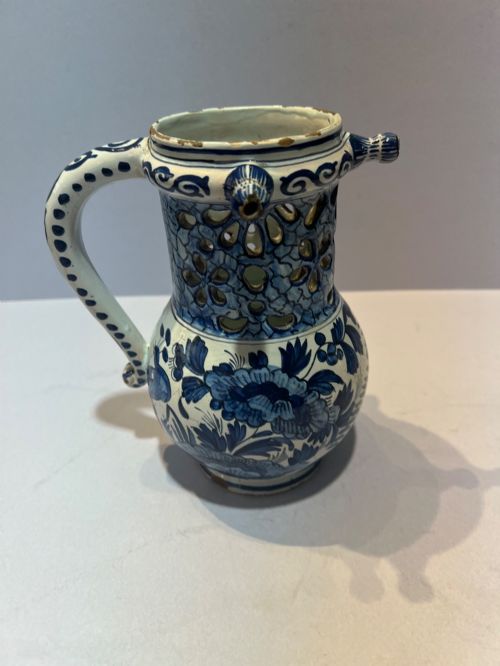
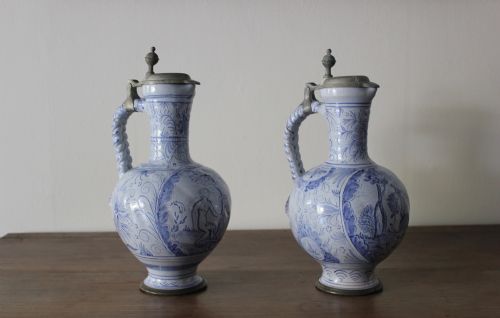
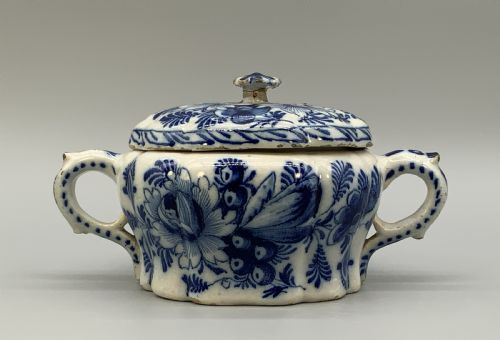
Every antique delftware vessel on this page sits within the broader ceramic family of tin-glazed earthenware, spanning the seventeenth, eighteenth, and nineteenth centuries. You encounter forms ranging from apothecary jars and drug jars to vases, posset pots, tobacco jars, bough pots, and puzzle jugs.
The majority of pieces originate from Dutch and English workshops, demonstrating styles such as Dutch Baroque, Georgian, and regional delftware traditions. Utilitarian pharmacy containers and decorative mantel pieces both appear in blue and white or polychrome schemes.
Makers utilised earthenware bodies covered in an opaque white tin glaze, upon which cobalt pigment and other mineral colours were applied before firing. The resulting forms serve as tangible links to historical domestic interiors and apothecary practices.
Materials and production methods
Potters shaped local clays into vessels on the wheel or pressed them into moulds, creating the foundational ceramic body. This earthenware was then fired to produce a stable biscuit ware ready for decoration.
The porous body received an opaque tin glaze that created a smooth, white canvas resembling porcelain. Artisans painted directly onto this unfired glaze using cobalt pigment, which absorbed into the surface during the final kiln firing.
A monkey wearing a waistcoat sits permanently frozen on a mid-eighteenth-century Dutch delft tobacco jar.
Assessing quality in tin-glazed ceramics
Quality rests in the crispness of the cobalt painting, the stability of the tin glaze, and the balance of the thrown form. Stronger brushwork and well-defined floral or figural motifs distinguish finer examples from hasty commercial output.
The purity and consistency of the white glaze surface affect visual appeal, as does the preservation of the painted details through centuries of handling. Retaining original lids on apothecary jars and posset pots elevates the integrity of the piece.
Pieter Verburg
The Antique Delftware Vessel Glossary
- Tin-Glazed Earthenware
- Earthenware coated with a glaze containing tin oxide to produce an opaque white surface. This technique forms the basis of all delftware and faience production.
- Cobalt Pigment
- A metallic oxide used under the glaze to produce deep blue decoration. It reacts with the tin glaze during firing to create distinctive feathered edges.
- Apothecary Jar
- A ceramic vessel used by chemists and pharmacists to store dry drugs, wet medicines, or ointments. Many feature labelled cartouches painted on the front.
- Posset Pot
- A multi-handled vessel used for serving posset, a hot spiced milk drink curdled with wine or ale. Examples often incorporate spouts and lids.
- Faience
- European tin-glazed earthenware produced outside of Italy, commonly used to describe Dutch and English delftware pieces. The term encompasses both utilitarian and decorative forms.
- Albarello
- A cylindrical earthenware jar used for holding apothecary drugs and ointments. The waist is typically pinched inwards to allow a secure grip when handling.
Antique Delftware Vessel: Frequently Asked Questions
What is an antique delftware vessel used for?
These vessels served various functions in historical households and apothecary shops, ranging from storing medicinal herbs and dry drugs to holding flowers or serving spiced posset drinks.
Today, collectors use them as decorative display pieces on shelves and mantelpieces to introduce historical blue and white ceramics into domestic interiors.
How do I clean an antique delftware vessel?
Tin-glazed earthenware requires gentle handling because the glaze can be porous and susceptible to moisture infiltration through hairline cracks.
Dust the surface dry with a soft cloth or brush, and avoid submerging the ceramic in water or using modern chemical cleaning agents.
How can I tell English delft from Dutch delft?
English and Dutch pieces share similar tin-glaze and cobalt painting techniques, but subtle differences in clay bodies, glaze tones, and stylistic motifs often provide clues to their origin.
Potters in different regions utilised local clays and distinct botanical or architectural painting conventions that developed within local workshop traditions.
Why do some drug jars have painted labels?
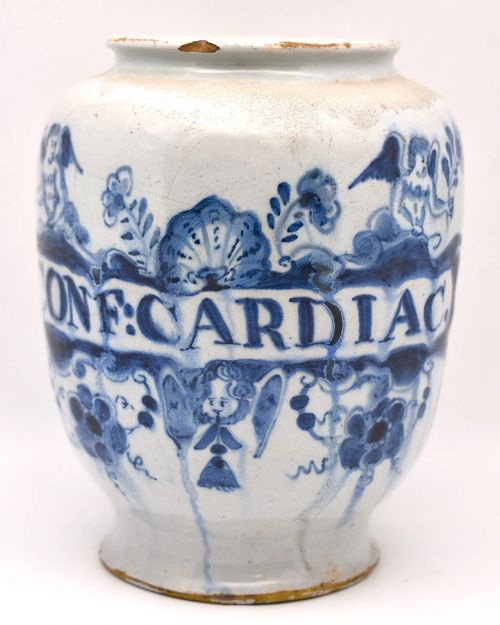
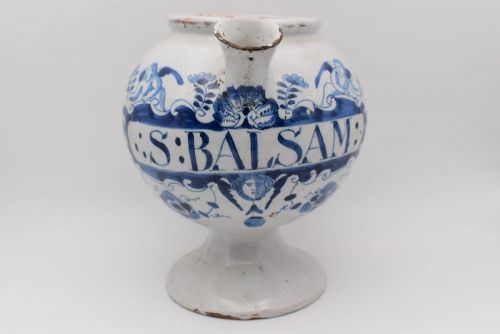
Apothecary and drug jars featured painted Latin inscriptions within scrolled cartouches so pharmacists could easily identify the specific contents stored inside.
These labels often combined botanical names with decorative elements like cherubs, shells, or floral swags.