



Blue White Apothecary Jar
These blue white apothecary jar examples span centuries of ceramic tradition, offering striking cobalt decoration on tin-glazed earthenware and glass for discerning collectors.
Blue White Apothecary Jar
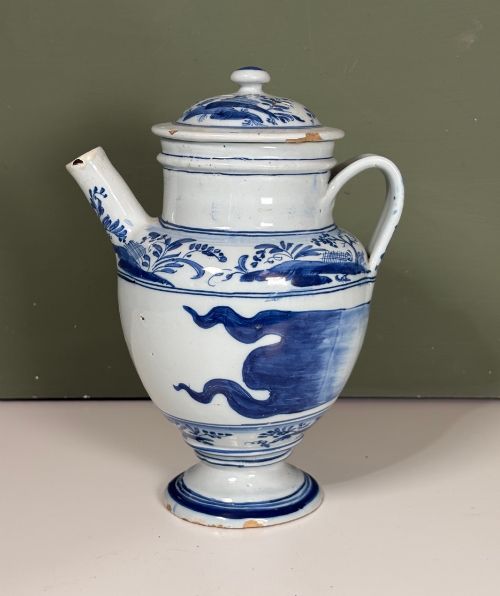
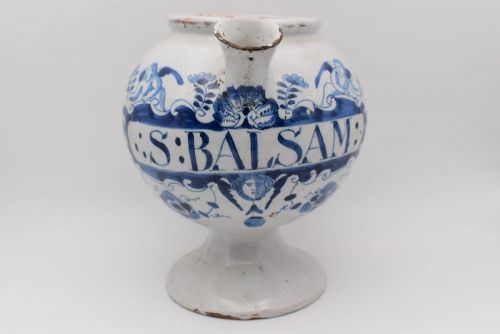
A blue white apothecary jar serves as a historical vessel originally used to hold medicinal drugs, herbs, and chemical preparations in pharmacies and dispensaries. Buyers seeking a blue white apothecary jar encounter forms ranging from traditional tall albarelli to bulbous wet drug jars and chemist bottles.
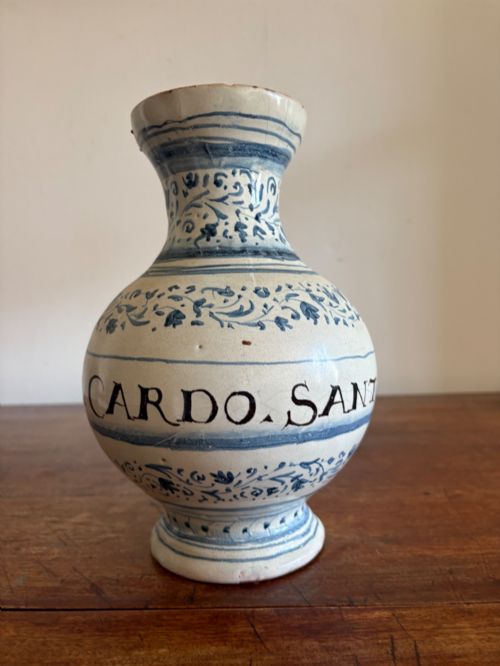
The pieces on this page originate primarily from the seventeenth, eighteenth, and nineteenth centuries, spanning Victorian, Georgian, and various continental European traditions. Continental faience, Dutch Delft, and Italian Majolica dominate the selection, reflecting distinct regional styles of tin-glazed earthenware.
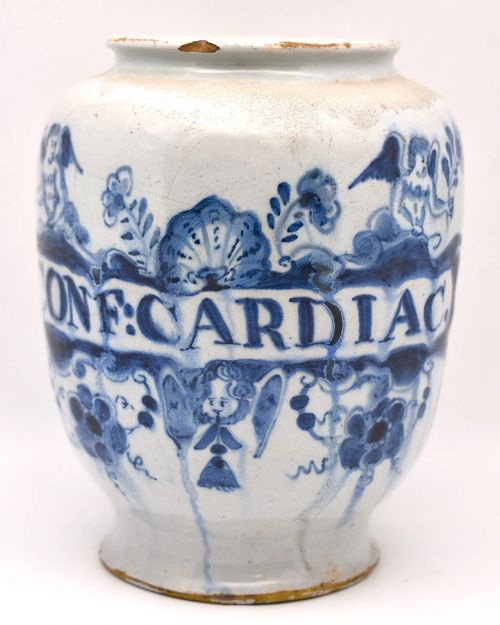
Most examples display hand-painted cobalt pigment decoration against a white tin-glazed surface, often featuring Latin inscriptions, cherubs, shells, or maker marks. These vessels capture the intersection of functional medical storage and decorative ceramic artistry from past eras.
Materials and methods
Potters shaped these vessels from earthenware clay, throwing them on a wheel to create distinct profiles such as the waisted albarello. Artisans then applied a tin glaze containing opacifying agents to achieve the characteristic opaque white background.
Painters used cobalt pigment or cobalt oxide to hand-paint botanical motifs, scrolls, and pharmaceutical inscriptions directly onto the unfired or raw glaze surface. Firing in kilns set the deep blue coloration permanently into the tin glaze, creating a durable finish.
Some seventeenth-century jars quietly survived centuries of medical practice just to hold dry kitchen pasta today.
Assessing quality and execution
Quality in these ceramics rests upon the crispness of the cobalt brushwork and the complexity of the painted imagery, such as detailed cherubs and scrollwork. Finer specimens exhibit controlled pigment application without excessive bleeding into the white tin glaze.
The throwing skill of the potter dictates the symmetry and balance of the jar profile, particularly on complex waisted forms like the albarello. Additionally, the clarity of the historical pharmaceutical inscriptions and the preservation of the original glaze contribute significantly to desirability.
The Blue White Apothecary Jar Glossary
- Albarello
- A cylindrical pharmacy jar with a waisted body designed for storing dry drugs and ointments. This form originated in the Middle East and spread throughout European majolica traditions.
- Tin Glaze
- A ceramic glaze made opaque by the addition of tin oxide, providing a smooth white surface for painted decoration. It defines the appearance of traditional delftware and faience.
- Majolica
- Tin-glazed earthenware produced in Italy and other European centres, renowned for vibrant blue and white pigment work. Artisans utilised this technique for decorative and utilitarian pharmacy vessels.
- Cobalt Pigment
- A metallic oxide used to achieve deep blue coloration on ceramic wares under high kiln temperatures. It remains stable during firing, producing the characteristic sharp contrast on white grounds.
- Wet Drug Jar
- A specialised apothecary container designed with a spout or wider neck to hold liquid medicines, syrups, and oils. These jars often featured painted labels to identify specific contents.
Blue White Apothecary Jar: Frequently Asked Questions
What were apothecary jars used for?
Apothecary jars stored dry herbs, ointments, electuaries, and liquid medicines in historical dispensaries and apothecaries. Pharmacists relied on these vessels to keep ingredients protected from light and moisture.
Label inscriptions helped practitioners identify specific contents quickly during the preparation of remedies. Over time, surplus jars transitioned into decorative display pieces in apothecary shops and homes.
How should I display these jars?
These ceramic and glass vessels suit placement on open shelving, in cabinets, or on mantelpieces where adequate lighting highlights the blue and white surface decoration. Keeping them away from direct heat sources helps preserve the stability of antique tin glazes.
Grouping jars of varying heights, such as pairing tall albarelli with bulbous drug bottles, creates visual balance. Gentle dusting with a dry cloth maintains the surface without risking moisture damage to the porous earthenware body.
Are these jars waterproof?
Porous earthenware and historical tin glazes can absorb moisture over long periods, making many antique apothecary jars unsuitable for holding liquids today. Micro-fissures in the glaze may develop hairline leaks if filled with water.
Glass apothecary bottles from later periods generally retain better liquid containment compared to early earthenware specimens. Collectors typically treat these pieces as dry display objects rather than functional containers.