
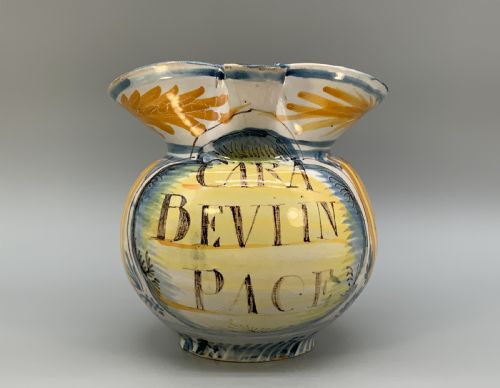
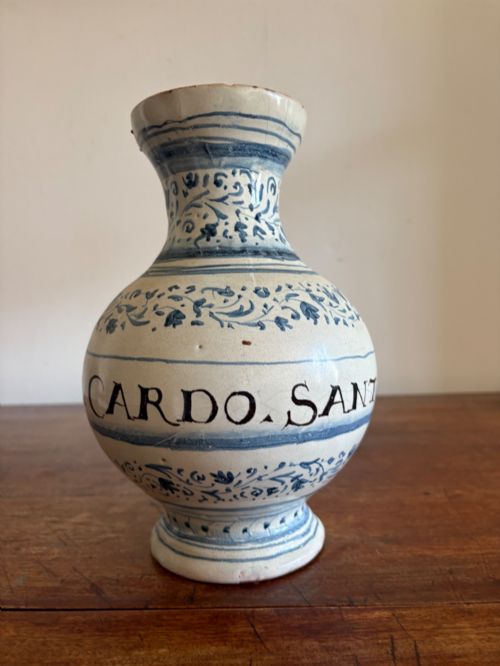


Majolica Drug Jar
These majolica drug jar pieces are apothecary vessels of earthenware and tin-glaze that bring centuries of Italian pharmacy history directly into a modern interior.
Majolica Drug Jar
When you search for majolica drug jar, you encounter apothecary vessels shaped as tall albarello jars or handled pharmacy jugs designed to hold medical ingredients. These pieces originate primarily from Italian workshops across the seventeenth, eighteenth, and nineteenth centuries.
Makers shaped these items in tin-glazed earthenware and ceramic, applying rich mineral pigments to record the contents once housed within. Collectors meet both blue and white examples and vibrant polychrome pieces displaying manganese and yellow tones.
How they were made
Potters formed these pieces using earthenware clay, shaping them into cylindrical albarello bodies or spouted jugs suited for liquids and dry remedies. The raw clay received a tin-glaze coating to create an opaque white surface that accepted painted decoration.
Artists applied mineral pigments directly onto the unfired tin glaze in styles ranging from Italian Baroque to Italian Renaissance traditions. Firing then fused the pigments into the glaze, fixing the polychrome or blue and white designs permanently across the ceramic body.
Potters once stored sticky syrups inside these jars, leaving history hidden beneath centuries of colourful tin glaze.
What varies in quality
Quality rests in the crispness of the hand-painted decoration and the complexity of the palette across the tin-glazed surface. Pieces featuring detailed polychrome pigments or controlled blue and white brushwork sit above simpler execution.
The survival of original covers on wet drug jars and the structural integrity of large earthenware bodies distinguish the finest examples. Age-related glaze wear is expected, but the overall visual impact of the historical Italian design dictates the standing of each vessel.
The Majolica Drug Jar Glossary
- Tin-Glaze
- An opaque white ceramic glaze containing tin oxide that provides a smooth ground for painted decoration. Potters across Italian traditions relied on this technique to coat earthenware bodies.
- Polychrome
- A multi-coloured decorative scheme utilising various mineral pigments such as manganese and yellow. This approach creates vibrant surfaces on historical pharmacy vessels.
- Faience
- Tin-glazed earthenware produced in imitation of fine Italian pottery styles. The term links these regional European ceramics to traditional majolica manufacturing methods.
- Wet Drug Jug
- An apothecary vessel fitted with a handle and spout designed specifically for liquid medicines and syrups. These jugs often retained matching covers to protect their contents.
Majolica Drug Jar: Frequently Asked Questions
What were majolica drug jars used for?
These vessels served as storage containers for dried herbs, ointments, and liquid medicines in historical apothecary shops. Pharmacists kept them on shelves to organise and preserve medicinal ingredients.
Over time, these practical containers transitioned from working pharmacy equipment into decorative display pieces collected for their historic Italian craftsmanship.
How do I date an 18th century jar?
Dating relies on stylistic markers such as the transition from strict blue and white palettes to polychrome designs like manganese and yellow. Form variations also help distinguish periods across the seventeenth, eighteenth, and nineteenth centuries.
Examining the tin-glaze application and the specific shape of the albarello or jug provides further clues to its production era.
Are the covers usually original?
Original covers on wet drug jugs and apothecary jars are uncommon due to centuries of daily handling and use in pharmacies. Surviving matched covers significantly enhance the historical completeness of a piece.
Many surviving vessels now lack their original lids, which collectors accept as a common feature of these early utilitarian items.
How do I display drug jars at home?
These pieces look best placed on open shelving or mantels where their cylindrical albarello shapes and painted surfaces stand out. Grouping pairs or varied sizes creates a striking visual arrangement.
Ensure they sit in stable locations away from heavy traffic areas to protect the historical earthenware and tin-glaze finishes.