
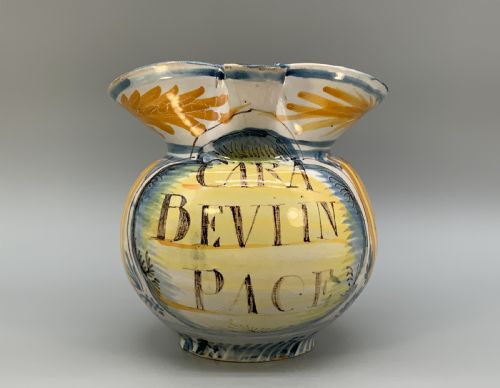
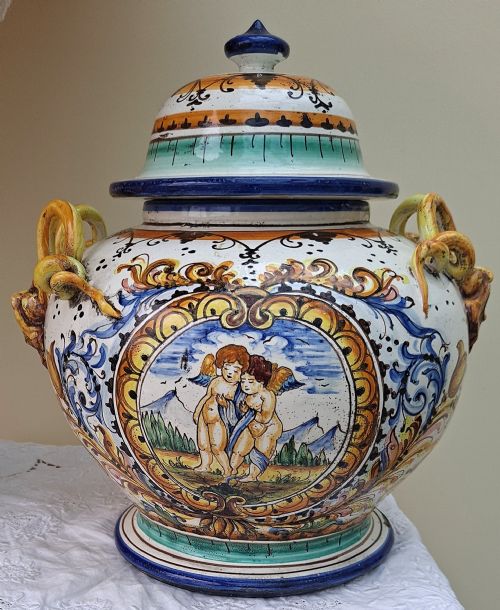
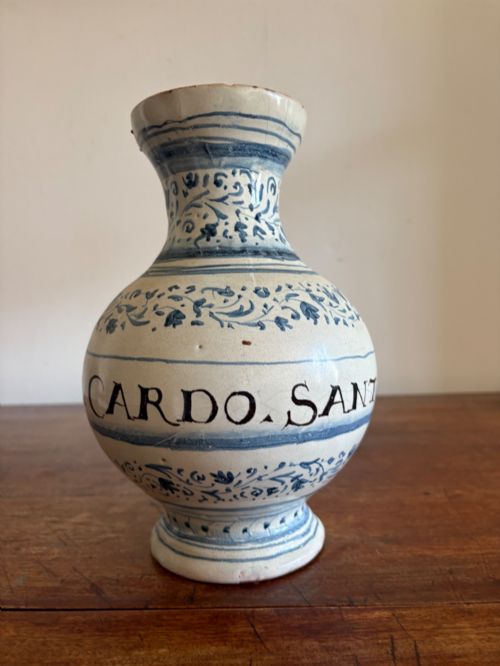


Italian Maiolica Jars
These Italian maiolica jars bring vibrant polychrome tin glaze and storied apothecary forms straight into your interior.
Italian Maiolica Jars
Italian maiolica jars encompass tin-glazed earthenware vessels produced across several centuries, including traditional pharmacy jugs and lidded vases. When you search for Italian maiolica jars, you encounter pieces spanning the eighteenth century, nineteenth century, and early twentieth century.
The selection ranges from blue and white albarello drug pharmacy jars to polychrome decorative vases and water vessels. Styles lean towards eighteenth-century Italian, Baroque, and Renaissance Revival aesthetics.
Apothecary jars and pharmacy jugs form the core of these listings, often featuring painted inscriptions or classical motifs. Vases and urns appear alongside these drug jars, offering varied display options for collectors.
How they were made
Potters shaped these vessels from terracotta and earthenware before applying an opaque tin glaze. This white glaze provided a smooth surface for subsequent hand-painted decoration.
Makers utilised pigments such as manganese, yellow, and cobalt blue to create polychrome and blue and white designs. Firing fixed these mineral colours into the absorbent tin-glazed surface.
Listings feature earthenware and terracotta materials finished with tin glaze, spanning the eighteenth to early twentieth centuries.
What varies in quality
The precision and detail of the hand-painted decoration separate simpler utility wares from finer display pieces. Mastery in handling polychrome pigments or controlling cobalt blue lines dictates visual impact.
Form and proportion also define the standard of a piece, especially in lidded vases and pharmacy jugs where lid retention and symmetry matter greatly.
The Italian Maiolica Jars Glossary
- Maiolica
- Tin-glazed earthenware produced in Italy, known for colourful painted decoration. This technique creates an opaque white background suitable for intricate artistic work.
- Albarello
- A cylindrical earthenware jar designed for holding pharmacy drugs and ointments. Originating in the Middle East, this form became a staple of Italian apothecary collections.
- Tin Glaze
- A ceramic glaze made opaque by the addition of tin oxide. It provides the characteristic white canvas for painting before the final kiln firing.
- Polychrome
- Decoration employing several colours rather than a single hue. In these ceramics, it typically combines manganese, yellow, and blue pigments.
- Faience
- European tin-glazed earthenware, often used to describe pieces following Italian maiolica traditions. The term connects closely with tin-glazed production across the continent.
Italian Maiolica Jars: Frequently Asked Questions
What were italian maiolica jars used for?
These vessels originally served practical functions in apothecaries and pharmacies, holding dry drugs, herbal remedies, and liquid medicines. Many feature specific painted inscriptions to identify their medicinal contents.
Over time, collectors repurposed them purely as decorative objects. Their striking glazes made them prominent display pieces in domestic interiors.
How do I date an italian maiolica jar?
Dating relies on stylistic clues, palette choices, and body materials. Eighteenth-century examples often display restrained blue and white painting or specific regional forms like the albarello.
Later nineteenth-century pieces frequently embrace Renaissance Revival styles with heavier polychrome schemes. Examining the ceramic body and glaze characteristics helps confirm the production era.
How do I clean and care for a jar?
Dusting gently with a dry, soft cloth is the safest way to maintain the tin-glazed surface. Avoid harsh chemical cleaners or soaking, as moisture can penetrate old earthenware.
Keep these vessels away from direct sunlight and damp environments to protect the painted pigments and ceramic body.
Are all these jars from italy?
While the style originates in Italy, related tin-glazed earthenware falls under continental faience traditions. Makers across Europe produced pieces emulating Italian aesthetics.
Examining the specific titles and listed origins helps distinguish traditional Italian works from broader continental interpretations.