

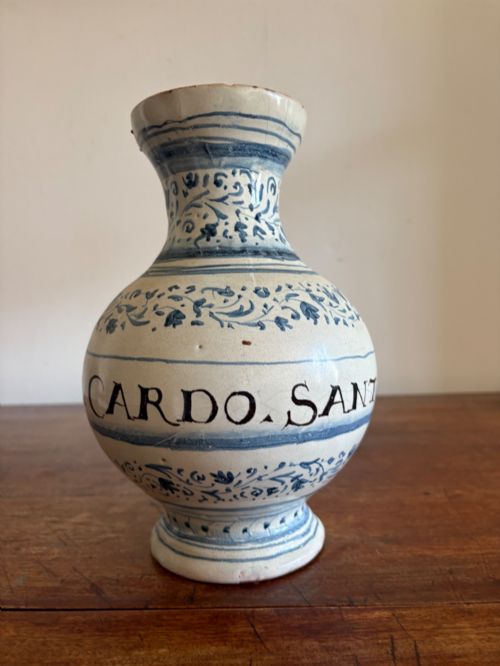


Tin Glazed Drug Jar
These tin glazed drug jar examples bring centuries of apothecary history into your home, offering painted pharmacy inscriptions and traditional forms.
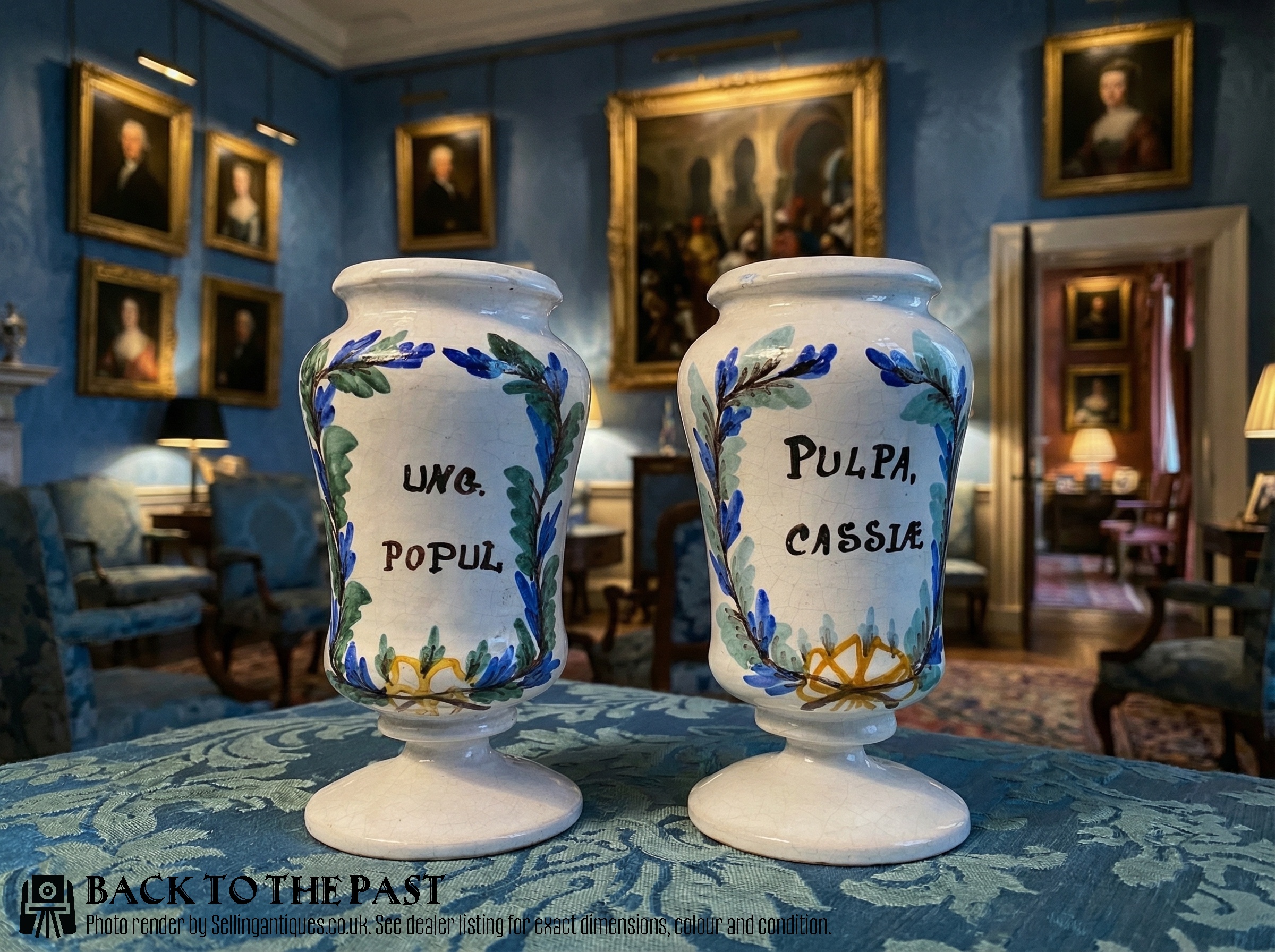
Tin Glazed Drug Jar
When you search for a tin glazed drug jar, you encounter apothecary vessels designed to hold medical ingredients, syrups and dry preparations in historical dispensaries. These ceramic containers span the seventeenth, eighteenth and nineteenth centuries, reflecting domestic and continental apothecary traditions.
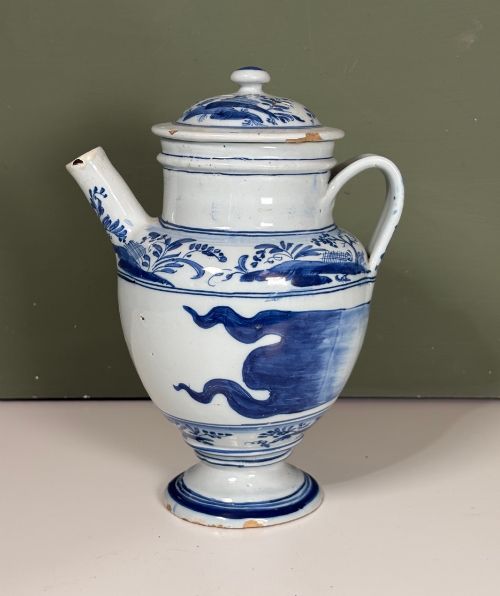
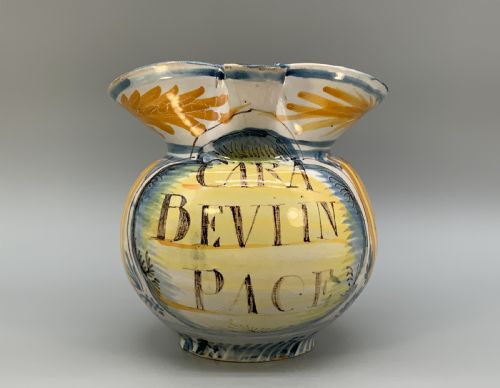
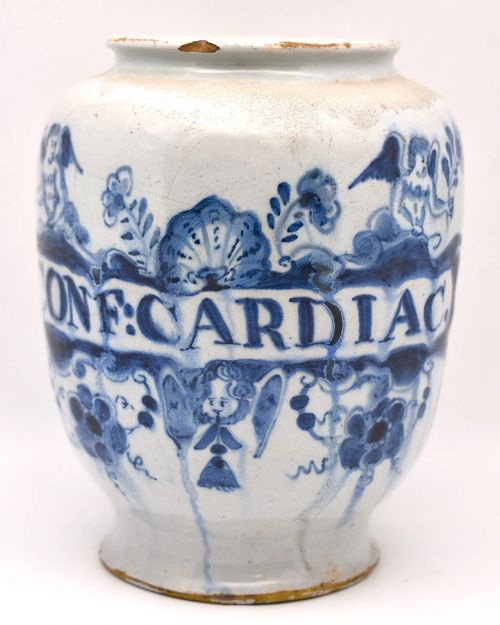
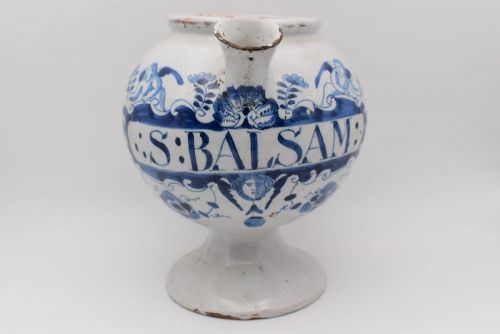
The pieces you meet here include albarello shapes, pharmacy jugs and wet drug jars bearing painted labels or abbreviated contents. English delftware, Dutch delft, Italian majolica and continental faience represent the main origins seen across these listings.
Most examples date from the eighteenth century, accompanied by earlier seventeenth-century survivals and later nineteenth-century interpretations. Collectors select these items for their hand-painted cobalt pigment decoration and direct connection to historical medicine.
Materials and construction
Potters formed these vessels from earthenware clay, shaping them into cylindrical albarelos, handled jugs and jars. The raw body received an opaque tin glaze that created a smooth white surface suitable for subsequent painting.
Decorators applied cobalt pigment, manganese and yellow pigments directly onto the unfired or raw glaze before the second firing. This technique allowed the metallic oxides to fuse with the tin glaze, producing distinct blue and polychrome pharmacy inscriptions.
Materials recorded across the inventory include earthenware, tin glaze, cobalt pigment, manganese and yellow oxides.
Judging quality in tin glazed drug jar examples
Quality rests in the clarity of the painted pharmacy labels, the crispness of the cobalt pigment lines and the complexity of the surrounding cherub, scroll or floral motifs. Superior pieces display confident brushwork and balanced proportions across the waisted body.
The stability of the tin glaze and the preservation of the painted surface distinguish finer vessels from more worn examples. Early origins, particularly seventeenth-century specimens and documented Italian or English pieces, command greater attention from experienced collectors.
The Tin Glazed Drug Jar Glossary
- Albarello
- A cylindrical pharmacy jar designed with an indented waist for secure handling during dispensary use. This shape originated in the Middle East and was widely adopted by Italian and Dutch potters.
- Tin Glaze
- An opaque white ceramic glaze produced by adding tin oxide to a lead glaze base. It provides the characteristic canvas for painted decoration on delftware and majolica.
- Majolica
- A type of Italian tin-glazed earthenware decorated with metallic oxide pigments. These pieces often feature rich polychrome or blue and white historical designs.
- Faience
- A European term for tin-glazed earthenware produced outside of Italy, particularly in France, Holland and England. The technique mirrors majolica production methods.
- Wet Drug Jar
- A specialised pharmacy vessel featuring a spout or wider neck designed to hold liquid syrups, oils and medical preparations. They frequently include painted handle attachments.
Tin Glazed Drug Jar: Frequently Asked Questions
What did a tin glazed drug jar store?
These vessels held dried herbs, medicinal powders, ointments and liquid syrups used by apothecaries and chemists.
Labels painted on the front identified specific contents like balsams or plant extracts for quick retrieval in a busy dispensary.
How do you date an old drug jar?
Dating relies on stylistic shifts in the painted lettering, the shape of the albarello body and the composition of the tin glaze.
Seventeenth-century pieces often show heavier earthenware bodies and specific blue and white motifs, while eighteenth-century examples display more refined lettering and polychrome details.
Were these jars used in English pharmacies?
English apothecaries utilised domestic delftware jars alongside imported continental faience and Italian majolica.
English delftware drug jars frequently feature abbreviated Latin inscriptions and distinctive royal or municipal pharmacy markings.
How should I display a pharmacy jar?
These ceramic vessels suit open shelving, sideboards or cabinets where their painted fronts remain visible.
Keep them away from direct moisture and handle them carefully around the unglazed foot rings.