


Antique Ceramic Pharmacy Pots
Antique ceramic pharmacy pots are practical vessels holding medicinal ingredients, sought after by collectors for their historical apothecary labels and rich tin-glazed finishes.
Antique Ceramic Pharmacy Pots
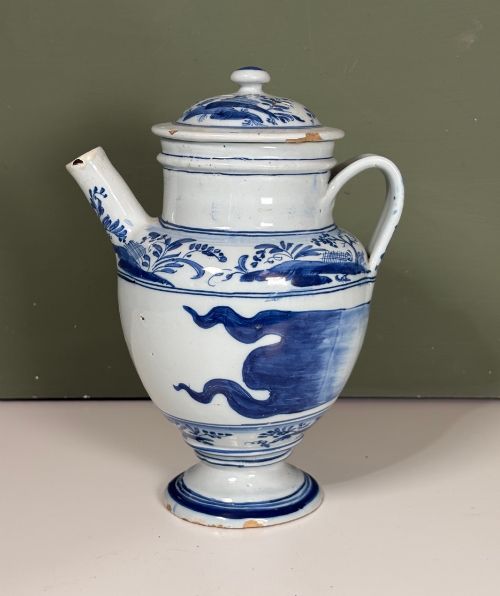
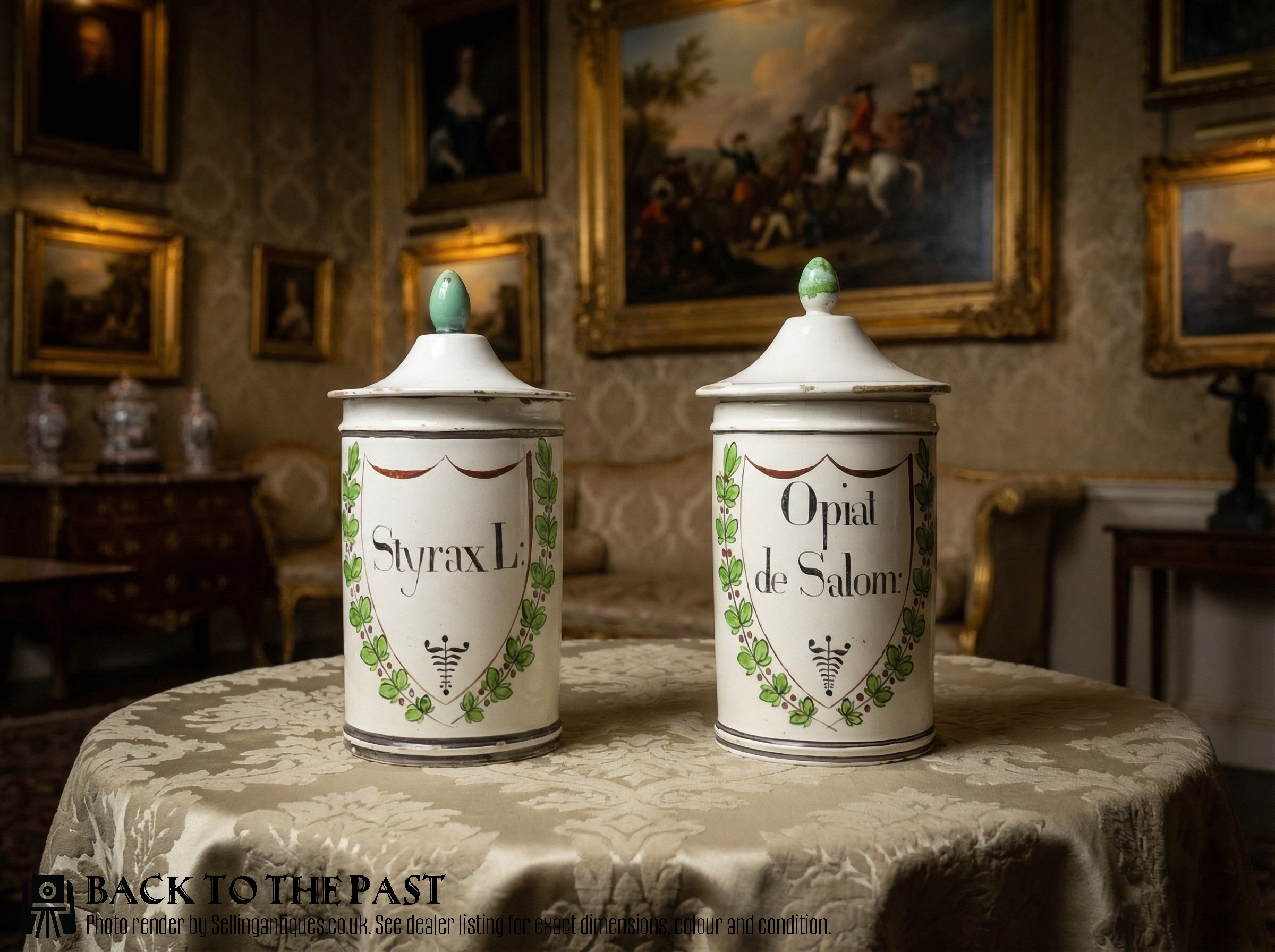
Antique ceramic pharmacy pots encompass apothecary jars, drug jars, and wet drug jugs designed to hold medicinal preparations in pharmacies and dispensaries. Buyers seeking these items encounter forms ranging from cylindrical albarellos to handled jugs and covered jars.
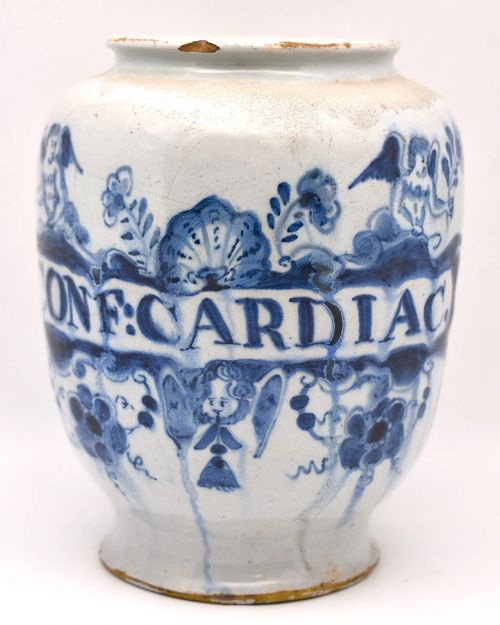
The pieces on this page span the eighteenth and nineteenth centuries, originating from English, Dutch, and Italian traditions. Tin-glazed earthenware and earthenware forms dominate, decorated with cobalt pigment or polychrome painting alongside early pharmaceutical inscriptions.
How they were made
Potters shaped these vessels from earthenware before applying a tin glaze that created an opaque, smooth white surface suitable for painted decoration. Artisans then utilised cobalt pigment and polychrome pigments to handwrite drug labels and botanical motifs directly onto the tin-glazed body.
Many examples required high-temperature firing to bond the glaze and pigment to the ceramic base, resulting in durable containers built to withstand daily use in apothecary shops.
Listings span the eighteenth and nineteenth centuries, featuring tin-glazed earthenware and standard earthenware materials decorated with cobalt pigment.
What varies in quality
Quality in these vessels rests upon the clarity of the painted pharmaceutical inscription and the precision of the cobalt pigment or polychrome detailing against the tin glaze. Pieces featuring well-preserved hand-painted pharmacy labels and intact covers achieve greater visual distinction.
The sophistication of the form, such as the balanced proportions of an Italian albarello or an English delftware drug jar, separates standard utilitarian containers from finer examples of ceramic art.
Samuel Alcock and Co
The Antique Ceramic Pharmacy Pots Glossary
- Albarello
- A type of cylindrical pharmacy jar designed with an indented waist for easy gripping, commonly used to store dry herbal remedies and ointments.
- Tin-glazed earthenware
- Pottery covered with a lead glaze made opaque by the addition of tin oxide, providing a white background for painted decoration.
- Cobalt pigment
- A blue colouring agent utilised under the glaze to create deep, stable hues on early ceramic vessels.
- Faience
- European tin-glazed earthenware, particularly associated with French, Italian, and Dutch production methods from past centuries.
- Drug jar
- A ceramic container specifically labelled to hold medicinal ingredients, herbs, or syrups in an apothecary shop.
Antique Ceramic Pharmacy Pots: Frequently Asked Questions
What were antique ceramic pharmacy pots used for?
These vessels served as storage containers for dried herbs, medicinal powders, ointments, and liquid syrups in historic apothecary shops and dispensaries. Apothecaries relied on them to keep active ingredients organised and protected from moisture on wooden shelves.
Each pot was clearly labelled with its contents so practitioners could quickly identify the correct medicine during busy working hours. Over time, many surplus jars transitioned from utilitarian shop fittings into decorative display items.
How do I date an antique pharmacy pot?
Dating relies on examining the ceramic body, the characteristics of the tin glaze, and the style of the painted pharmaceutical lettering. Eighteenth-century examples often feature English or Dutch delftware bodies with blue cobalt inscriptions, while nineteenth-century pieces may show different earthenware compositions.
Shape is another helpful indicator, as traditional albarello forms shifted toward varied Victorian jar designs over the decades. Comparing the style of the hand-written labels to known historical pharmacy naming conventions helps narrow down the period of manufacture.
How do I display pharmacy pots at home?
Displaying these vessels on open wooden shelving or within glass-fronted cabinets allows their historic labels and painted decoration to stand out. Grouping pots of varying heights, such as pairing a tall albarello with a handled wet drug jug, creates an engaging visual arrangement.
Keep them away from areas of high humidity or direct sunlight to protect the fragile tin glaze and painted surfaces over time. Gentle dusting with a dry cloth is all that is needed to maintain their appearance.
What is the difference between wet and dry drug jars?
Dry drug jars typically feature wide, open mouths designed to allow easy access to solid herbs, powders, and electuaries stored inside. They often have cylindrical bodies like albarellos that sat neatly on dispensary shelves.
Wet drug jugs include spouts or handles and were built to contain liquid syrups, oils, and distilled waters used in compounding prescriptions. The addition of a secure pouring lip prevented sticky liquids from spilling down the sides of the vessel.