


18th Century Faience Jars
These 18th century faience jars are tin-glazed earthenware vessels holding centuries of history, prized by collectors for their hand-painted blue and white or polychrome surfaces.
18th Century Faience Jars
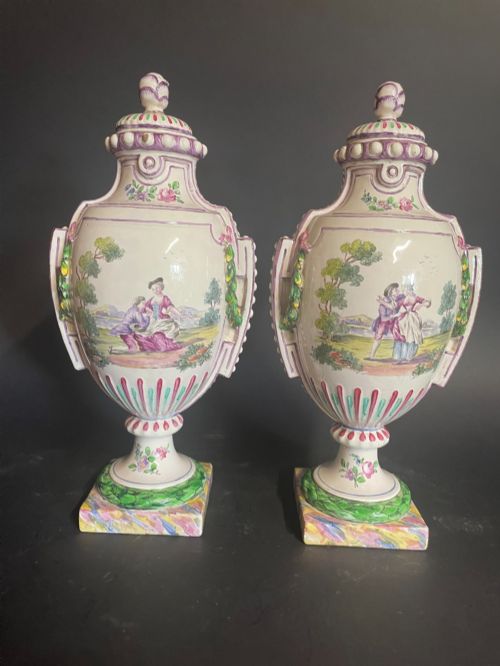
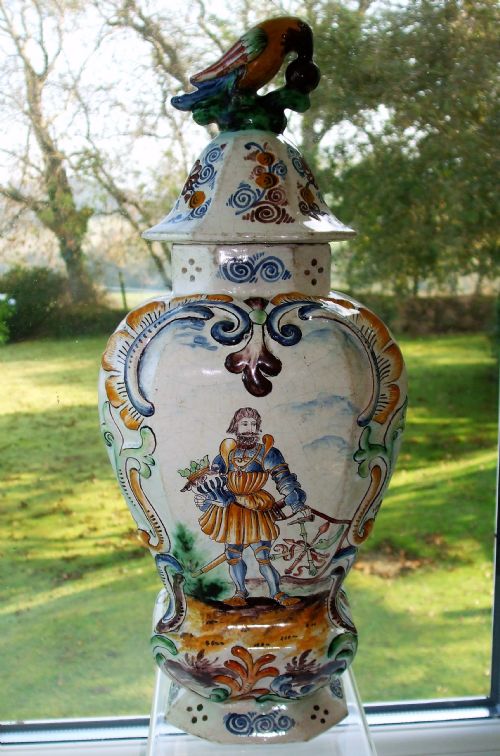
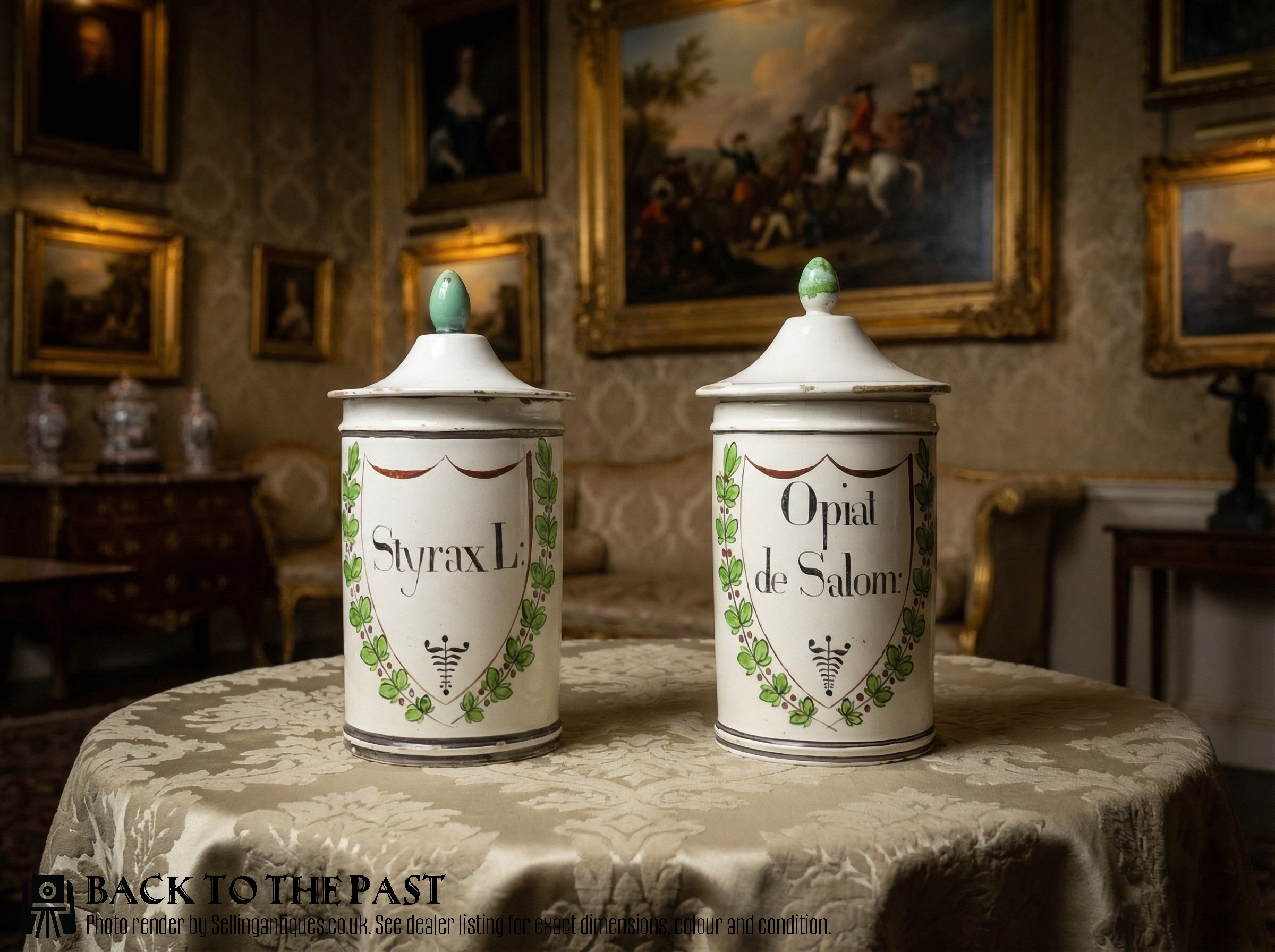
When you search for 18th century faience jars, you encounter a specialised group of ceramic vessels that served both practical apothecary roles and decorative purposes in European homes and pharmacies. The forms on this page span Dutch Delftware, Italian majolica, and French faience, ranging from tall albarelli to handled urns and covered drug jars.
Most pieces date to the eighteenth century, though occasional later interpretations from the nineteenth century also appear. Buyers meet various shapes, including cylindrical drug jars inscribed with pharmaceutical abbreviations and monumental vases meant for display.
What varies in quality
The distinction between ordinary and exceptional examples lies primarily in the confidence and detail of the hand-painted decoration. Finer pieces display crisp botanical motifs, heraldry, or lettering executed by skilled hands rather than hurried workshop production.
The purity of the tin glaze and the precision of the initial ceramic throwing also define the tier of the piece. Smooth, even glazing without excessive bubbling elevates the visual weight of the vessel.
Some jars are labelled with mysterious historical pharmaceutical abbreviations like Aq Di Greedri, preserving centuries-old apothecary secrets.
Sceaux Faience·Savona Majolica
The 18th Century Faience Jars Glossary
- Albarello
- A cylindrical earthenware jar used in pharmacies to store ointments and dry drugs. Its waist is typically pinched to allow easy gripping when hands are slippery.
- Tin Glaze
- A ceramic glaze made opaque by the addition of tin oxide, creating a white background for pigments. It absorbs painted colours during firing.
- Polychrome
- Decoration utilising multiple colours rather than a single pigment like blue. In these jars, it often includes yellows, greens, and oranges alongside cobalt.
18th Century Faience Jars: Frequently Asked Questions
What were 18th century faience jars used for?
These vessels primarily functioned as apothecary containers holding syrups, dried herbs, and medical ointments in European pharmacies and dispensaries. Their opaque tin-glazed walls protected sensitive contents from light.
Over time, many of these utilitarian containers transitioned into purely decorative objects displayed in cabinet collections and grand interiors.
What is an albarello jar?
An albarello is a specific cylindrical apothecary jar shape imported from the Middle East through Italy and spread across Europe. The waisted body allowed pharmacists to lift the jar easily from crowded shelves.
Many examples feature painted cartouches inscribed with abbreviated Latin pharmaceutical names.
How should I clean my faience jar?
Dust these antique ceramics gently with a soft, dry brush to remove surface debris without harming the historic glaze. Avoid using water, soap, or cleaning agents, as tin glaze can be porous and vulnerable.
Keep the jars away from direct sunlight and areas subject to sudden temperature fluctuations to preserve the ceramic body.