

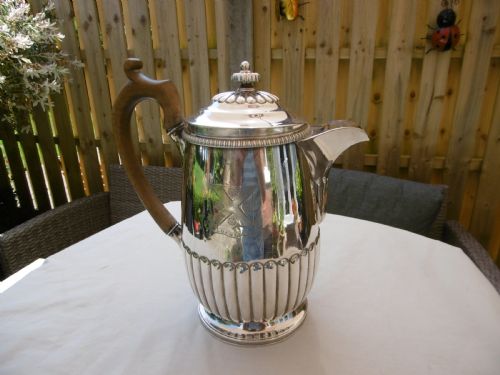


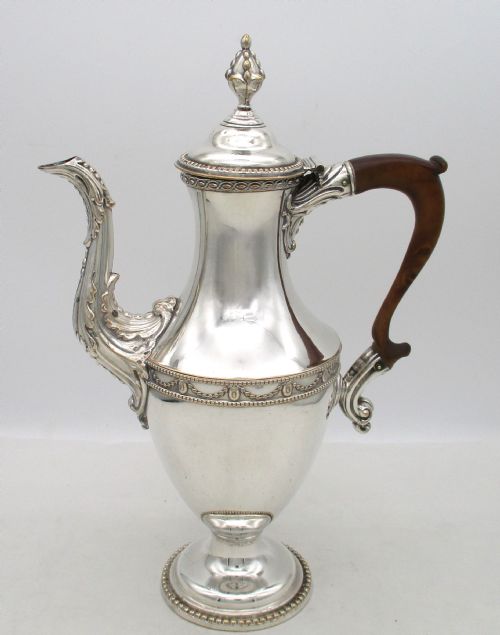


Georgian Sheffield Plate Jug
A georgian sheffield plate jug combines layered silver and copper with crisp period form, offering tangible eighteenth and nineteenth century history.
Georgian Sheffield Plate Jug
When you search for a georgian sheffield plate jug, you find holloware vessels originating primarily from the eighteenth and nineteenth centuries, including the Regency era. The forms span beer jugs, wine ewers, coffee jugs, water jugs, and communion jugs, alongside related teaware like coffee pots and sugar and cream sets.
Most pieces on this page stem from the Georgian period, the eighteenth century, and circa 1800 to 1820. Makers utilised silver plate, old Sheffield plate, copper, and hardwood handles to build robust serving vessels for domestic and ecclesiastical use.
The aesthetic mirrors the prevailing styles of the era, incorporating Georgian and Regency designs, with occasional examples showing Victorian ecclesiastical influence. These vessels range from tall coffee pots to quart tankards, displaying heraldic crests and early marks.
Assessing quality in plated wares
Quality rests upon the preservation of the fused silver layer over the underlying copper core, noting where wear reveals the base metal beneath. Crispness in engraved crests, armorials, and early maker marks distinguishes superior workshop output.
Proportion and the integrity of applied decorative borders separate standard utilitarian vessels from finer showroom pieces. The retention of original wooden handles and matching lids dictates the historical completeness of the jug.
Several jugs bear the weight of history alongside family crests, ready to pour tea or beer just as they did two centuries ago.
Matthew Boulton·John Hoyland
The Georgian Sheffield Plate Jug Glossary
- Old Sheffield Plate
- A composite material made by fusing silver to a copper ingot before rolling them into sheets together. This technique defines the primary manufacturing process for these items.
- Ewer
- A large jug with a wide spout and a curved handle, traditionally used for holding and pouring wine or water. Fine Regency examples often served decorative as well as functional roles.
- Quart Tankard
- A large drinking vessel designed to hold a quart of liquid, typically featuring a sturdy handle and a cylindrical body. These pieces reflect robust tavern and domestic drinking customs of the Georgian period.
- Communion Jug
- A specialised vessel intended for ecclesiastical use in church services. The evidence includes nineteenth-century examples associated with specific locations like Poplar.
- Early Marks
- Stamps or symbols placed on metalwork by makers to identify their workshop before formal assay office standards became universal. These marks help attribute pieces to specific silversmiths.
Georgian Sheffield Plate Jug: Frequently Asked Questions
How do I clean a georgian sheffield plate jug?
Clean these items using mild soapy water and a soft cloth to protect the thin layer of silver fused over the copper base. Avoid abrasive polishes that can wear away the plating and expose the underlying metal.
Store the vessel in a dry environment to prevent tarnishing and corrosion of the exposed edges where the copper meets the silver.
What is the difference between silver plate and old Sheffield plate?
Old Sheffield plate is created by thermally fusing a sheet of silver to a copper core, whereas later electroplate applies silver via an electrical current. This mechanical fusion leaves distinct edge characteristics on older pieces.
Examining the rim or worn spots often reveals the reddish copper layer showing through the thinner silver sheet characteristic of the earlier fusing method.
Were these jugs used for water or beer?
The evidence shows specific categorisations for water jugs, beer jugs, wine ewers, and coffee pots. Each form was tailored to hold and pour its specific beverage during dining or social gatherings.
Larger vessels like quart tankards and beer jugs catered to communal drinking, while tall coffee pots served the growing consumption of hot beverages in the eighteenth and nineteenth centuries.
How can I tell a Georgian piece from a Regency one?
Georgian pieces often display robust, swelling bodies and traditional applied wire borders, reflecting the broader eighteenth-century aesthetic. Regency items tend to incorporate classical revival motifs inspired by Greek and Roman forms.
Looking at the overall silhouette and handle attachment helps date the vessel alongside any engraved crests or stylistic markers recorded in the listing.