


Antique Metalware Pitcher
An antique metalware pitcher is a functional vessel forged in copper, brass, pewter, or silver plate for service and display.
Antique Metalware Pitcher
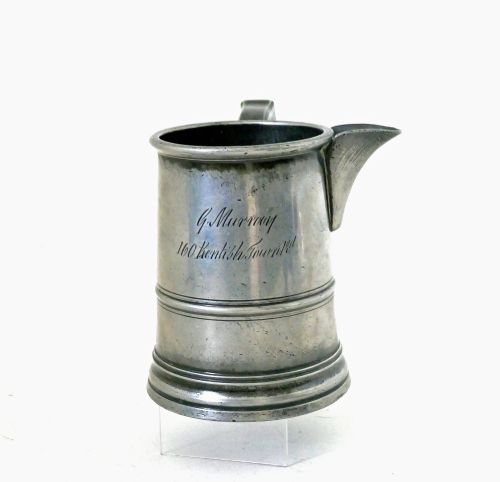
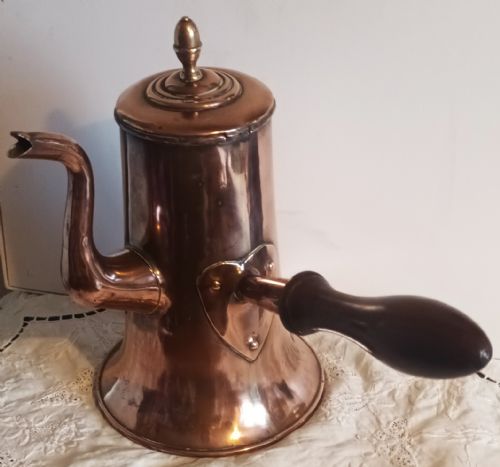
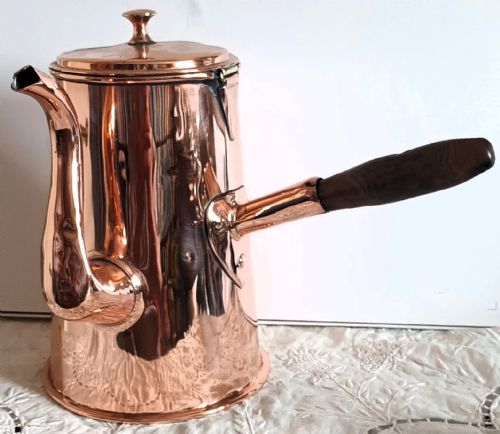
When you search for an antique metalware pitcher, you encounter a varied selection of functional pouring vessels spanning centuries of domestic, ceremonial, and tavern use. These range from heavy copper measuring jugs and Georgian coffee pots to pewter tappit hens, spired flagons, and ornate Art Nouveau designs.
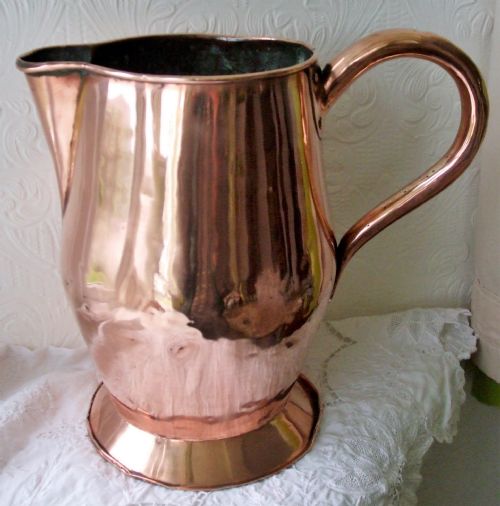
The versions most frequently met on this page are generous copper jugs and measures originating from the Georgian and Victorian eras, alongside pewter flagons and ewers. Formats stretch from small noggin capacity measures to colossal lidded pitchers and graduated sets designed for commercial or household service.
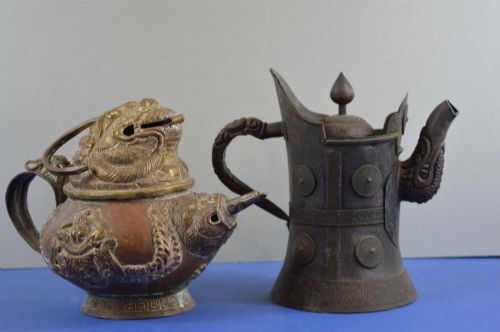
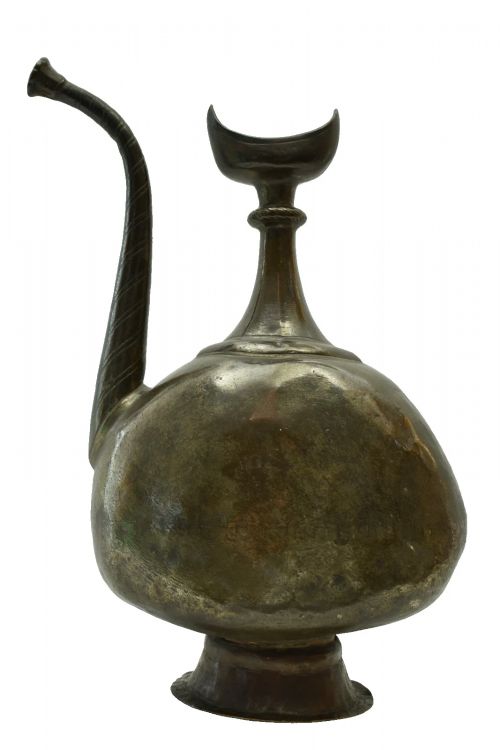
Geographic origins extend across English, Scottish, and continental European workshops, as well as distinct traditions including Ottoman, Tibetan, and Persian metalwork. Forms adapt accordingly, appearing as trefoil oinochoe, Islamic aftaba ewers, ceremonial tea vessels, and communion flagons.
How they were made
Makers shaped heavy sheets of copper and brass through hammering, raising, and seam soldering to build rigid bodies capable of holding substantial liquid capacity. Surface finishes range from plain polished metal to hammered Art Nouveau textures and intricate chased or engraved detailing.
Pewter vessels relied on alloy casting in moulds, producing substantial walls for forms such as spire flagons and tappit hens, often finished with applied handles and thumbpieces. Silver plating and electrotype techniques later permitted complex sculptural forms like wine jugs and beakers with detailed relief decoration.
Inlaid metalwork combined bronze or copper bases with silver and other metals to create patterned surfaces, while specialised plating methods like Old Sheffield Plate fused silver layers onto copper foundations.
Antique Metalware Pitcher Retail Price Guide 2026
Typical asking prices for metalware pitcher among the pieces listed under this phrase on Sellingantiques today, from the lower quarter to the upper quarter. They describe what is for sale here now, not the wider market.
Several copper jugs bear clear evidence of hard tavern life, having served generous pints of ale in busy nineteenth-century clubs.
What varies in quality
The standard of an antique metalware pitcher rests primarily upon the integrity of its construction, the weight of the metal used, and the directness of its form. Heavy-gauge copper and thick-walled pewter indicate pieces built for enduring utility rather than light decorative display.
The refinement of surface execution distinguishes ordinary vessels from superior examples, visible in the precision of hand-engraving, the clean joinery of spouts and handles, and the survival of original touchmarks or early maker stamps. Graduated sets show particular distinction when all matching components remain together with uniform patination.
Artistic ambition shapes the upper tier of the range, where recognised designers and firms integrate distinct aesthetic movements such as Art Nouveau or Arts and Crafts into the functional silhouette of the jug.
Joseph Sankey·Henry Bourne·Robert Iles·WMF·Orme Evans and Co·Loftus of Oxford Street·Maison Christofle
The Antique Metalware Pitcher Glossary
- Ewer
- A large jug with a wide spout and curved handle, traditionally used for holding water or wine. Many surviving examples date from Islamic and European classical traditions.
- Flagon
- A large vessel with a handle and lid, frequently used for holding beer or wine. Spire variants feature tall, tapered covers.
- Tappit Hen
- A traditional Scottish pewter measuring jug featuring a prominent lid and distinctive knob on top. These items typically held specific liquid volumes like the Scots pint.
- Old Sheffield Plate
- An early composite material made by fusing a thin layer of silver to a thicker copper base. This technique preceded modern electroplating.
- Electrotype
- A metal object produced by depositing metal via an electrical current onto a mould. This process allowed Victorian makers to replicate complex sculptural forms.
- Aftaba
- An Islamic metal ewer characterised by a long neck, bulbous body, and curved spout, often utilised for ritual ablutions.
Antique Metalware Pitcher: Frequently Asked Questions
What were antique copper pitchers used for?
These vessels served diverse practical roles in domestic kitchens, taverns, and commercial establishments for measuring, storing, and pouring liquids like ale, water, and coffee.
Larger graduated sets and tavern jugs managed high-volume service, while smaller capacities handled daily household tasks.
How do I identify a pewter flagon?
Pewter flagons are characterised by their sturdy alloy construction, heavy lids, and upright spired silhouettes designed for secure liquid containment.
Look for early maker stamps, touchmarks, and capacity indicators near the rim or handle to help confirm the manufacturing period.
Are these metal pitchers safe for drinks?
While historic pitchers were made for beverage service, many antique pieces contain lead in older pewter alloys or display interior wear from centuries of use.
Collectors generally treat these vessels as decorative objects or dry display pieces rather than utilising them for modern consumption.
How should I clean antique metalware?
Maintenance requires gentle dusting and occasional cleaning with appropriate non-abrasive metal treatments to preserve the natural historic patina.
Avoid aggressive polishing that strips away surface character and historical marks accumulated over centuries.