

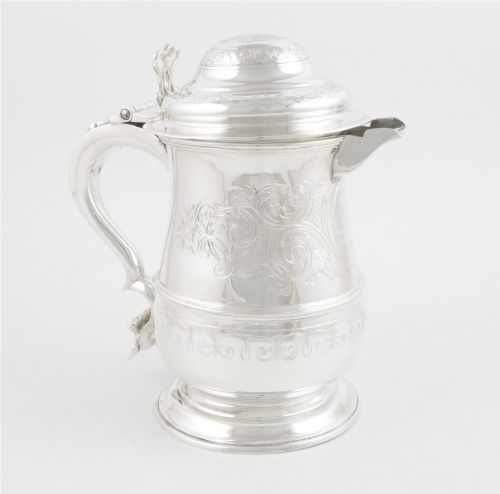
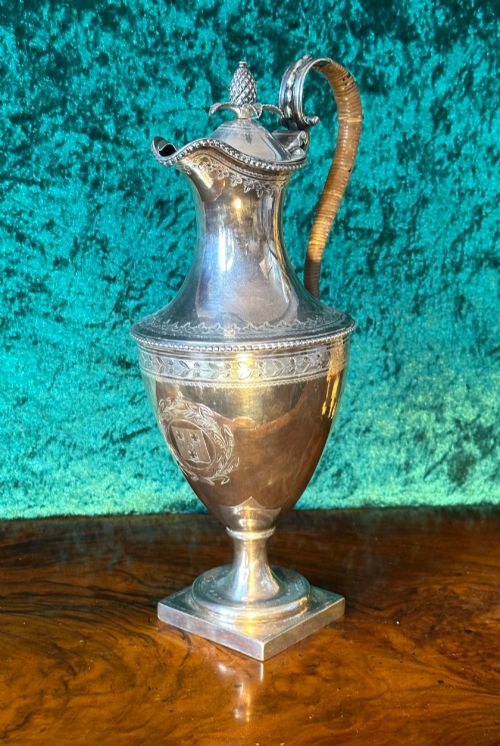
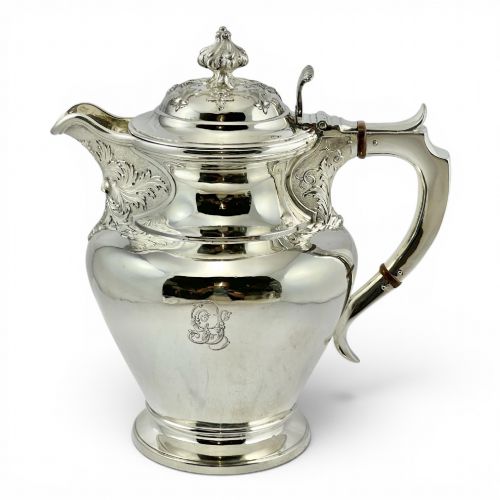


Georgian Silver Water Pitcher
A georgian silver water pitcher brings remarkable Georgian form and weight to the table, and collectors prize them for their striking presence.
Georgian Silver Water Pitcher
When you search for a georgian silver water pitcher, you encounter diverse serveware including ewers, jugs, and coffee pots from the Georgian era through to the nineteenth century. These vessels range from solid sterling silver examples to Old Sheffield Plate and silver plate constructions, alongside alternative metals like copper and pewter.
The objects listed display prominent Neoclassical and Rococo stylistic influences, embodying the aesthetic shifts of the eighteenth and nineteenth centuries. Alongside the primary silver and plated pitchers, related forms such as beer jugs and ale jugs appear in the selection.
How they were made
Makers utilised sterling silver, Old Sheffield Plate, and standard silver plate over base metals, often mounting the vessels with handles incorporating wood or wicker elements. Pewter and copper also appear as primary materials in specific ale and beer jugs from the eighteenth century.
Construction techniques involve careful metal shaping and plating methods suited to utilitarian and decorative serveware, spanning the craftsmanship of the eighteenth and nineteenth centuries.
Georgian Silver Water Pitcher Retail Price Guide 2026
Typical asking prices for georgian silver water pitcher among the pieces listed under this phrase on Sellingantiques today, from the lower quarter to the upper quarter. They describe what is for sale here now, not the wider market.
What varies in quality
Quality rests in the purity of the metal and the precision of the period styling, distinguishing simple utility vessels from finer Neoclassical and Rococo creations. The presence of early marks and identifiable maker attribution elevates certain examples above unmarked pieces.
The integrity of the original plating on Old Sheffield Plate or the quality of wooden and wicker handle fittings plays a significant role in separating standard domestic items from superior survivals.
John Scofield
The Georgian Silver Water Pitcher Glossary
- Old Sheffield Plate
- A composite material made by fusing a thin sheet of silver to a thicker copper base. This early technique produces a distinctive warm tone as the underlying copper occasionally shows through.
- Ewer
- A large jug with a wide spout and a curved handle, traditionally used for holding and pouring water. Georgian examples often display elaborate Neoclassical or Rococo ornamentation.
- Neoclassical
- A style dominating late eighteenth-century design, drawing inspiration from classical antiquity. It is characterised by symmetrical forms and restrained decorative motifs.
- Rococo
- An ornate artistic style prominent in the eighteenth century, defined by asymmetrical scrollwork and botanical motifs. These decorative flourishes appear on several jugs from the period.
Georgian Silver Water Pitcher: Frequently Asked Questions
What is a georgian silver water pitcher?
A georgian silver water pitcher is a serving vessel produced during the Georgian period or under its stylistic influence, utilised for pouring water or other beverages at the table.
These pieces encompass sterling silver, silver plate, and Old Sheffield Plate forms, often featuring Neoclassical or Rococo design details.
How do I identify periods?
Identifying periods involves examining the stylistic markers such as Neoclassical symmetry or Rococo ornamentation, alongside any available date markers or hallmarking.
The selection includes items from the eighteenth century, the Georgian era proper, and nineteenth-century interpretations.
Were these pitchers used for water?
While designated as water pitchers or ewers, many similar vessels served multiple domestic functions, including holding beer, ale, or coffee.
Historical usage varied according to the specific form, with larger capacity jugs often serving communal beverages at table.
What materials are common?
The primary materials include sterling silver, silver plate, and Old Sheffield Plate, which uses a fused layer of silver over copper.
Secondary materials like wood and wicker appear on handles, while related jugs in this category are made from copper or pewter.