



Silver Plated Hot Water Pot
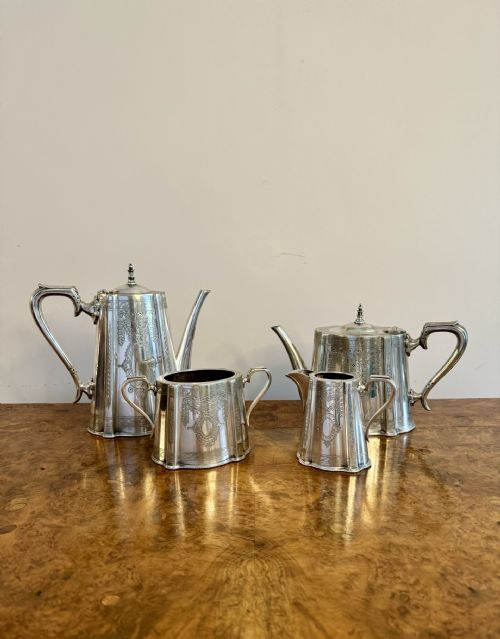
A silver plated hot water pot brings the warmth of historic hospitality to your table, offering the polished gleam of past centuries.
Silver Plated Hot Water Pot
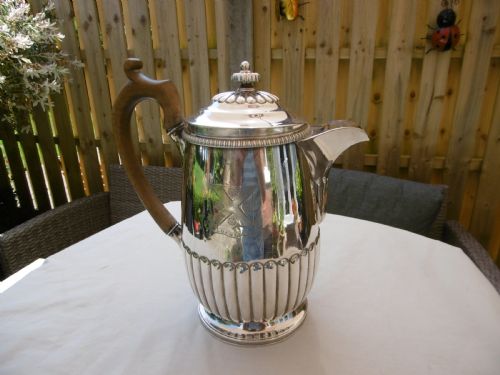
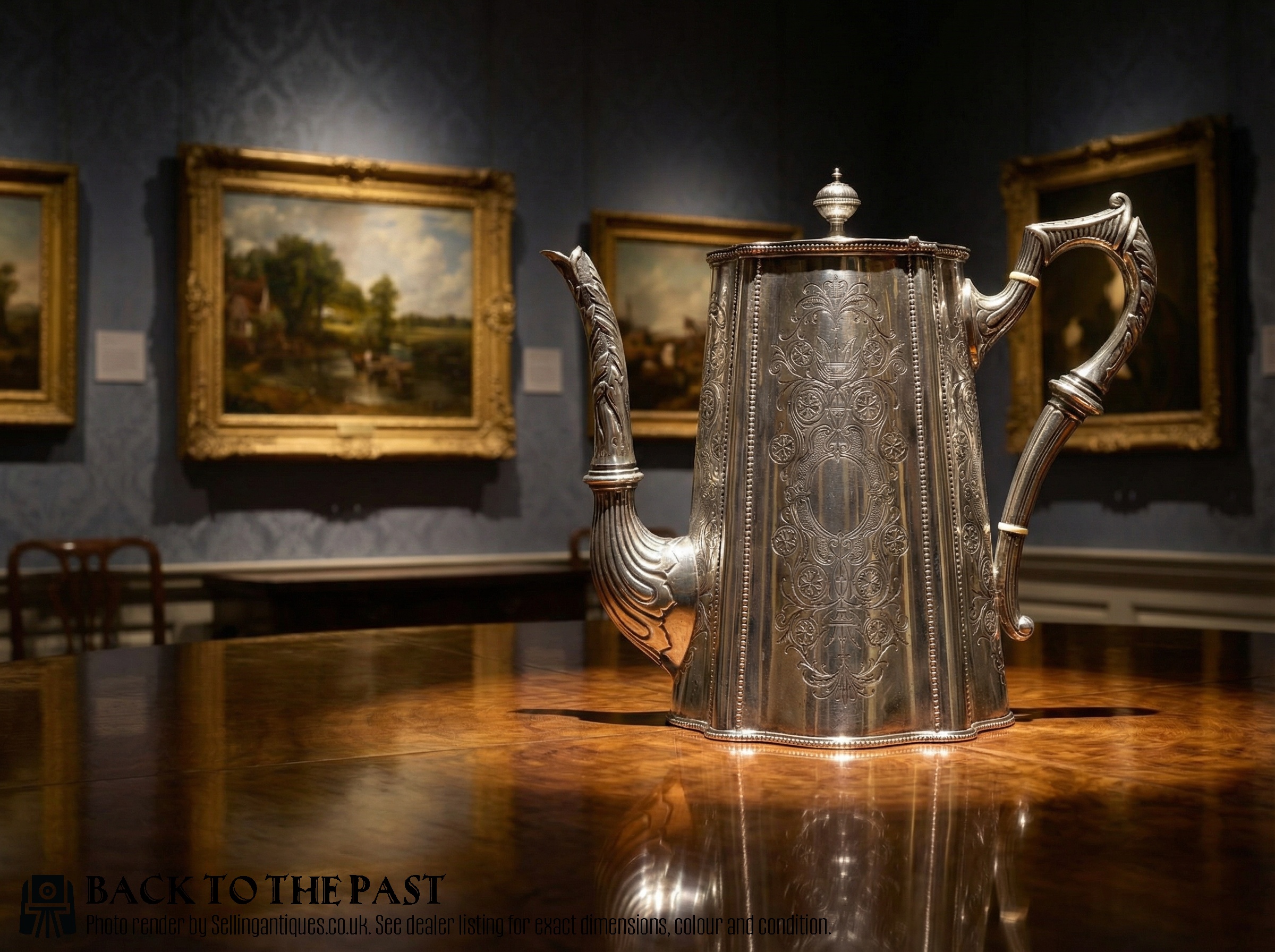
A silver plated hot water pot is a vessel designed to hold and serve steaming water for tea or coffee, standing as a staple of historic table service. When you search for this phrase, you encounter forms that range from simple Georgian jugs to ornate Edwardian sets and Victorian services.
The pieces on this page span the eighteenth, nineteenth, and early twentieth centuries, capturing periods such as Regency, Georgian, and Edwardian. You see individual coffee pots, larger tea and coffee sets, and dedicated hot water jugs created across different British eras.
How they were made
Early examples utilise Old Sheffield Plate, a technique fusing a thin sheet of silver to a thicker copper base, sometimes visible at seams or wear points. Later pieces employ electroplated nickel silver as the base method for applying silver over a mixed metal core.
Handles and insulators incorporate materials such as wood, bone, and ebony to prevent heat transfer during service. Individual makers integrate cast mounts, crests, and decorative borders alongside hand-finished silver plating.
Several pots retain personal family crests, meaning your tea service might once have belonged to a strict Victorian household.
What varies in quality
The distinction between standard utility vessels and finer pieces lies in the crispness of the chased decoration and the weight of the metal. Heavier gauge metal and clear maker marks separate workshop pieces from mass-produced items.
The preservation of the original plating layer and the integrity of insulating handle materials determine the overall standing of an antique pot.
Walker and Hall·Matthew Boulton·John Hoyland·Boardman Glossop and Co
The Silver Plated Hot Water Pot Glossary
- Old Sheffield Plate
- An early method of fusing silver to a copper ingot before rolling them into sheets together. This technique produces a characteristic warm tone and reveals thin copper lines where the silver wears.
- Electroplated Nickel Silver
- A mid-nineteenth century process where an electrical current bonds a layer of silver onto a nickel silver alloy base. This method largely replaced older fusing techniques.
- Crest
- An engraved or applied family emblem placed on the body of a pot. These symbols often denote the original owning household.
- Insulator
- Small spacers of wood, bone, or ebony fitted into handles to block heat transfer. These materials protect the user's hand while pouring hot liquids.
Silver Plated Hot Water Pot: Frequently Asked Questions
How do I clean an antique silver plated pot?
Use a gentle silver cloth and mild soapy water to maintain the surface without removing the remaining plating layer.
Avoid harsh abrasive dips that strip away historic patina and damage underlying base metals.
Can I still use these pots for hot water?
Many pots remain structurally sound for serving hot water during meals or gatherings.
Check the interior condition and handle joints carefully before filling with boiling liquid.
What is the difference between Old Sheffield Plate and silver plate?
Old Sheffield Plate involves physically fusing silver and copper sheets together under heat before shaping.
Later silver plate uses an electrical current to bond a thin coating of silver onto a nickel alloy base.
How can I tell a Georgian pot from an Edwardian one?
Georgian pieces often display simpler neoclassical lines or heavy Old Sheffield construction with hand-beaten elements.
Edwardian examples tend to feature brighter electroplated surfaces, matching tea sets, and ornate Edwardian revival styling.