



Silver Plated Coffee Pot
These silver plated coffee pot selections bring functional elegance to the table, offering the bright gleam of silver without the bullion weight.
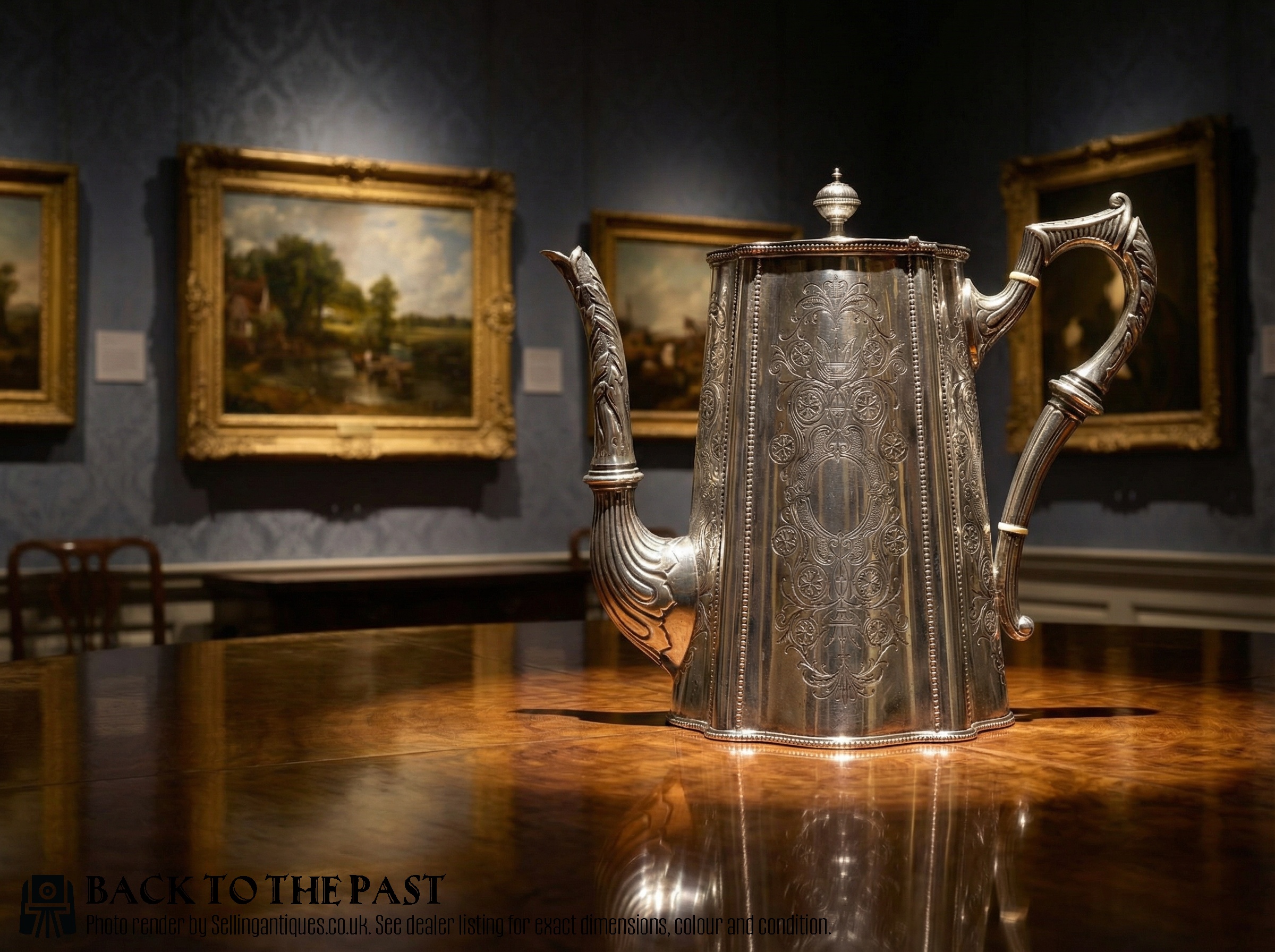
Silver Plated Coffee Pot
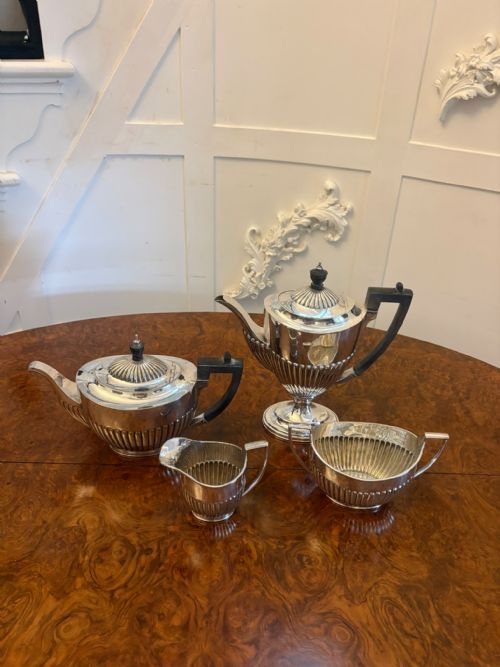
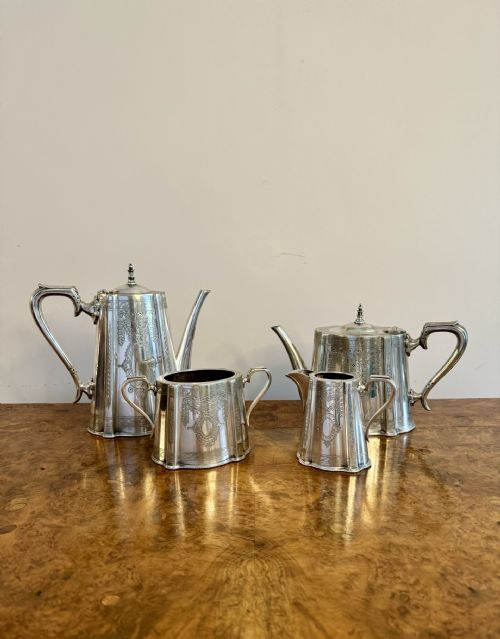
When you search for a silver plated coffee pot, you encounter vessels designed for social pouring, ranging from standalone servers to centrepieces in matching tea and coffee sets.
The versions most commonly met on this page span the Georgian, Victorian, and Edwardian eras, alongside Old Sheffield Plate pieces from the eighteenth and nineteenth centuries.
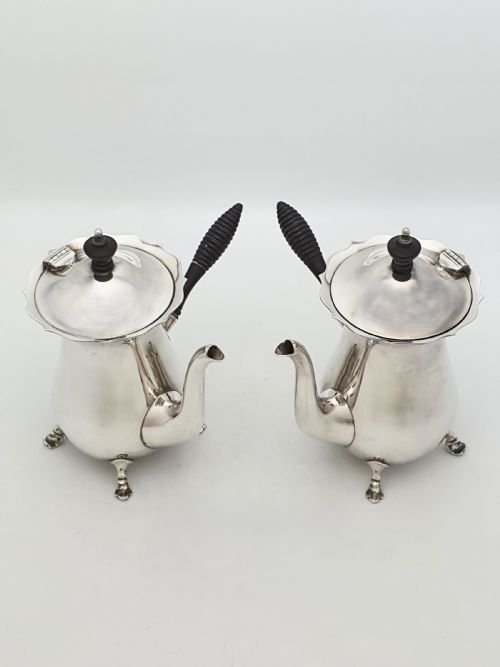
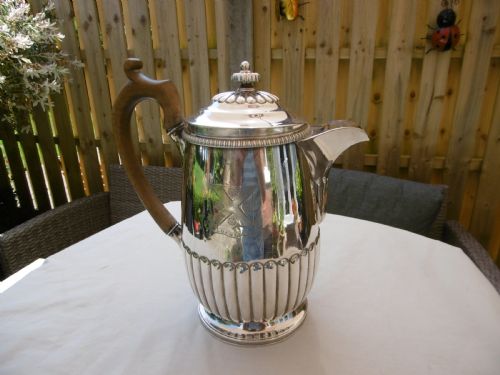
Makers utilised forms varying from tall jugs to café au lait pairs, often incorporating wood, copper, or bone elements into the design.

How They Were Made
Early items rely on Old Sheffield Plate techniques, fusing a thin layer of silver to a copper base, visible where the core metal shows through on high-wear spots.
Later pieces employ electroplated nickel silver as a foundation, applying the silver coating via an electrical current for an even finish across ornate repoussé surfaces.
Handles and insulators frequently incorporate ebony, bone, ebonised wood, or bakelite to manage heat conduction during pouring.
Silver Plated Coffee Pot Retail Price Guide 2026
Typical asking prices for silver plated coffee pot among the pieces listed under this phrase on Sellingantiques today, from the lower quarter to the upper quarter. They describe what is for sale here now, not the wider market.
One persistent eighteenth-century coffee pot hides its age behind early maker marks that resemble tiny stamped animal footprints.
What Varies in Quality
The thickness of the original silver coating and the durability of the underlying base metal dictate the longevity of each vessel, separating sturdy daily servers from delicate display items.
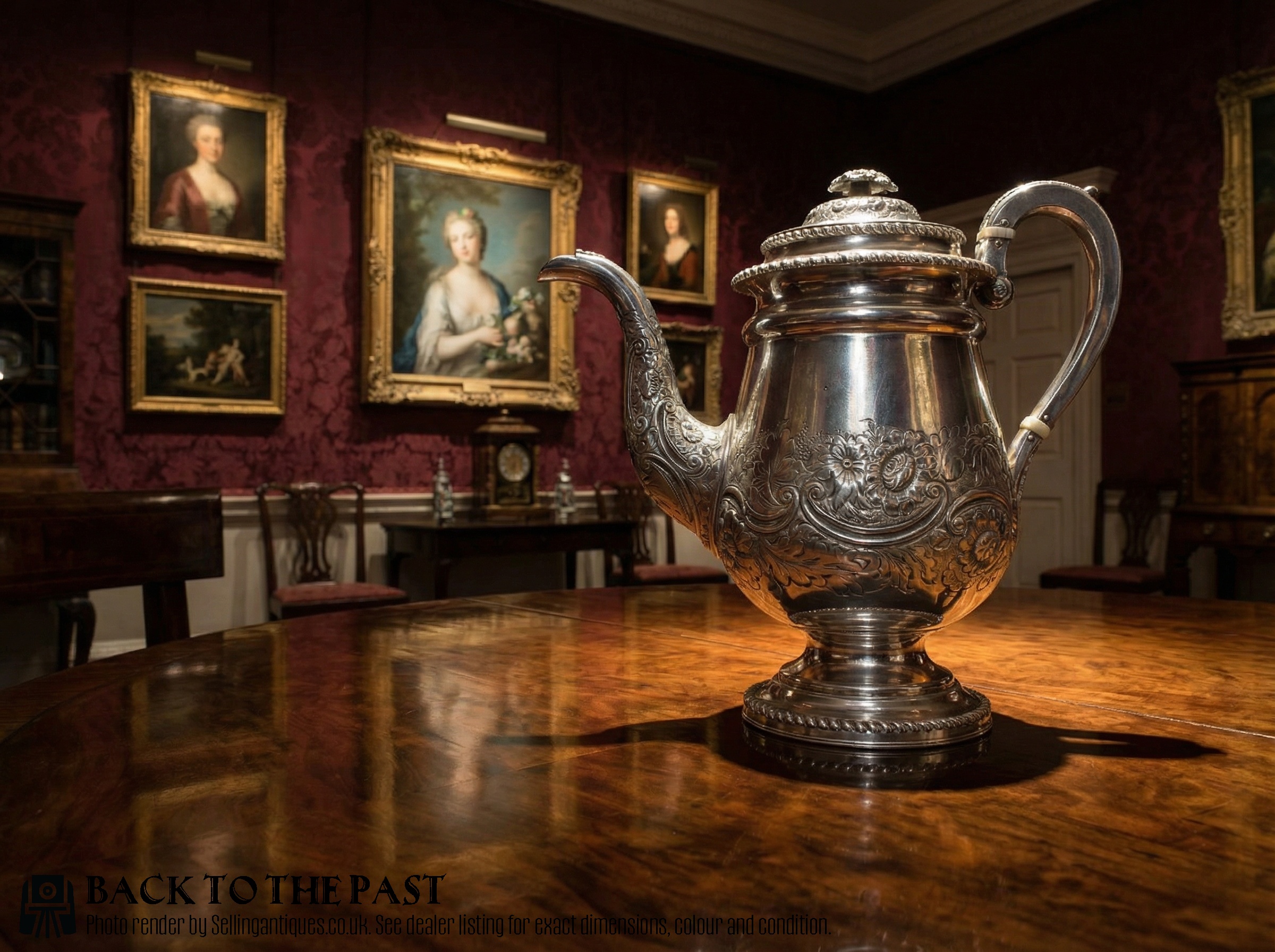
Design execution determines the visual tier, ranging from plain functional bodies to deeply chased repoussé floral decoration, engraved crests, and cast handles.
Completeness alters the standing of a piece, separating standalone pots from matched sets that include creamers, sugar bowls, and hot water jugs.
Walker and Hall·Matthew Boulton·John Hoyland·Boardman Glossop and Co·Aspreys·Victor Saglier Paris·Elkington and Co·Arnand Fresnais·Atkin Bros
The Silver Plated Coffee Pot Glossary
- Old Sheffield Plate
- A method of fusing silver and copper together before shaping the metal into a vessel. This technique predates modern electroplating.
- Electroplated Nickel Silver
- A base alloy of copper, nickel, and zinc coated with a layer of pure silver using electricity. This became the standard manufacturing method in the nineteenth century.
- Repoussé
- A metalworking technique where the artisan hammers the design from the reverse side to form raised floral or decorative patterns on the body.
- Café Au Lait Pots
- Matching pairs of vessels designed for serving coffee and hot milk simultaneously. These often appear alongside larger tea services.
- Insulator
- Small spacer rings made of bone, ebony, or bakelite fitted into the handle. These prevent the heat of the coffee from transferring to the grip.
Silver Plated Coffee Pot: Frequently Asked Questions
How do I clean a silver plated coffee pot?
Wash the vessel gently using warm soapy water and a soft cloth to protect the thin metal surface from abrasion.
Avoid harsh chemical dips that strip the plating, and use specialised silver polish sparingly only when necessary.
Can I still use these pots for daily coffee?
Many of these vessels remain structurally sound and capable of holding liquids for daily table use.
Check the interior lining and handle insulators to ensure they are secure before pouring hot beverages.
What is the difference between Old Sheffield Plate and silver plate?
Old Sheffield Plate involves physically fusing a sheet of silver to a copper block prior to rolling and shaping.
Standard silver plate applies a chemical silver layer over a base metal via electricity during later industrial periods.
How do I date an unmarked coffee pot?
Examine the overall silhouette, handle materials, and decorative style against documented period shapes.
Georgian and Regency designs favour clean classical lines, while Victorian and Edwardian examples lean toward heavier ornamentation.