




Four Piece Tea Service
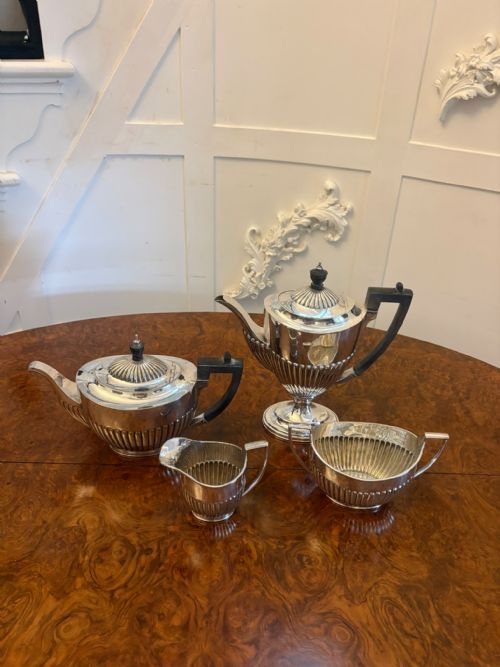
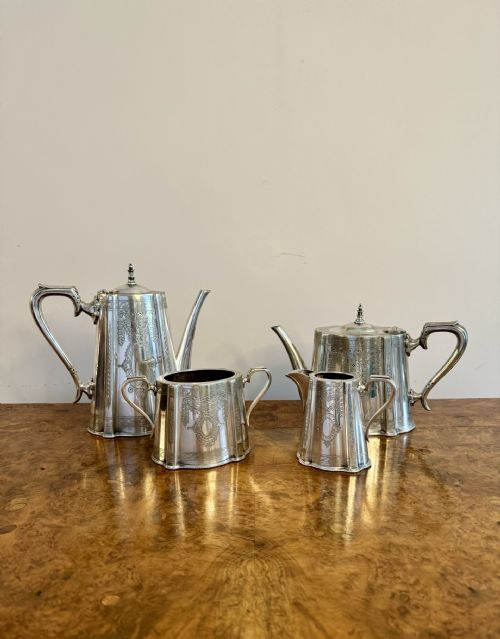
A four piece tea service brings complete matched elegance to the table, uniting pots, jugs and sugar basins from the Victorian, Edwardian and Art Deco eras.
Four Piece Tea Service
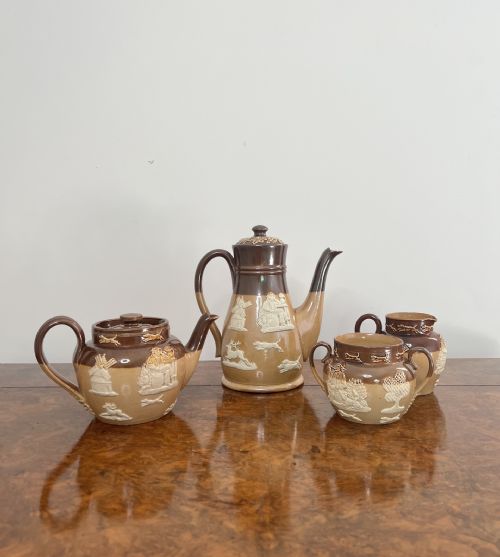
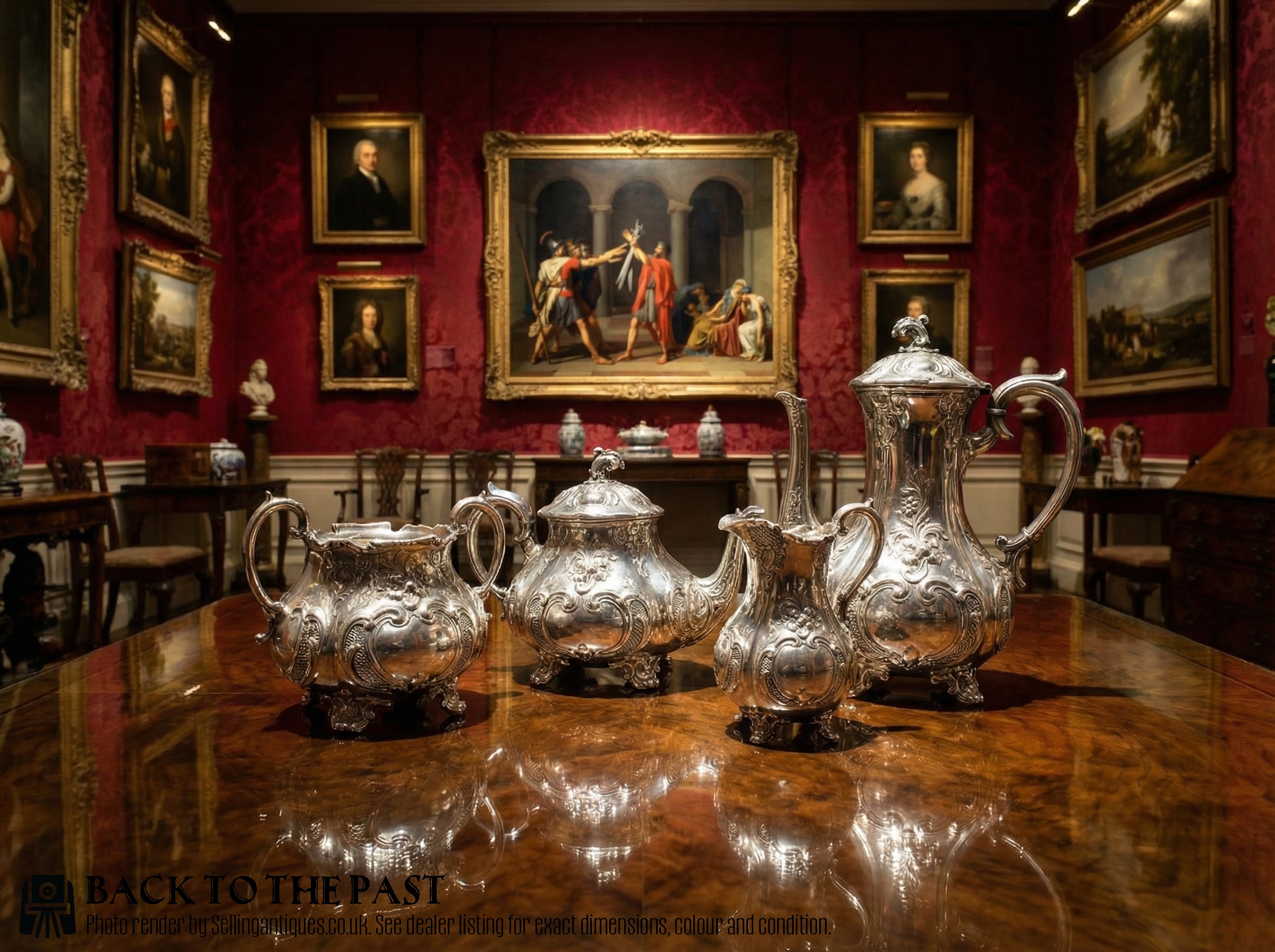
When you search for a four piece tea service, you are looking at matched groupings designed to serve both tea and coffee, or to provide the full array of vessels required for traditional hospitality. These domestic assemblages typically combine a teapot, coffee pot, milk jug or creamer, and a sugar basin into a single cohesive spread.
The versions you are most likely to meet on this page span the late nineteenth century through to the interwar period, encompassing Victorian elaboration, Edwardian refinement, and clean Art Deco geometry. Materials range from solid silver to electroplated nickel silver and standard silver plate, frequently accented with handles of ebonised wood or ebony.
Materials and construction methods
Silversmiths and electroplaters formed these services using a combination of traditional hand-raising, spinning, and stamping techniques, applying metal over copper bases or working with solid silver bullion. Heavier gauges provided durability and substantial weight, particularly in solid silver sets intended for daily household use.
Insulating spacers made from ebonised wood or ebony were fitted to handles on pots to prevent heat transfer during pouring. Silver plating was often executed via electroplating on nickel silver or standard base metals, creating a lustrous surface finish designed to mimic solid silver at a lower production cost.
Many a Victorian household relied on these heavy pots to survive endless damp afternoons of polite gossip and lukewarm Earl Grey.
Distinguishing quality across services
The dividing line between standard commercial sets and the finest workshop productions lies in the crispness of the chasing, the thickness of the metal gauge, and the integrity of the hinges and joints. Superior services demonstrate balanced proportions across all four pieces, with heavy walls that resist denting and substantial handles firmly pinned to their bodies.
Maker attribution also elevates a service, as pieces bearing the marks of established silversmiths exhibit superior finishing on interior surfaces and more intricate decorative detailing such as Rococo revival scrolls or precise geometric facets.
Walker and Hall·H Atkin·Elkington and Co·Doulton
The Four Piece Tea Service Glossary
- Electroplated Nickel Silver
- A base metal alloy of copper, nickel, and zinc coated with a layer of pure silver through an electrical process. This method became widespread in the nineteenth century for producing durable tableware.
- Ebonised Wood
- Timber treated to resemble ebony, frequently utilised for the heat-insulating handles and finials of teapots and coffee pots. It provides a dark, smooth contrast to polished silver and silver plate.
- Chasing
- A metalsmithing technique where designs are hammered into the front surface of the metal using punches to create raised or textured ornamental relief. This method defines ornate Victorian and Edwardian revival styles.
- Baluster
- A vase-like architectural form with a rounded lower body tapering to a narrower neck, commonly seen in the silhouette of Victorian pots within these services.
- Hallmark
- An official stamp applied to precious metals indicating the standard of purity, the assay office, and the year of manufacture. These marks assist in dating solid silver components accurately.
Four Piece Tea Service: Frequently Asked Questions
What is included in a four piece tea service?
A standard four piece tea service generally comprises a teapot, a coffee pot, a milk jug or creamer, and a sugar basin. Some configurations substitute a hot water kettle or omit the coffee pot depending on the specific period and design.
Matching sets ensure that all vessels share identical decorative motifs, handles, and material composition, creating a unified presentation on the sideboard or dining table.
How do I distinguish Edwardian from Victorian sets?
Victorian sets tend to feature heavier ornamentation, including deep chasing, ornate Rococo revival scrolls, and bulbous baluster shapes. They often prioritise rich texture and high decorative relief.
Edwardian services lean towards lighter, more restrained neoclassical or revival forms with crisper lines and balanced proportions, reflecting a shift in domestic tastes at the turn of the twentieth century.
How should I clean silver plated tea sets?
Silver plated and solid silver pieces require gentle cleaning with non-abrasive silver polishes and soft cloths to preserve the plating and remove tarnish. Avoid harsh chemical dips that can strip away thin plating layers over time.
Regular dusting and careful hand washing in warm soapy water after use help maintain the surface lustre without damaging ebonised wooden handles or delicate hinges.