





Silver Plated Teapot
A silver plated teapot brings the ceremony of the table from past centuries straight into daily use.
Silver Plated Teapot
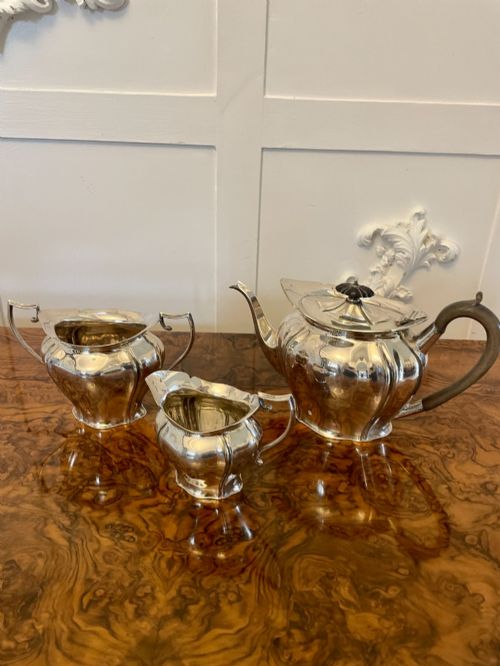
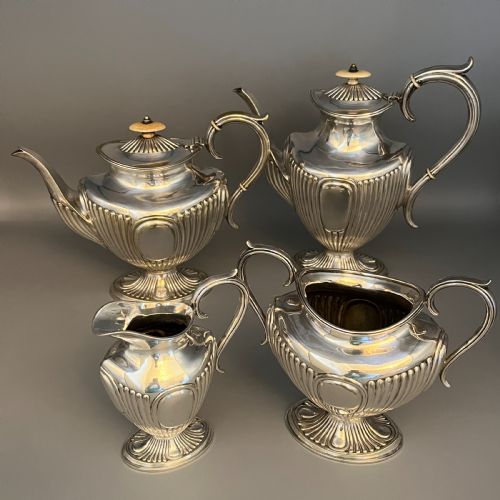
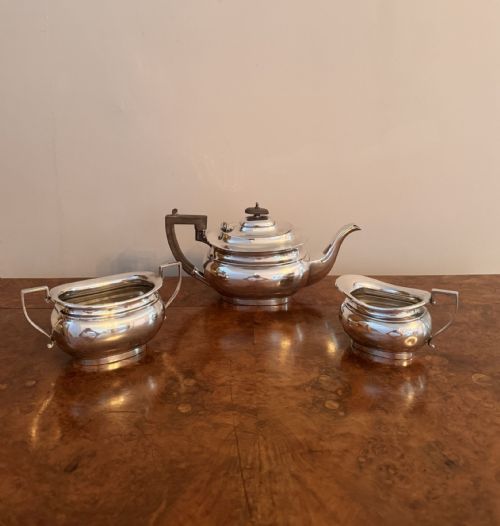
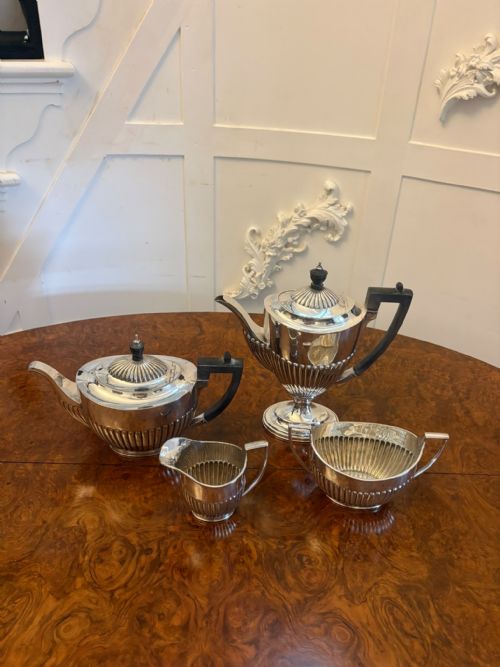
A silver plated teapot represents a central vessel for serving hot water or infused leaves, appearing as a standalone piece or part of larger tea and coffee sets. Buyers encounter these items in various configurations, from single pots to complete four-piece services comprising a pot, milk jug, and sugar bowl.
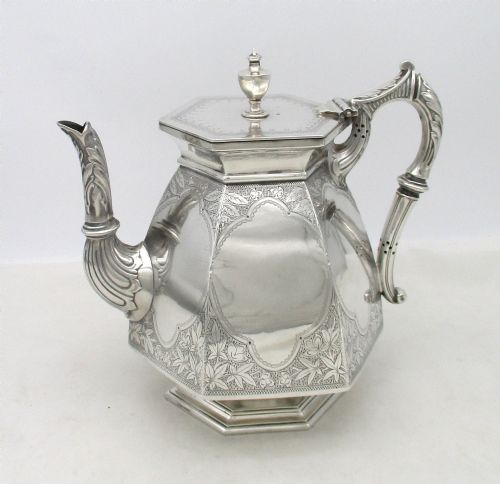
The selection ranges across distinct periods, with Edwardian examples appearing most frequently alongside Victorian, Georgian, and Art Deco pieces. Forms span standard oval pots, spirit kettles on stands, and angular designs influenced by the Aesthetic Movement and later modernism.

How they were made
Maker's workshops built these vessels using base metals like copper or nickel silver, applying a layer of silver through early Old Sheffield plating methods or later electroplating techniques. This combination provided the visual weight and shine of solid silver at a lower cost.
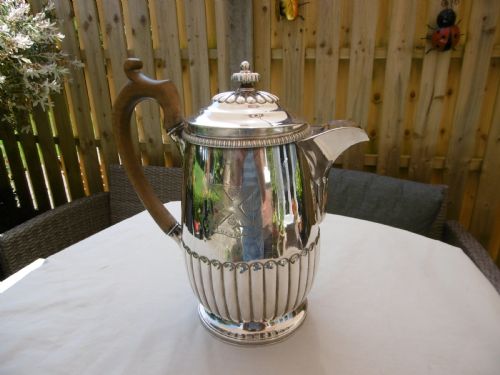
Handles and insulators incorporated contrasting materials such as wood, ebony, ebonised wood, and bone to prevent heat transfer during pouring.
Silver Plated Teapot Retail Price Guide 2026
Typical asking prices for silver plated teapot among the pieces listed under this phrase on Sellingantiques today, from the lower quarter to the upper quarter. They describe what is for sale here now, not the wider market.
Listings span periods from the Georgian era through to Art Deco designs, featuring materials such as bone, ebony, and electroplated nickel silver.
What varies in quality
The distinction between tiers rests upon the crispness of applied ornament, such as embossed grapevine detailing or hand-chased crests, and the structural integrity of the handle insulators and hinges. Finer examples display balanced proportions and substantial weight from heavy metal bases.
Makers mark their highest-grade output with distinct stamps from known firms, whereas lesser pieces show thin plating wear and simplified junctions where spouts meet the body.

Walker and Hall·Matthew Boulton·Goldsmiths and Silversmiths Co·Boardman Glossop and Co·Martin Hall and Co·Elkington and Co·Philip Ashberry and Sons
The Silver Plated Teapot Glossary
- Old Sheffield Plate
- An early fusing technique where a thin sheet of silver is fused to a copper core. This process creates a distinctive appearance as the underlying copper occasionally shows through high points.
- Electroplated Nickel Silver
- A manufacturing process introduced in the nineteenth century using an electrical current to bond silver onto a nickel brass alloy. It became the standard method for durable tableware.
- Spirit Kettle
- A tea kettle mounted upon a metal stand equipped with a small burner beneath. This device kept water hot at the table throughout long Victorian and Edwardian gatherings.
- Tea Service
- A matched group of vessels comprising a teapot, sugar basin, and milk jug. Larger services often include a matching coffee pot and a supporting tray.
Silver Plated Teapot: Frequently Asked Questions
Can I use an antique teapot for daily tea?
Many of these vessels remain entirely functional for serving tea provided the interior is washed carefully before use. Check that the interior lining remains intact and free from heavy corrosion.
Pour boiling water gently into the pot to temper the metal and prevent thermal shock to older joints and handles.
How do I date an Edwardian silver plated pot?
Edwardian pieces typically date between nineteen hundred and nineteen ten, featuring maker's stamps and registration numbers on the base. Stylistic cues include neoclassical revival motifs and lighter proportions than heavy Victorian designs.
Matching sets from this era frequently include bone or wooden insulators on the handles to keep them cool during use.
What is the difference between Old Sheffield plate and electroplate?
Old Sheffield plate involves physically fusing silver sheets to a copper base before rolling, often revealing a thin copper line at the edges. Electroplating applies silver chemically via an electric current over a nickel silver base.
Electroplated items emerged later in the nineteenth century and generally display a more uniform silver layer across the entire surface.