
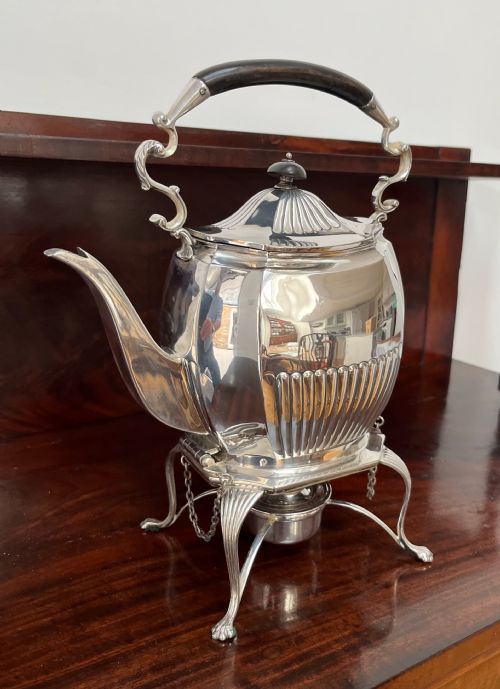


Epns Tea Service
An epns tea service brings solid Victorian and Edwardian hospitality to the table, offering gleaming silver plated service sets for daily hosting.
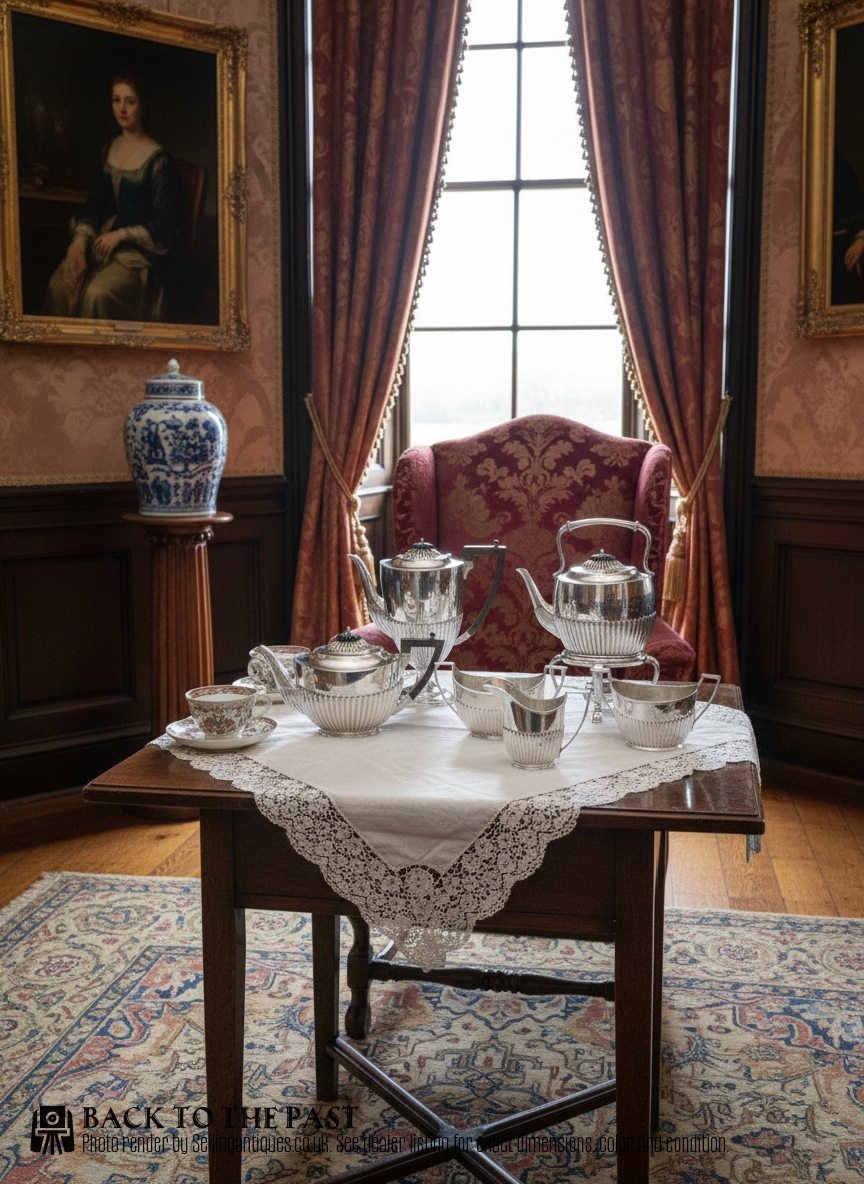
Epns Tea Service
When you search for an epns tea service, you encounter matching sets of teaware designed for formal domestic hospitality across the Victorian, Edwardian, and Art Deco periods. These assemblages primarily comprise teapots, coffee pots, sugar basins, and milk jugs, occasionally accompanied by matching trays.
The prevailing examples on this page date predominantly from the Edwardian era and the year 1900, alongside Victorian formations from the 1880s and 1890s. Forms vary from compact two-piece jug and sugar bowl sets up to substantial six-piece ensembles and spirit kettles on stands with burners.
Victorian sets tend towards ornate decorative detailing and heavier proportions, whereas Edwardian configurations often present cleaner profiles. Art Deco examples introduce geometric styling, represented by specific makers such as Mappin & Webb.

Materials and construction
An epns tea service relies on electroplated nickel silver as the core metallic medium, combining a durable base metal with an outer coating of silver. Manufacturers frequently integrated secondary elements such as wood, bone, and ebonised wood for insulating handle grips and finials.
Spirit kettles and larger tea sets incorporate specialised metalwork for stands and burners, demanding secure joints and functional moving parts. The application of silver plating provided the visual luxury of solid silver while ensuring structural longevity for regular table use.
Epns Tea Service Retail Price Guide 2026
Typical asking prices for epns tea service among the pieces listed under this phrase on Sellingantiques today, from the lower quarter to the upper quarter. They describe what is for sale here now, not the wider market.
Many Edwardian tea sets travelled with miniature spirit burners, transforming the dining room table into a nineteenth-century chemistry lab.
Assessing quality in silver plated sets
The distinction between standard and superior sets rests in the crispness of the chased and engraved decorative motifs and the thickness of the original silver plating. Heavier gauge metalwork maintains its structural integrity and resists denting over decades of domestic service.
Attention to detail in the fitting of insulating elements, such as bone or ebonised wood spacers on handles, separates utilitarian production from finer workshop output. Complete sets that retain their original matched spirit burners and stands command greater technical cohesion.
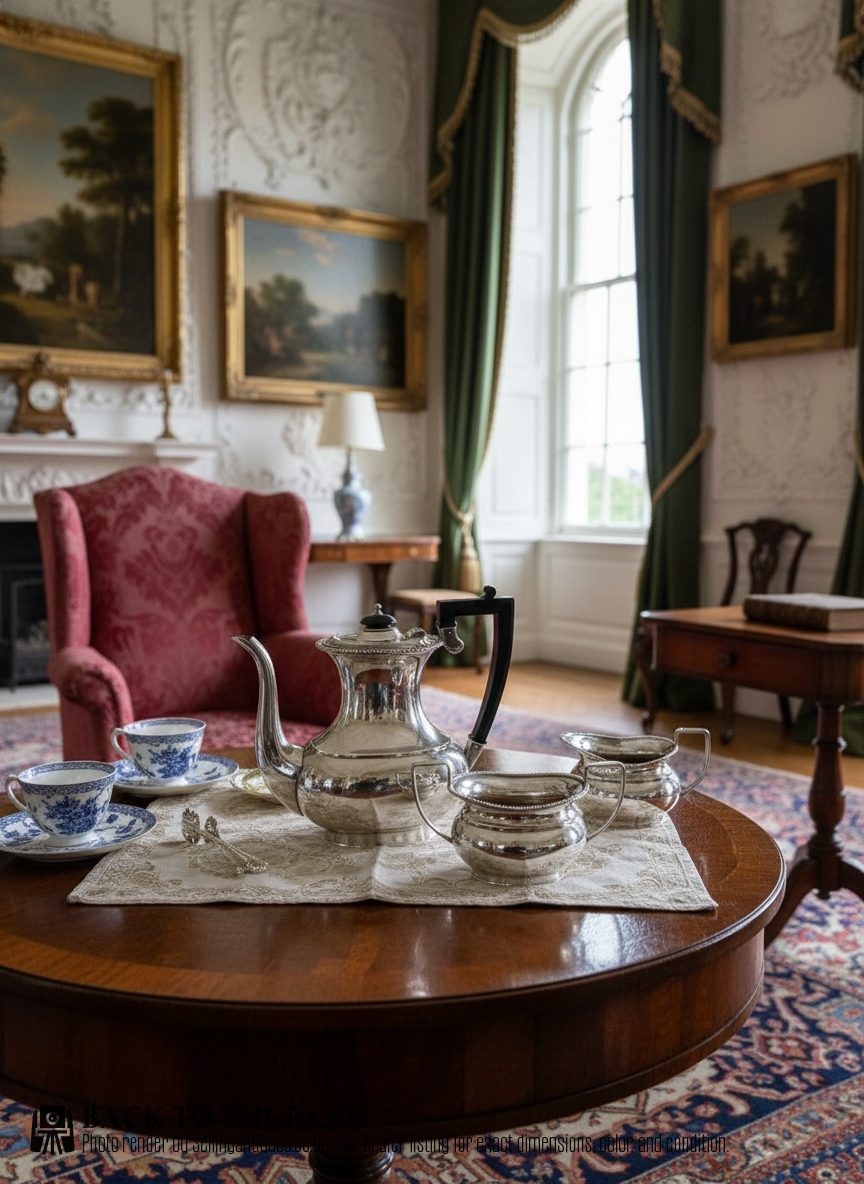
Mappin & Webb·Frederik Ellis Tim & Co
The Epns Tea Service Glossary
- EPNS
- Electroplated Nickel Silver. This designates a base alloy of copper, nickel, and zinc coated with a thin layer of pure silver through an electrolytic process.
- Spirit Kettle
- A water heating vessel mounted on a metal stand above a small alcohol burner. These pieces allowed hosts to maintain boiling water at the tea table.
- Teaware
- The collective term for ceramic or metal vessels used in the preparation and service of tea, including pots, creamers, and sugar basins.
- Ebonised Wood
- Timber treated with a dark finish to imitate expensive ebony. Makers utilised this material for heat-resistant handles and lid knobs.
Epns Tea Service: Frequently Asked Questions
What pieces belong in a full tea service?
A standard set includes a teapot, a milk or cream jug, and a sugar basin. Larger configurations can incorporate coffee pots, waste bowls, and matching kettles on stands.
Additional items occasionally include hot water jugs and specialised serving trays designed to match the principal vessels.
How do I clean silver plated teaware?
Use a soft cloth and a gentle silver polish formulated specifically for plated items. Avoid abrasive pads or harsh chemical dips that strip the thin silver layer.
Wash the pieces in warm soapy water and dry them thoroughly immediately after cleaning to prevent water spotting on the metal surface.
How do Victorian and Edwardian sets differ?
Victorian sets generally feature heavier proportions, elaborate chased ornamentation, and ornate floral or scroll motifs. Edwardian examples often display lighter handling and more restrained decorative borders.
Art Deco sets from later decades introduce angular geometric lines and streamlined forms distinct from nineteenth-century aesthetics.