
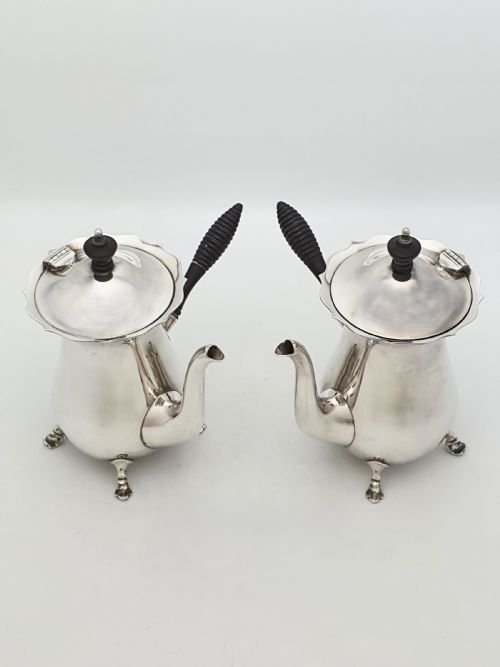


Edwardian Silver Tea Set
An Edwardian silver tea set brings formal hospitality to the table through matched pots, sugar bowls, and cream jugs from the early twentieth century.
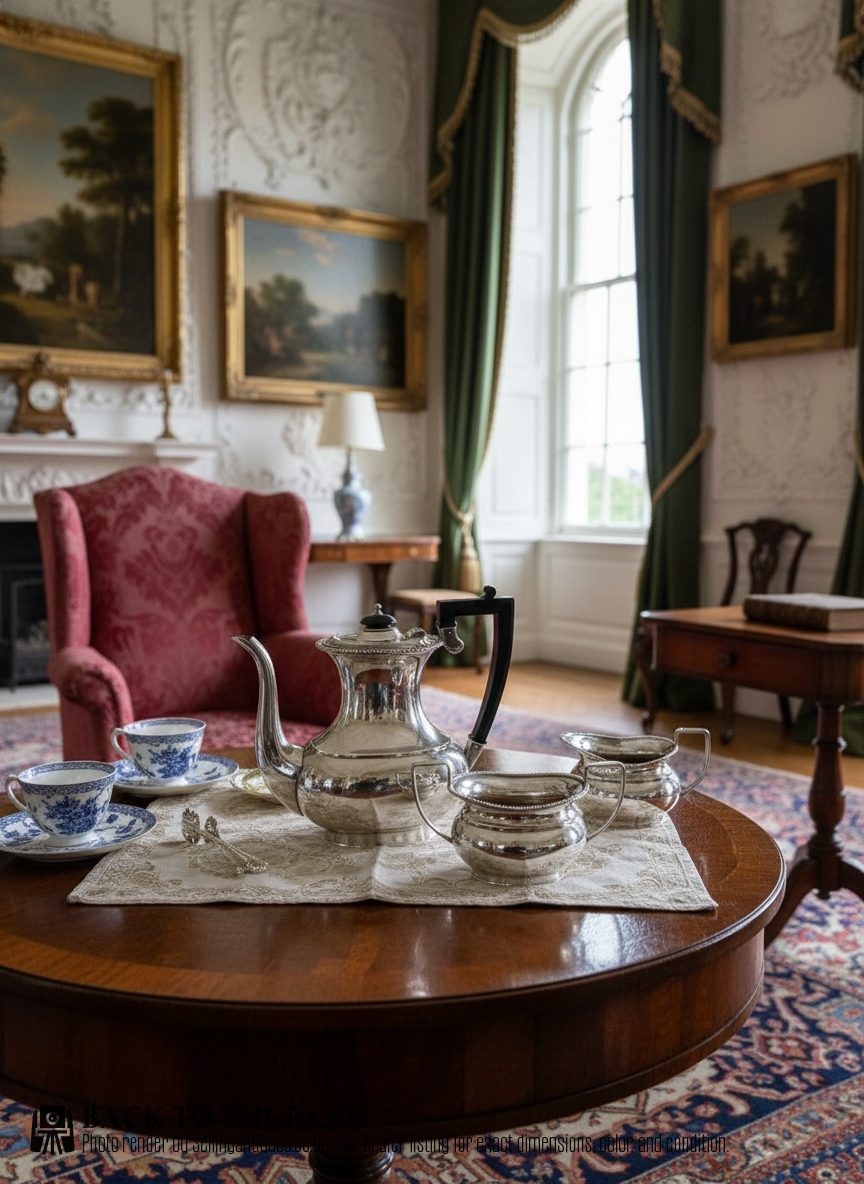
Edwardian silver tea sets
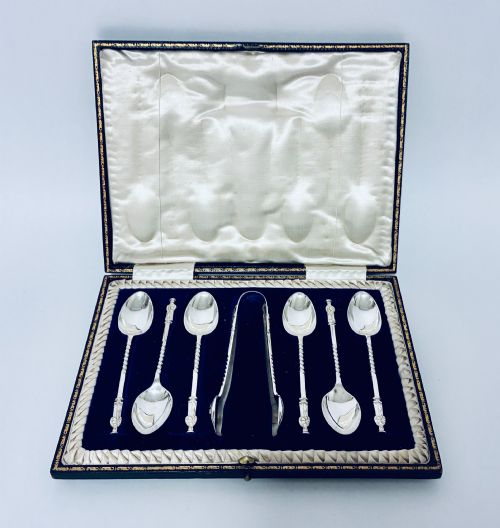
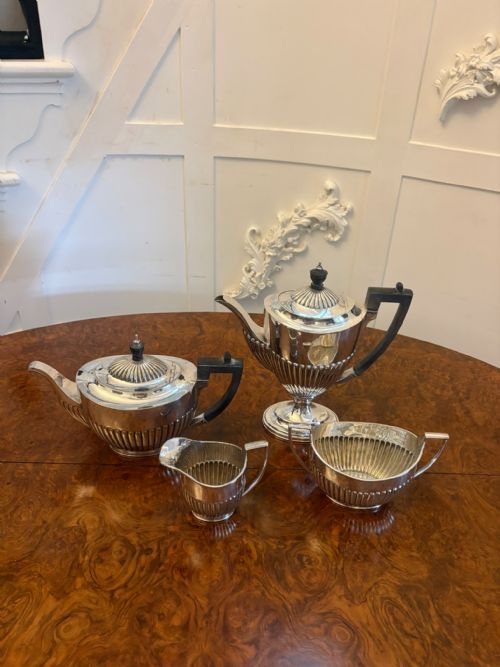
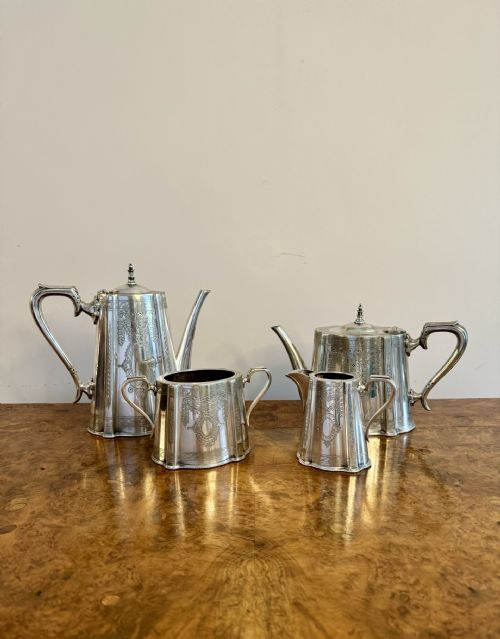
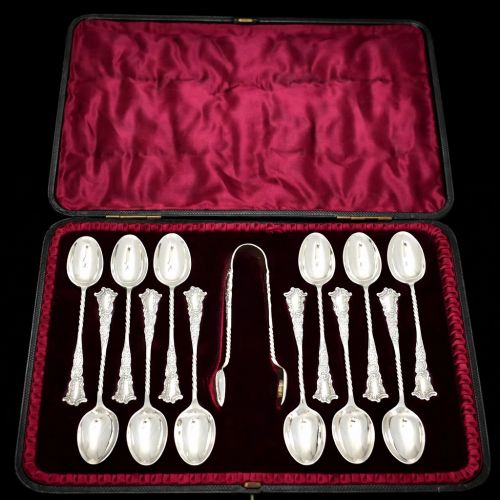
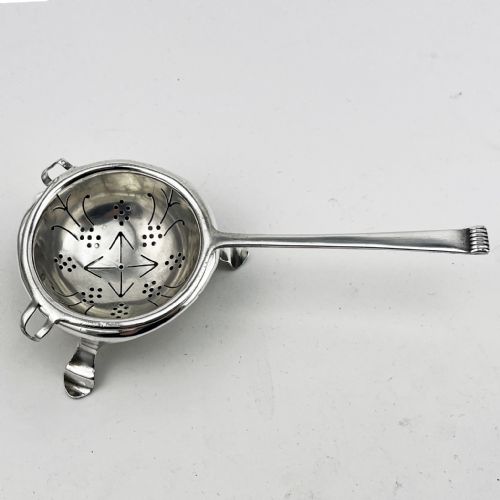
An Edwardian silver tea set comprises matched vessels designed for serving hot tea, frequently found in three-piece, four-piece, or five-piece configurations alongside related items such as trays, teaspoons, and sugar tongs. The pieces date primarily from the early 1900s, reflecting the domestic habits of the period.
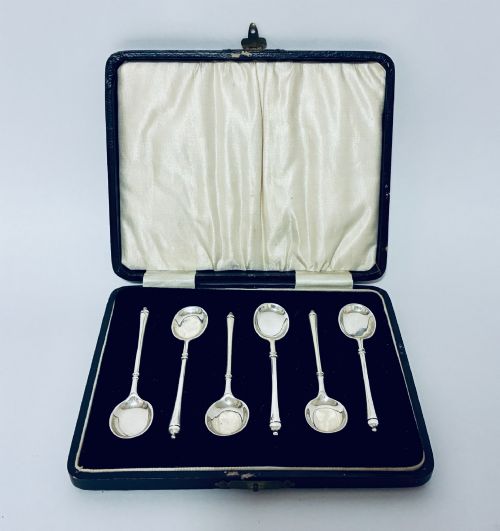
Buyers most frequently encounter silver-plated versions on this page, often decorated with grapevine motifs or plain surfaces, alongside solid sterling silver sets hallmarked in assay offices like Sheffield, Chester, and Birmingham. Miniature tea sets and boxed sets of teaspoons also appear within the selection.
Sets range from substantial bachelor configurations intended for smaller households to complete tea and coffee services housed in original fitted cases. Stylistic influences span traditional Edwardian forms as well as occasional Victorian survivals.
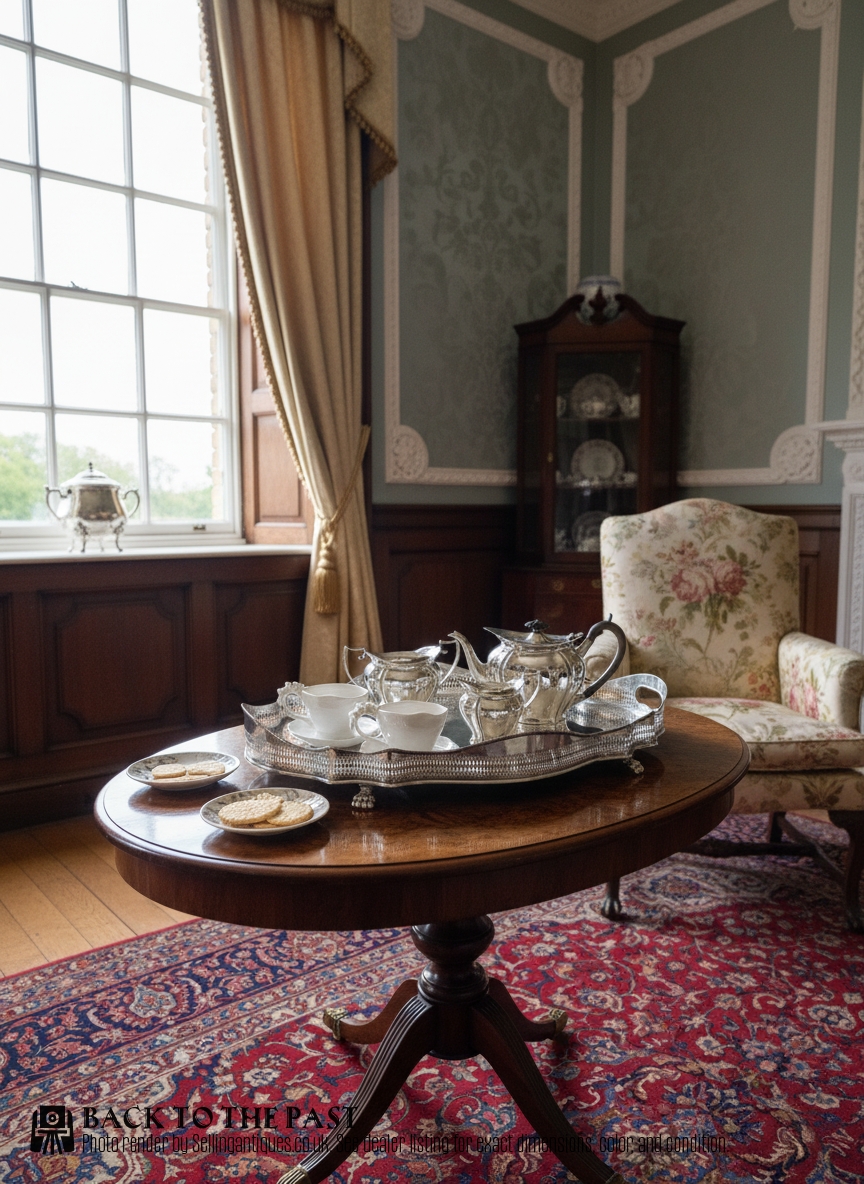
Materials and construction
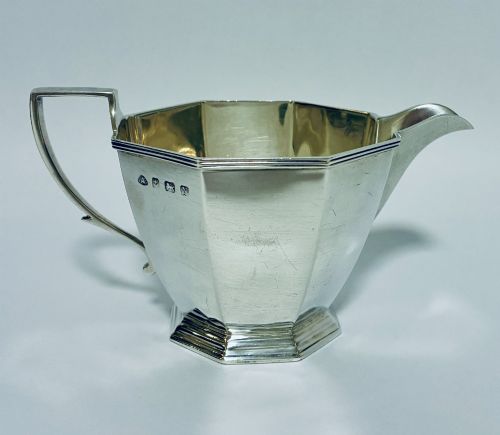
Silversmiths employed techniques such as casting, piercing, and chasing to produce swirling leaves, flowers, and grapevine detailing on tea pots, cream jugs, and sugar dishes. Hallmarks stamped directly into the silver record the assay office, year, and maker.
Retail Price Guide 2026
Typical UK retail prices for edwardian silver tea set, calculated from the Sellingantiques database of over a million retail prices indexed since 2003. This retail price guide relies exclusively on Sellingantiques data; no external sources or auction records are used, so the figures do not describe the wider market.
Assay origins on these pieces include Sheffield, Chester, and Birmingham alongside unpunctuated silver-plated wares.
Distinctions in quality
Quality rests upon the weight of the metal and the crispness of decorative elements like chased leaves, floral motifs, and grapevine detailing. Substantial gauge silver and heavy silver plating maintain their integrity better through decades of polishing.
Completeness dictates standing, particularly when sets retain their original fitted cases, matched trays, or associated spoons and tongs by notable makers. The precision of the joints, handles, and hinges on pots further separates standard production from superior output.
Harry Atkin·Walker & Hall·Saunders & Shepherd·Cooper Brothers & Sons Ltd·Stewart of Glasgow
The Edwardian Silver Tea Set Glossary
- Hallmark
- Official stamps struck into precious metal indicating the standard of silver, the assay office, and the date letter. These marks allow collectors to trace the origin of solid silver tea sets.
- Bachelor tea set
- A smaller scale tea service typically comprising a teapot, milk jug, and sugar basin intended for intimate use. These compact sets were popular for private drawing room service.
- Silver plate
- A layer of silver bonded to a base metal core, frequently utilised to achieve the appearance of solid silver at a lower cost. Many Edwardian tea sets employ this technique.
- Chasing
- A metalworking technique where a silversmith hammers designs into the front surface from the outside to create raised patterns of flowers and leaves. This ornamentation defines many Edwardian tea pots.
- Piercing
- The practice of cutting openwork patterns through the silver wall, often seen on baskets and bowl rims. It lightened the visual weight of decorative serving pieces.
Frequently Asked Questions
What pieces belong in a standard set?
A standard tea set typically includes a teapot, a sugar bowl, and a milk jug, occasionally accompanied by a hot water kettle or coffee pot.
Larger services expand this arrangement to four or five pieces, sometimes including a matching serving tray or fitted presentation boxes.
How do solid silver and silver plate differ?
Solid silver pieces consist entirely of precious metal marked with official hallmarker stamps, while silver plate applies a thin layer of silver over a base metal.
Both materials were common during the Edwardian period, offering identical domestic utility with different underlying compositions.
What is a bachelor tea set?
A bachelor tea set is a reduced-scale service designed for one or two drinkers rather than large gatherings.
These compact sets appeared frequently in Edwardian households for private morning or afternoon tea.
How should antique silver be cleaned?
Antique silver benefits from gentle cleaning with specialised silver polish and a soft cloth to remove tarnish without abrading the metal surface.
Avoiding harsh chemical dips preserves the chased details and original finish of the silver.