
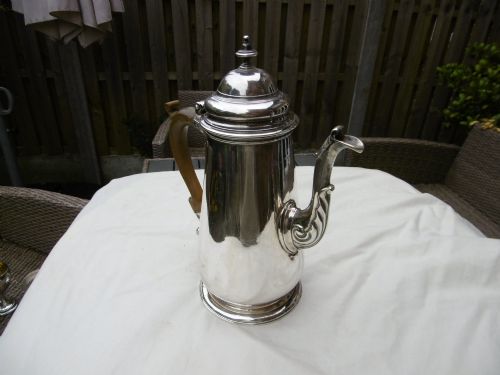


Sterling Silver Coffee Pot
A sterling silver coffee pot brings substance to the table, and these pieces span periods from the eighteenth century through the mid-twentieth century.
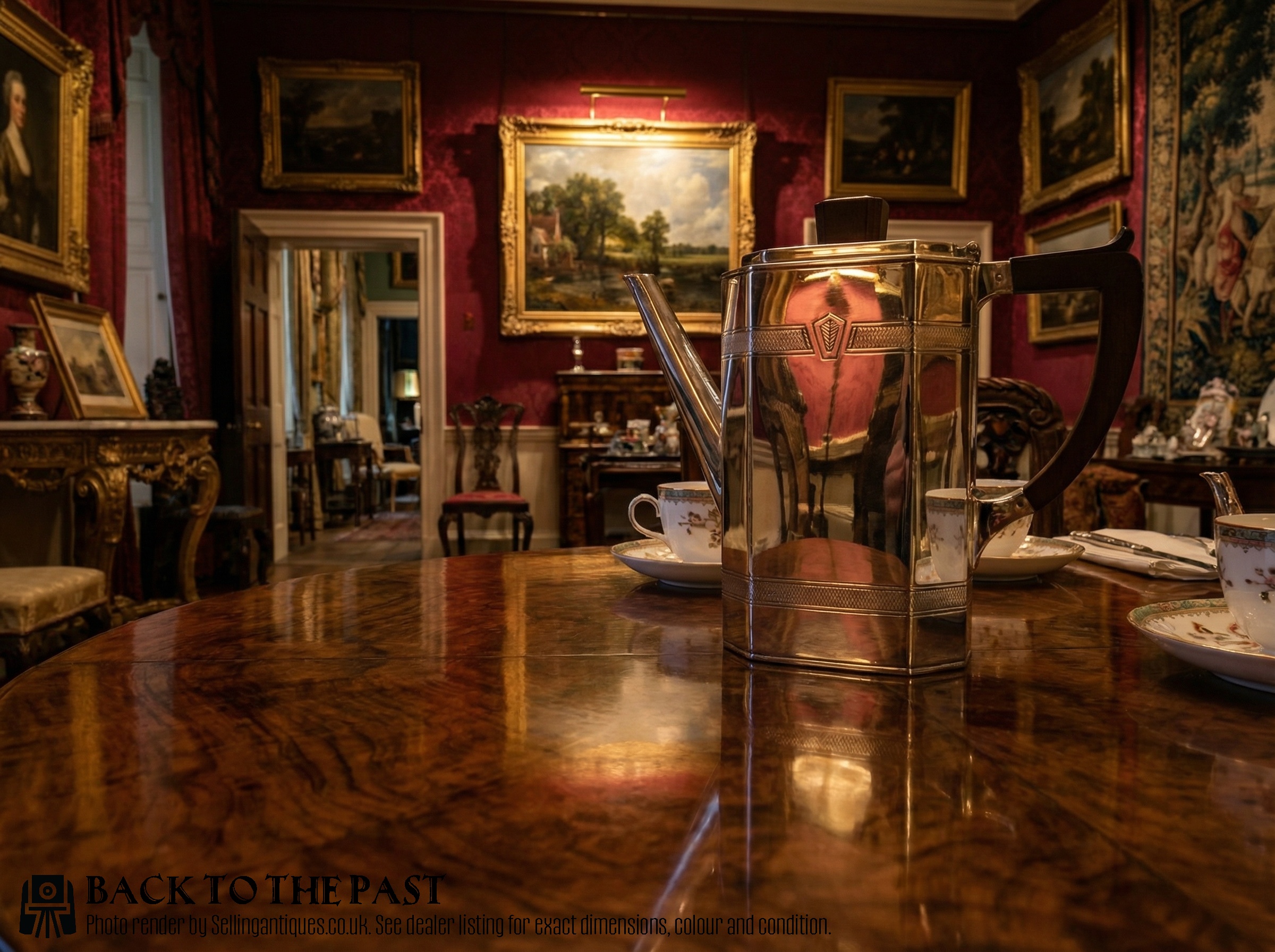
Sterling Silver Coffee Pot
A sterling silver coffee pot is a hollowware vessel designed for serving coffee, appearing in forms ranging from standalone tapered pots to pieces included within larger tea and coffee services. Buyers browsing this selection encounter historical examples originating primarily from the Georgian, Victorian, and Edwardian eras, alongside later twentieth-century interpretations.
The objects take several distinct shapes, including pear-shaped bodies, side-handled chocolate pots, and coffee biggins mounted on burner stands. Alongside full-sized vessels intended for regular domestic use, smaller bachelor pots and miniature versions also appear in the record.
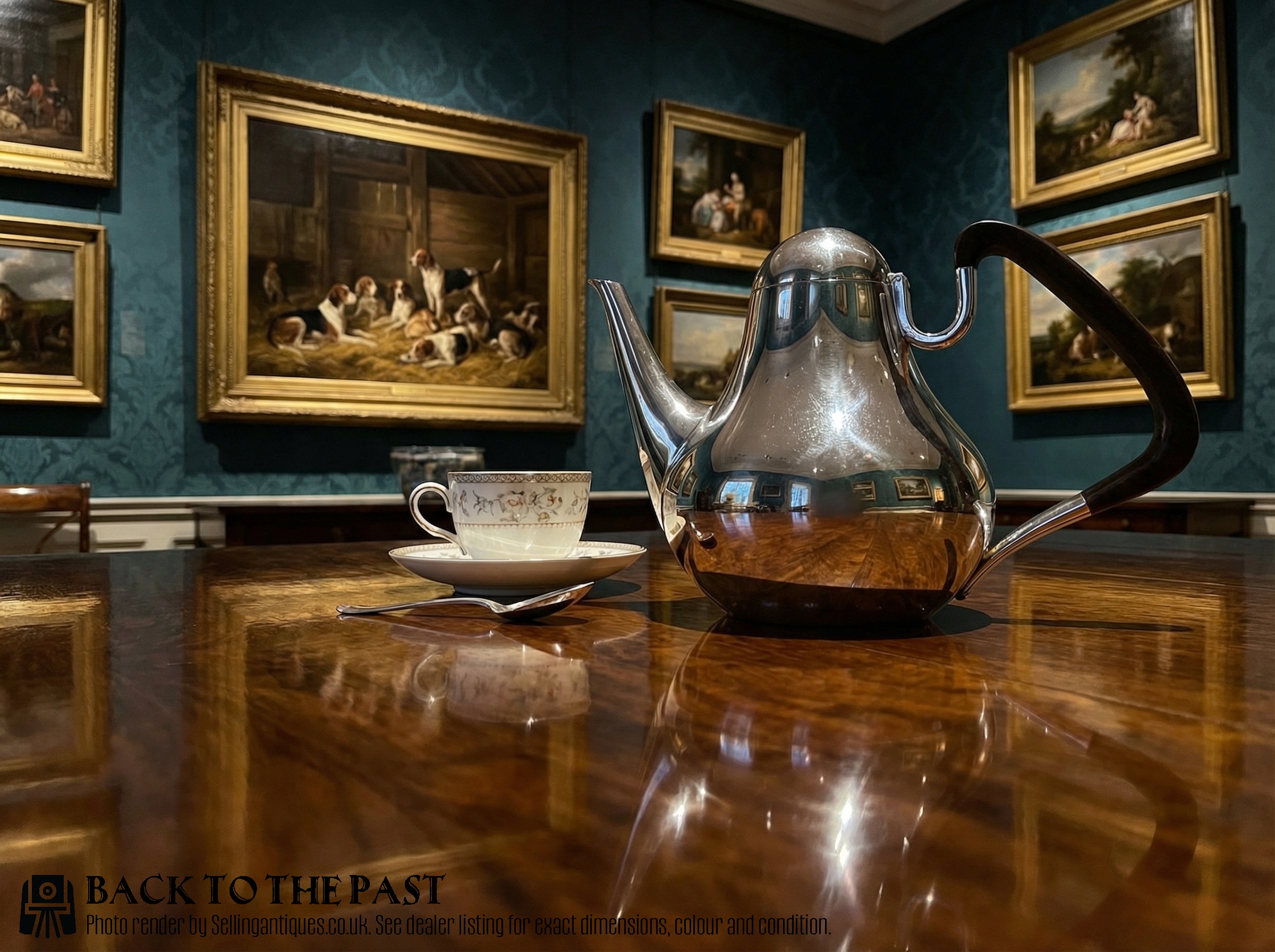
How they were made
Makers fashioned these vessels predominantly from sterling silver and solid silver, sometimes utilising silver-gilt finishes or gilding for interior details. Structural elements and insulation components frequently incorporated contrasting materials such as wood and ebony.
Techniques varied from smooth neoclassical lines to elaborate rococo repousse work featuring chased ornamentation, armorials, and figural finials like eagles. Silversmiths constructed handles from wood or ebony to prevent heat transfer during use.
Sterling Silver Coffee Pot Retail Price Guide 2026
Typical asking prices for sterling silver coffee pot among the pieces listed under this phrase on Sellingantiques today, from the lower quarter to the upper quarter. They describe what is for sale here now, not the wider market.
What varies in quality
The standard of a sterling silver coffee pot depends on the crispness of its chased or repousse decoration and the integrity of its original form, whether smooth or pear-shaped. Heavier gauge metal and balanced proportions distinguish more substantial pieces from lighter domestic wares.
Maker attribution influences distinction, with pieces originating from documented workshops or notable silversmiths carrying specific weight and craftsmanship markers. The presence of matching stands, burners, or complete multi-piece service components adds to the integrity of the ensemble.
Richard Gurney·Edward Power·Joseph Craddock·Harrison Brothers And Howson·Paul Storr·Georg Jensen·Birmingham Silversmiths Company·Harry Atkin·Rebecca Emes
The Sterling Silver Coffee Pot Glossary
- Biggin
- A coffee pot equipped with a cloth bag or wire basket filter inside the top, often mounted on a stand with a burner.
- Repousse
- A metalworking technique where the silversmith shapes the metal by hammering from the reverse side to form raised designs.
- Hollowware
- A category of tableware that includes vessels such as pots, jugs, kettles, and pitchers rather than flatware.
- Silver-Gilt
- Silver that has been coated with a thin layer of gold on its interior or exterior surfaces.
- Armorial
- A heraldic design or coat of arms engraved or applied to the surface of the silver.
Sterling Silver Coffee Pot: Frequently Asked Questions
How do I clean a silver coffee pot?
Wash the interior with warm soapy water and dry thoroughly after use to prevent residue buildup.
Polish the exterior gently with a dedicated silver cloth, avoiding harsh abrasives that wear down chased details.
Can I use an antique coffee pot daily?
Many of these vessels remain structurally sound for regular service, provided you handle them with care.
Consider the presence of wooden or ebony handles and insulators, which require hand washing rather than immersion.
What is the difference between a coffee pot and a biggin?
A standard coffee pot serves brewed coffee directly from the spout after preparation elsewhere.
A biggin includes an integrated brewing apparatus or sits above a spirit burner to keep the contents warm at the table.
How can I tell a Georgian pot from a Victorian one?
Georgian examples often display cleaner neoclassical lines or early rococo repousse work with lighter overall weights.
Victorian pieces frequently feature heavier cast bodies, ornate floral chasing, and specific hallmarks denoting the nineteenth-century decade.