

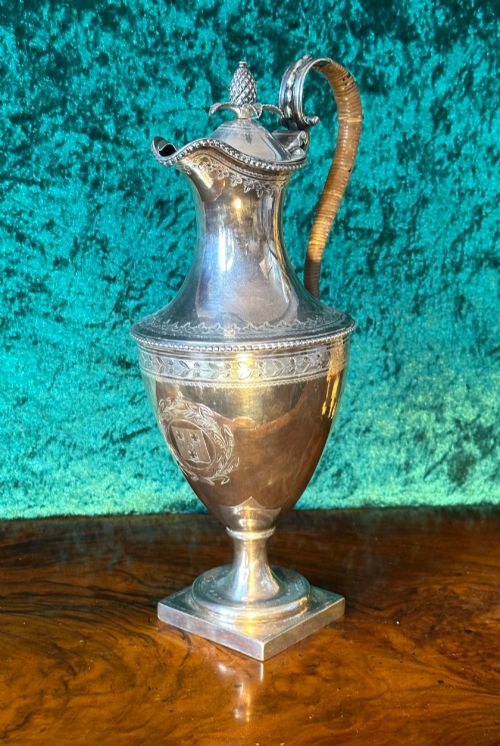
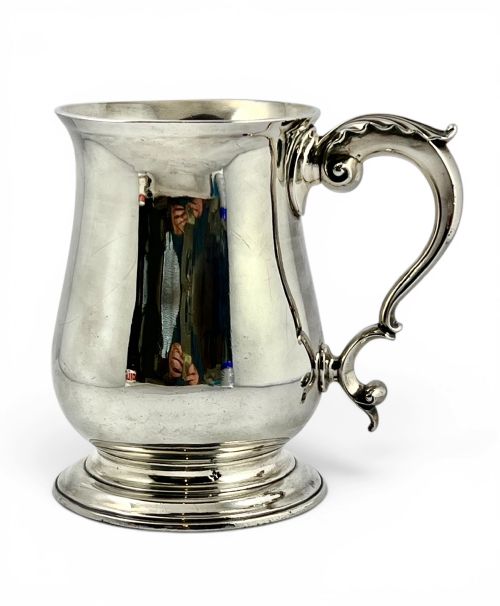


George III Silver Pot
A george iii silver pot brings the weight and bright work of Georgian metal-working directly to the table.
George III Silver Pot
When searching for a george iii silver pot, buyers encounter a diverse selection of hollowware spanning teapots, coffee pots, mustard pots, and condiment vessels created during the Georgian period.
Teapots and coffee pots dominate the available range, often accompanied by smaller mustard pots, casters, and tankards stamped with London or provincial hallmarks.
Pieces span forms from plain oval shapes to repousse surfaces, some retaining wooden handles or wicker-bound grips alongside matching stands.
Assessing quality in silver
Quality rests upon crispness of hallmark stamps, structural integrity of spouts and handles, and the depth of hand-engraved bright-cut decoration.
Superior examples display balanced proportions, substantial metal weight, and original maker marks that remain clear through centuries of polishing.
Materials across this selection include sterling silver, wood, ebony, and wicker.
William Grundy·Robert Hennell I·Paul Storr·Peter and Anne Bateman·Henry Chawner·John Emes·Benjamin Smith·William Burwash·Hester Bateman
The George III Silver Pot Glossary
- Hallmark
- Official stamps pressed into metal to guarantee purity and origin. These marks identify the city, maker, and year of assay.
- Bright-cut engraving
- A faceted engraving technique using angled chisel cuts. This method creates a glittering, geometric pattern across the silver surface.
- Repousse
- Metal shaping hammered from the reverse side to form raised relief designs. This process allows ornate floral and scroll motifs to emerge from the body.
- Biggin
- A tall coffee pot mounted on a stand with a spirit burner. The design kept brews warm at the table throughout long dinners.
- Pounce pot
- A small shaker used to sprinkle resin powder over unblotted ink. It prepared rough paper surfaces for writing.
George III Silver Pot: Frequently Asked Questions
How do I clean a silver pot?
Wash silver gently in warm soapy water using a soft cloth, avoiding harsh abrasives that wear away engraved details.
Dry thoroughly with a lint-free towel to maintain the natural lustre without stripping historic patination.
Can I use these teapots daily?
Many silver pots remain structurally sound for service, though thermal shock from boiling water requires careful handling.
Protect fragile wooden handles and antique hinges by pouring warm water gently before adding hot tea.
What caused the blue glass liners?
Mustard pots required cobalt blue glass inserts to protect the silver from chemical corrosion caused by acidic condiments.
These liners sit inside pierced silver bodies to display the vibrant glass colour through openwork metal patterns.
How do I date an unmarked pot?
Datation relies upon stylistic shifts in form, such as the transition from pear-shaped bodies to geometric oval shapes.
Comparing handle materials, foot rims, and maker punches against established assay records narrows the era.