


Carved Wooden Handle Silver
These carved wooden handle silver pieces bring together functional metalwork and tactile organic grips from the nineteenth and early twentieth centuries.
Carved Wooden Handle Silver
When you search for carved wooden handle silver, you enter a varied group of functional antiques spanning walking sticks, serving sets, and coffee vessels. The nineteenth century dominates this selection, alongside Edwardian and Georgian examples that combine precious metalwork with worked handles.
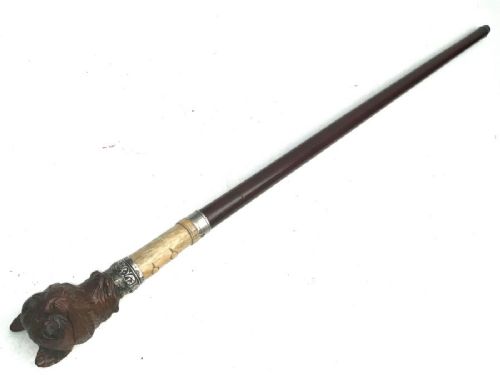
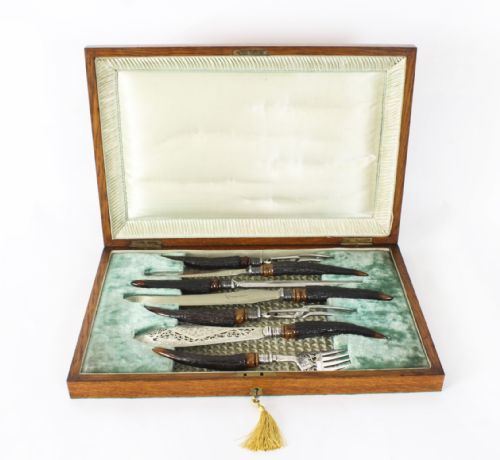
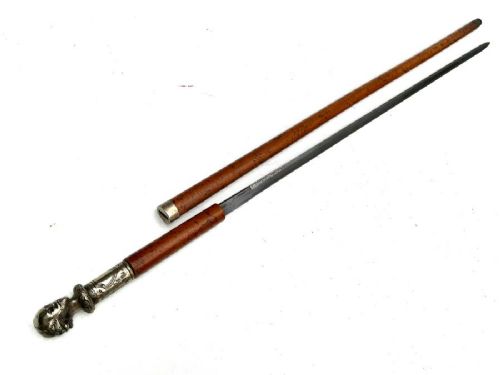
Walking sticks and canes form a large part of this category, often featuring novelty grips alongside hidden elements like sword blades or corkscrews. Tableware also appears, including silver plated meat trays, warming dishes, and coffee pots paired with organic handles.
You will encounter materials such as horn, bone, and stag antler alongside wood and silver or silver plate. These items reflect both everyday gentility and military use across British and continental European origins.
How they were made
Makers shaped these objects by combining solid or plated silver with dense woods and animal materials like stag antler and horn. Handles were carved by hand to form animal shapes, golf clubs, or novelty grips before being mounted onto wooden shafts or metal bodies.
Silversmiths employed embossing, chasing, and plating techniques to decorate coffee pots, serving trays, and cutlery sets. Blades and internal mechanisms, such as those found in sword sticks and corkscrews, utilised steel fitted securely into wooden or metal housings.
Materials recorded across these objects include wood, silver, silver plate, steel, metal, horn, bone, and stag antler.
What varies in quality
Quality in these pieces rests upon the precision of the carving and the integrity of the silver work. Finer examples display crisp detail in animal handles and deep, well-defined embossing on metal surfaces.
The choice of materials also dictates the standard of the piece, with substantial solid silver components and high-grade silver plate outperforming simplerplated items. Mechanical elements, such as hidden corkscrews or sword blades, operate smoothly in superior specimens.
The Carved Wooden Handle Silver Glossary
- Silver plate
- A base metal coated with a thin layer of silver through electroplating or older fusion methods. This technique allowed makers to produce substantial items like warming dishes and serving trays at a lower cost than solid silver.
- Sword stick
- A walking cane engineered with a concealed blade locked inside the wooden shaft. These nineteenth-century items were typically carried for personal defence by gentlemen and military officers.
- Stag antler
- The shed horn of a deer utilised for knife handles and cane grips due to its durable texture and natural grip. It appears frequently on nineteenth-century carving sets.
- Gadget stick
- A walking cane containing a hidden utility, such as a corkscrew, flask, or tool. These novelty pieces reflect Victorian ingenuity and practicality.
- Embossing
- A metalworking technique where a design is raised from the reverse side using hammers and punches. This creates tactile relief on silver handles and trays.
Carved Wooden Handle Silver: Frequently Asked Questions
What is a carved wooden handle silver piece?
These items are historical objects that combine silver or silver-plated components with carved wooden grips. They include walking sticks, serving trays, and cutlery sets.
Most date from the nineteenth century and reflect the craftsmanship and utilitarian design of the Victorian and Edwardian eras.
How were walking sticks with hidden blades used?
Military officers and gentlemen carried sword sticks during the nineteenth and early twentieth centuries for personal protection while travelling.
The concealed blade remained locked inside the wooden shaft until released by a mechanical catch.
What materials are found alongside the wood and silver?
These pieces frequently incorporate animal materials such as stag antler, horn, and bone for handles and grips. Steel and base metals also appear in internal mechanisms and plated tableware.
Mother-of-pearl is occasionally used for cutlery handles within dining sets.
How can I tell the period of a silver coffee pot?
Dating relies on the overall form, the style of the silver decoration, and the materials used for the handle and finial. Georgian and mid-nineteenth-century pots exhibit distinct proportions compared to later Edwardian pieces.
Engraved crests and hallmarks provide further historical context.
How do I care for antique silver and wood?
Keep these objects away from direct sunlight and extreme humidity to protect the wooden shafts and organic horn handles. Use appropriate silver polish sparingly to maintain the metalwork without damaging plated surfaces.
Handle mechanical canes gently to preserve the internal locking mechanisms.