
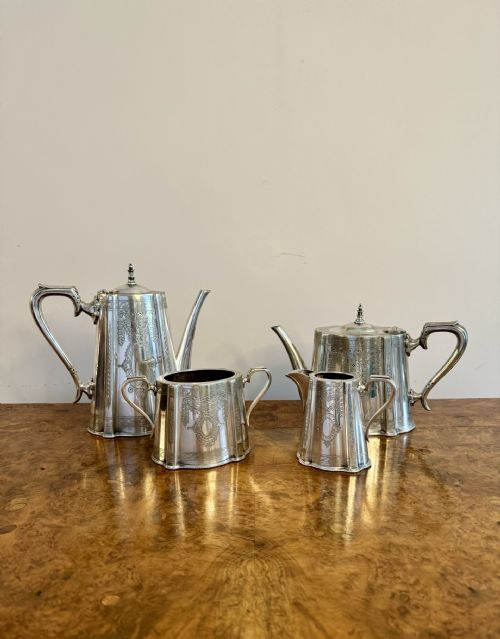
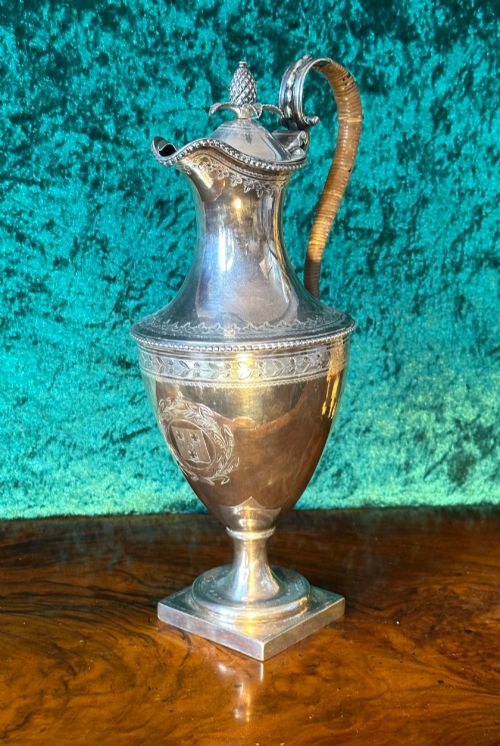
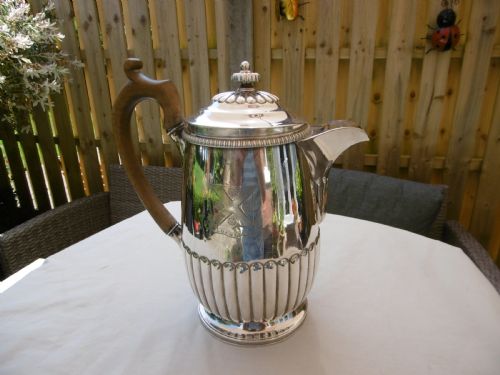


Engraved Silver Coffee Pot
An engraved silver coffee pot brings the weight of the Georgian, Regency, and Victorian centuries straight to the modern breakfast table.
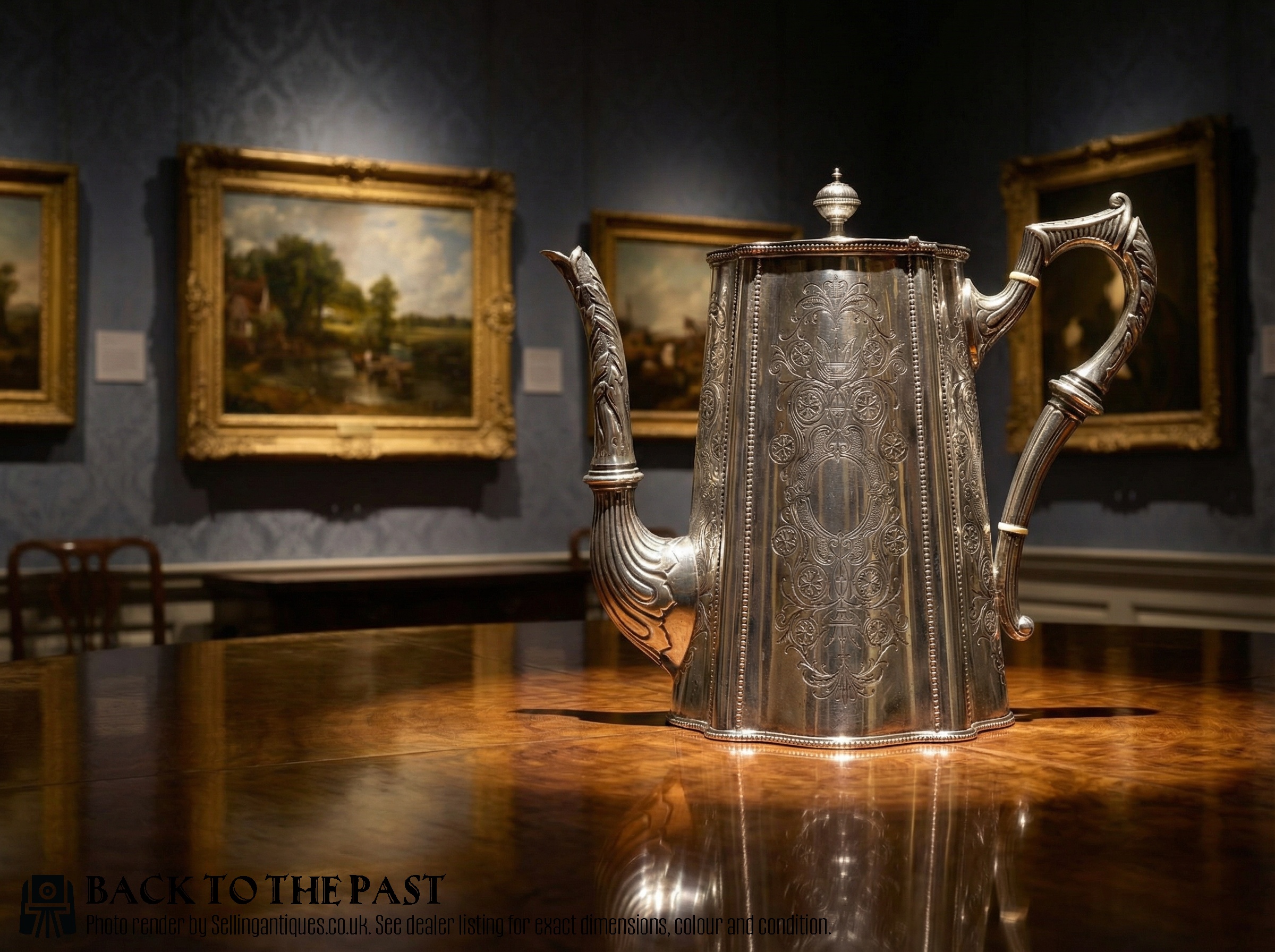
Engraved Silver Coffee Pot
An engraved silver coffee pot represents the traditional vessel for serving coffee, found across periods from the eighteenth century through the Victorian era. These vessels arrive in forms such as tall ewers, lidded jugs, and large coffee biggins, sometimes accompanied by matching tea services.
Most examples encountered on this page date from the Georgian and nineteenth-century periods, showing the heavy influence of Regency and Victorian Rococo Revival styles. Buyers frequently select these for their decorative hand-engraved floral designs and historical family crests.
The assortment ranges from solid sterling silver pieces by notable makers to substantial Old Sheffield plated and electroplated nickel silver items. Each piece demonstrates the domestic utility and social rituals of high-status dining rooms from past centuries.
How they were made
Silver and silver plate form the primary body of these vessels, shaped through skilled metalworking and often finished with hand-engraved floral motifs. Makers applied deep chasing and intricate detailing to achieve the ornate textures seen on Victorian Rococo Revival pieces.
Insulating handle elements incorporate organic materials such as bone, hardwood, cane, and woven wicker to manage heat during service. Metal frames and stands occasionally accompany the pots, particularly in complete coffee biggins and multi-piece tea services.
Listings feature periods spanning the 18th Century, Georgian, Regency, 1800, 19th Century, 1890, and Edwardian eras.
What varies in quality
The distinction between standard domestic wares and top-tier examples lies in the depth and crispness of the hand engraving. Deeply chased floral designs and sharply rendered crests indicate superior workshop output compared to light surface pattern work.
Weight and structural substance separate solid silver production from plated alternatives, though high-grade Old Sheffield plating demonstrates exceptional longevity. The retention of original insulating handles in bone, cane, or wood also influences the integrity of the piece.
Walker and Hall·Matthew Boulton·Paul Storr·Boardman Glossop and Co
The Engraved Silver Coffee Pot Glossary
- Old Sheffield Plated
- A fused composite material made by melting a sheet of silver onto a heavier copper base. This early plating method produces a rich depth of tone that ages gracefully over the centuries.
- Coffee Biggin
- A tall coffee pot fitted with a standalone frame or lamp underneath for keeping the brew warm. These elaborate serving vessels often date to the Regency and early nineteenth-century periods.
- Electroplated Nickel Silver
- A base metal alloy of copper, nickel, and zinc coated in a thin layer of pure silver through electrolysis. This technique became widespread during the Victorian era for mass-producing durable tableware.
- Ewer
- A large jug featuring a flared spout and a sweeping handle, historically utilised for pouring water or coffee. The form appears in Georgian silver and silver-plated serving collections.
- Crest
- An engraved family heraldic emblem or monogram placed prominently on the body of the pot. These personalized markings often allow researchers to trace the original ownership lineage.
Engraved Silver Coffee Pot: Frequently Asked Questions
How do I clean an antique silver coffee pot?
Polishing requires a soft cloth and a gentle silver cleaner formulated specifically for antique metalwork to preserve the delicate hand engraving. Avoid abrasive cloths that can wear down thin silver plating or obliterate fine surface details.
Wash the interior simply with warm water and mild soap without submerging organic handle components made of bone, wicker, or wood. Proper drying immediately after cleaning prevents moisture damage to the insulating joints.
Are these coffee pots still safe to use daily?
Most antique pots function adequately for display and occasional serving, though older plated items may show base metal beneath worn surfaces. Modern users should test the vessel for leaks and inspect internal soldering before regular liquid use.
Thermal expansion in older metal can stress historical joins if filled with boiling water repeatedly. Many collectors prefer to enjoy these pieces as decorative centrepieces rather than daily kitchen utensils.
How can I tell a Georgian pot from a Victorian one?
Georgian examples generally favour cleaner neoclassical or early Regency lines with restrained engraving and balanced proportions. Victorian pieces lean toward heavier ornate decoration, including deep floral chasing and Rococo Revival curves.
Maker marks and hallmarks stamped into the metal provide the most reliable dating evidence alongside the overall stylistic weight. Comparing the handle insulation materials also helps distinguish between eighteenth-century construction and later nineteenth-century manufacturing.
What is the difference between solid silver and silver plate?
Solid silver pots consist entirely of precious metal throughout the body, marked with official assay office hallmarks indicating sterling standard. These pieces carry intrinsic metal weight and generally command higher standing among collectors.
Silver plate utilises a core base metal, such as copper or nickel silver, coated with a superficial layer of real silver. Old Sheffield plate and electroplated nickel silver represent the primary plating methods found on nineteenth-century serving items.