


Edwardian Tea Set
An edwardian tea set brings period elegance to the table, combining matched pots and vessels for hosting afternoon tea.
Edwardian tea sets in context
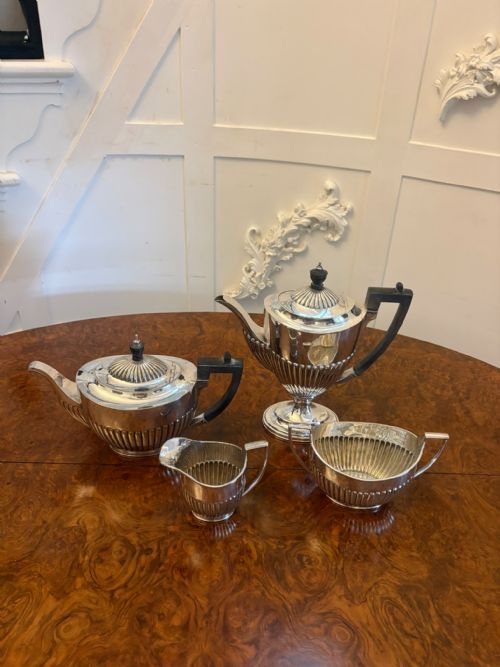
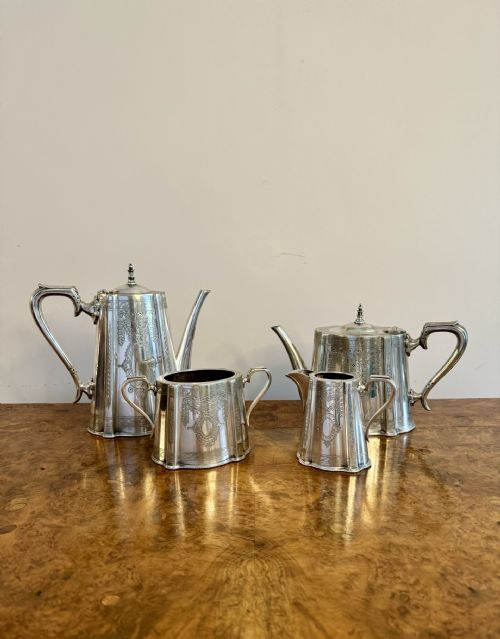
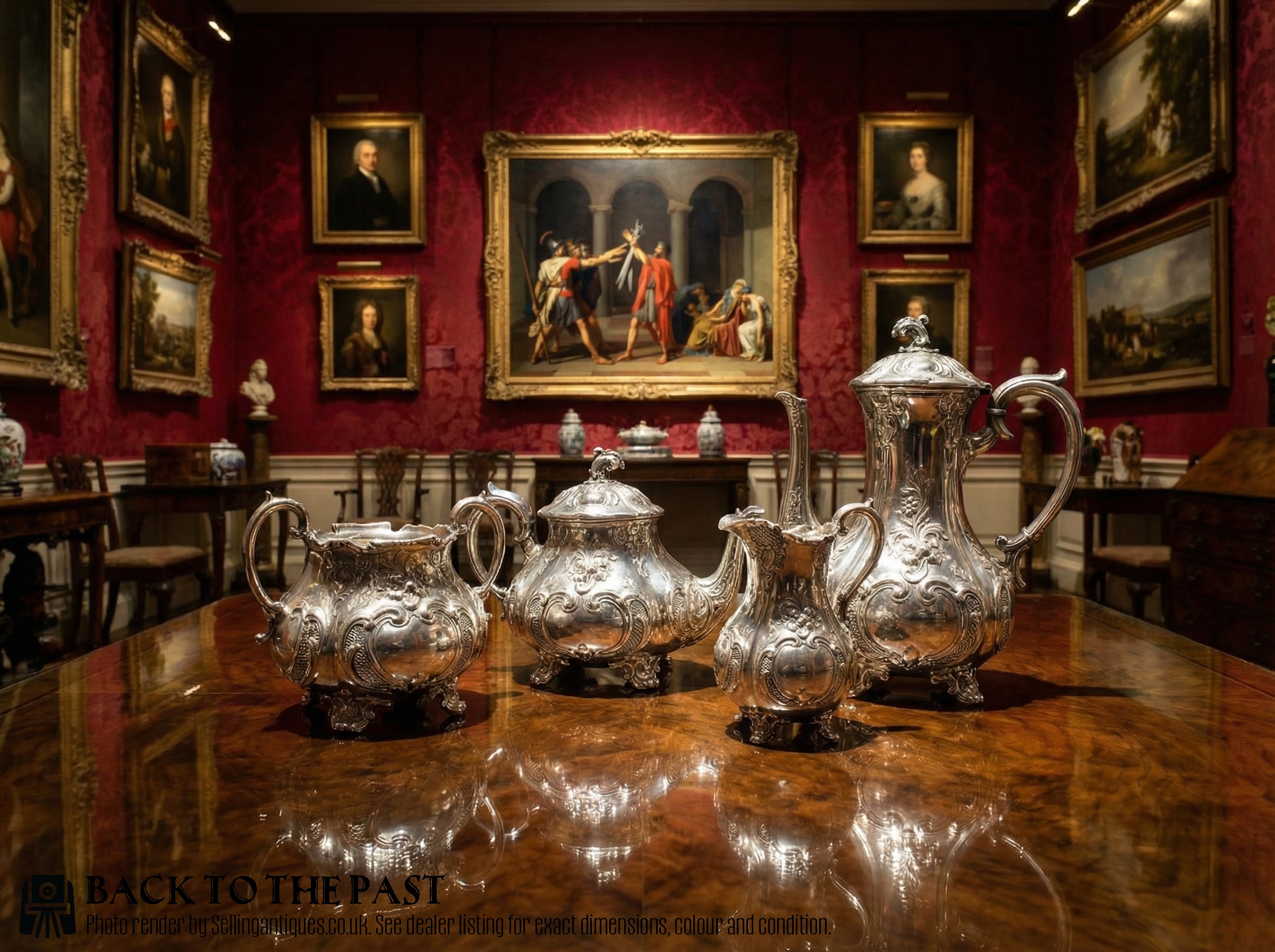
An edwardian tea set comprises matching vessels designed for serving tea, most frequently appearing as three or four piece configurations consisting of a teapot, sugar basin, and milk jug, sometimes accompanied by a matching coffee pot. These services date from the early twentieth century around 1900 to 1910, reflecting the formal domestic habits of the Edwardian era.
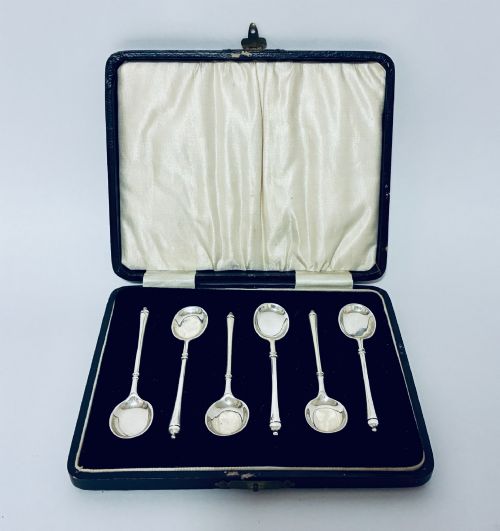
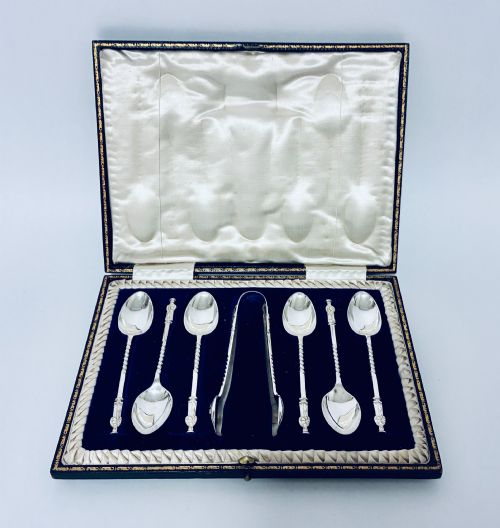
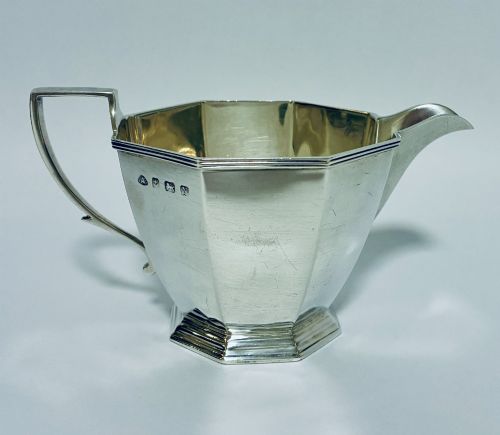
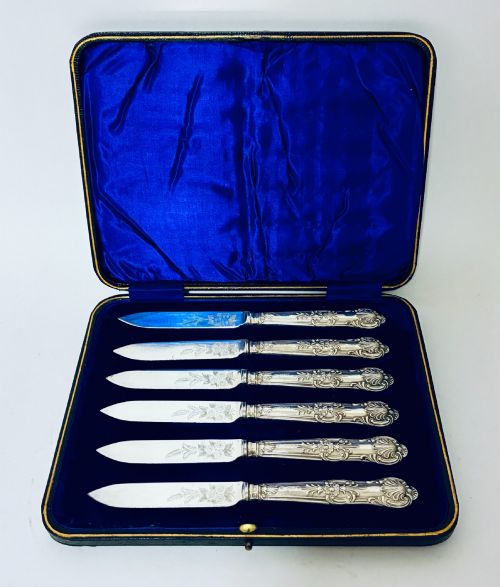
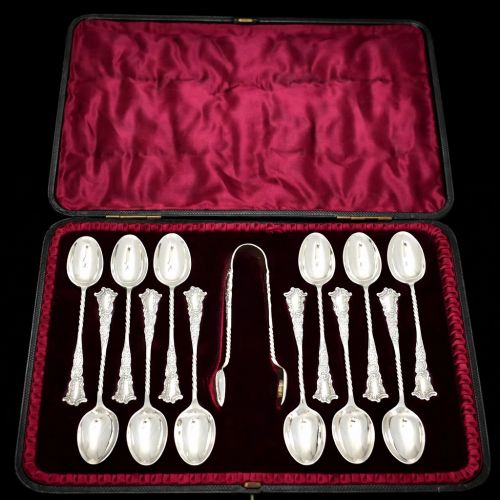
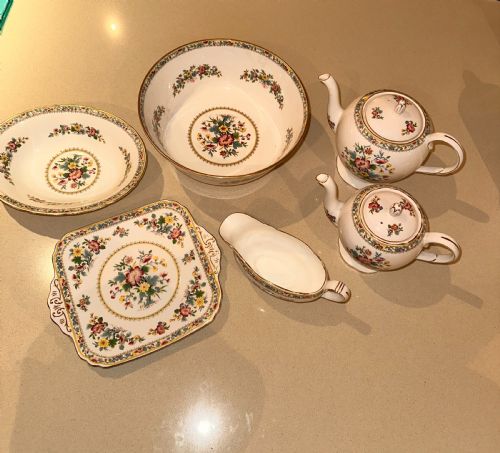
The services seen on this page span complete tea and coffee sets down to smaller tea for two configurations, alongside boxed teaspoon sets and novelty miniature silver examples. Teapots are often paired with complementary sugar bowls and cream jugs, maintaining uniform styling across every component in the set.

Markers of distinction
Quality rests in the weight of the metal and the crispness of the chased or embossed ornamentation applied to the bodies of the pots. Maker attribution plays a significant role, with established firms like Walker and Hall or Cooper Brothers and Sons delivering heavier gauge metal and superior finishing.
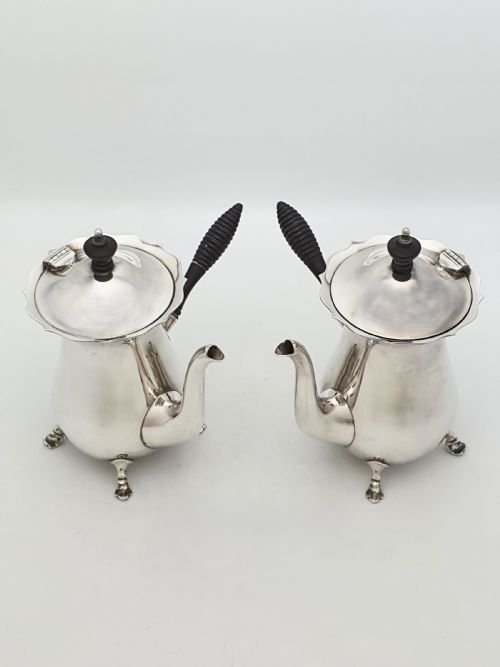
The completeness of the service affects its standing, with matching four or five piece sets commanding greater presence than smaller three piece configurations. Monograms, crisp hallmarks, and intact ebonised wooden handle insulators further distinguish finer examples.
Retail Price Guide 2026
Typical UK retail prices for edwardian tea set, calculated from the Sellingantiques database of over a million retail prices indexed since 2003. This retail price guide relies exclusively on Sellingantiques data; no external sources or auction records are used, so the figures do not describe the wider market.
Walker and Hall·Cooper Brothers and Sons Ltd·Saunders and Shepherd·Royal Crown Derby
The Edwardian Tea Set Glossary
- Electroplated nickel silver
- A base metal alloy coated with a layer of silver through an electrical process. This method offered an accessible alternative to solid silver whilst maintaining a bright reflective finish.
- Hallmark
- An official stamp applied to precious metals indicating the standard of purity, the assay office, and the date letter. Chester and Sheffield offices frequently appear on silver pieces from this period.
- Bachelor tea set
- A smaller scale tea service designed for one or two people, typically comprising a compact teapot, sugar basin, and milk jug. These were popular for intimate use or smaller households.
- Ebonised wood
- Timber treated to resemble ebony, frequently utilised for handles and finials on metal teapots to prevent heat transfer during pouring.
- Silver plate
- A thin layer of silver bonded to a base metal foundation. It allows larger serving items to remain relatively light and durable.
Frequently Asked Questions
What pieces belong in a standard tea set?
A standard set generally includes a teapot, a sugar basin, and a milk jug, forming a cohesive trio for serving hot beverages.
Larger configurations often expand to four or five pieces by adding a matching coffee pot or hot water kettle on a stand.
How do I distinguish silver plate from solid silver?
Solid silver pieces carry official hallmarks indicating the purity of the metal and the assay office that tested it. Items without these stamps are typically silver plated over a base metal.
Examining the edges and high points can also reveal the underlying base metal if the thin silver layer has worn away through decades of polishing.
What is a bachelor tea set?
A bachelor tea set is a reduced scale service created for single occupants or intimate gatherings. These compact sets feature smaller teapots and matching vessels designed to occupy less space on a tray or table.
Despite their smaller proportions, they retain all the functional elements of a full sized service.
How should I care for silver plated tea sets?
Regular dusting and occasional gentle cleaning with a specialist silver polish will maintain the lustre without damaging the plated surface. Avoid harsh abrasives that can wear down the thin silver layer.
When not in use, storing items in a dry environment helps prevent tarnish accumulation.