


Epns Tea Set
An epns tea set brings traditional elegance to the table, offering silver-plated lustre without the heavier cost of solid metal.
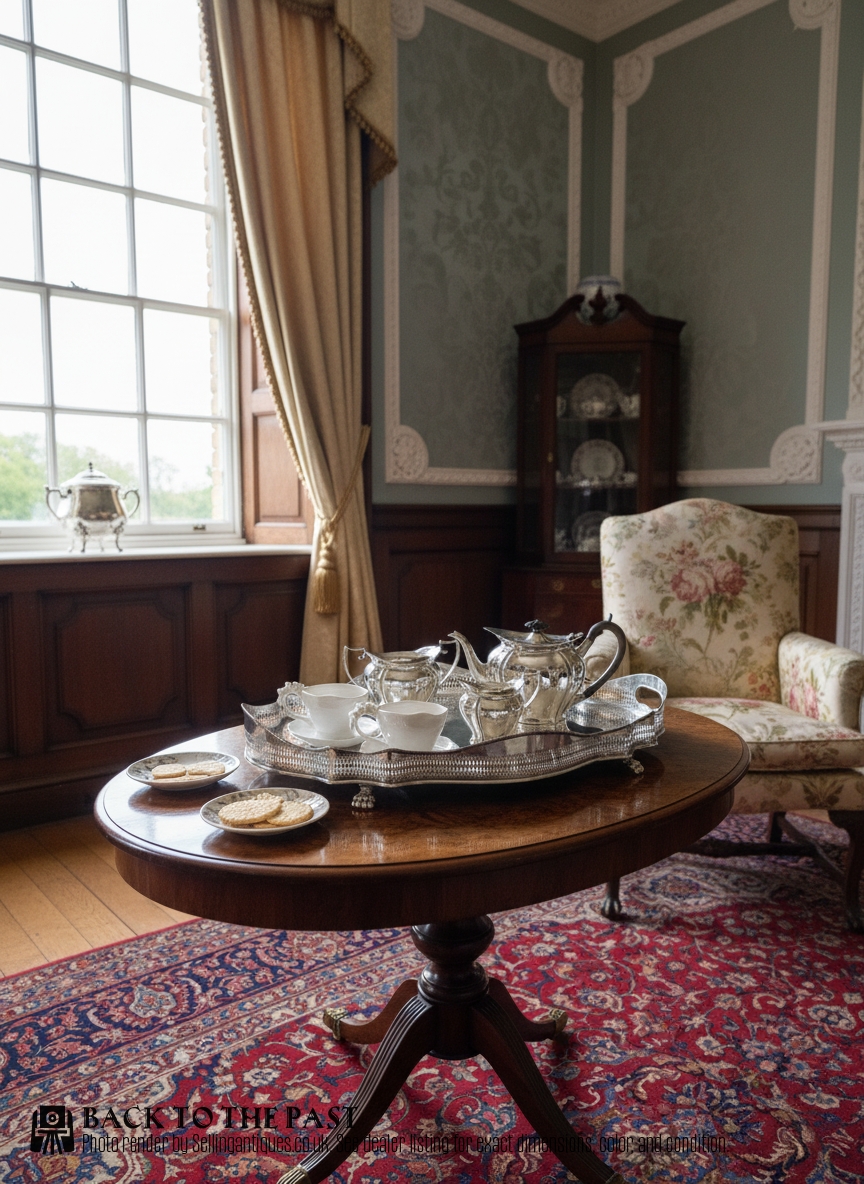
Epns Tea Set
An epns tea set comprises matching vessels for serving tea and coffee, frequently appearing as three, four, or six piece configurations. These service sets emerged across the Victorian, Edwardian, and Art Deco eras, reflecting the shifting domestic fashions of their respective decades.
The most common version met on this page is the Edwardian silver plated set, typically arriving alongside Victorian ornate designs and later Art Deco interpretations. Buyers encounter complete tea and coffee services, alongside smaller sugar and creamer pairings and jug combinations.
Forms range from compact groupings to large, elaborate services designed for formal entertaining. Each collection brings together matching pots, creamers, and sugar basins fashioned from silver plate over a base metal.
Materials and construction
The pieces rely upon electroplated nickel silver, a technique that coats a durable base metal with a layer of silver. This process provided the visual appeal of solid silver for Victorian and Edwardian households.
Handles and insulators often incorporate wood, ebony, or ebonised wood to prevent heat transfer during use. Gilt highlights occasionally appear on interior surfaces, adding contrast to the silver plated exterior.
Mappin & Webb gave their sugar and cream set the snappy designation Model No 52150.
Evaluating quality and craftsmanship
Quality rests upon the preservation of the silver plating and the crispness of the chased or engraved ornamentation. Victorian sets often display heavy, ornate decoration, whereas Edwardian and Art Deco examples favour cleaner lines or specific model forms.
The integrity of the construction matters greatly, particularly where wooden or ebonised insulators meet the metal body. Weight, balance, and the proportion of matching components dictate the standing of a service within its period.
Mappin & Webb
The Epns Tea Set Glossary
- EPNS
- Electroplated nickel silver. This denotes a base metal core coated with a thin layer of silver through an electrolytic process.
- Silver Plate
- A metallic coating applied to a base metal object. It provides the appearance and lustre of solid silver.
- Ebonised Wood
- Timber treated to resemble ebony. It appears frequently on handles and finials to insulate against heat.
- Gilt
- A thin layer of gold applied to a surface. It is often found on the interior bowls of sugar basins or cream jugs.
Epns Tea Set: Frequently Asked Questions
What pieces belong in a full set?
A standard service includes a teapot, a milk jug, and a sugar basin. Larger configurations expand to incorporate a coffee pot, hot water kettle, or matching tray.
Counts vary from two-piece jug and bowl pairings up to expansive six-piece collections. Each component shares stylistic traits and plating characteristics.
How do I date an epns tea set?
Stylistic clues offer the clearest indication of age. Victorian services tend to be heavy and ornate, Edwardian examples display refined Edwardian elegance, and 1930s sets embrace geometric Art Deco forms.
Materials also assist identification, as ebonised wood and specific plating markers evolve across these decades. Examining the silhouette helps separate nineteenth-century designs from twentieth-century production.
How should I clean silver plate?
Silver plate requires gentle maintenance to preserve the underlying electroplated layer. Use non-abrasive polishes specifically formulated for plated items rather than harsh chemical dips.
Frequent, light cleaning prevents tarnish accumulation without wearing away the finish. Soft cloths protect the metallic surfaces and any incorporated wooden handles.
Were these sets used daily?
Many services served formal domestic routines rather than everyday dining. Their presence reflected social standing and hospitality standards in Victorian and Edwardian households.
Over time, changing domestic habits shifted these collections from active service to display pieces. Their construction nonetheless remains robust enough for occasional modern use.