
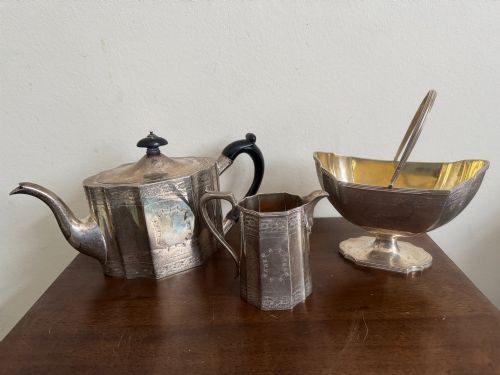


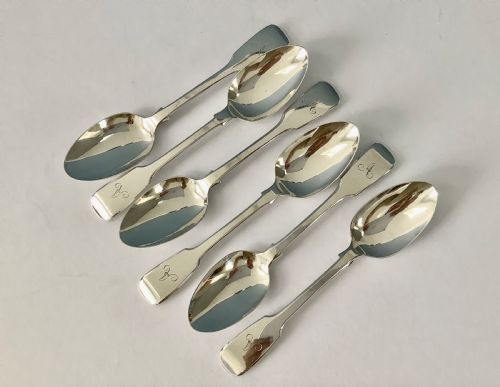
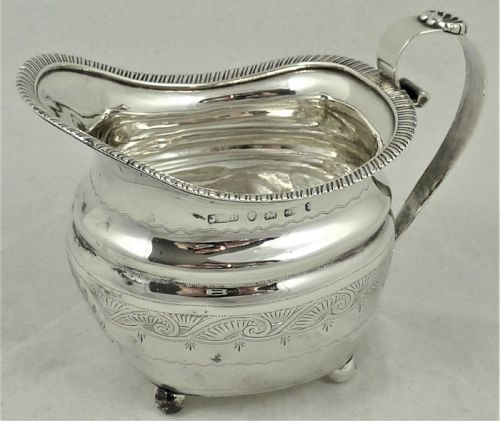


Engraved Silver Tea Set
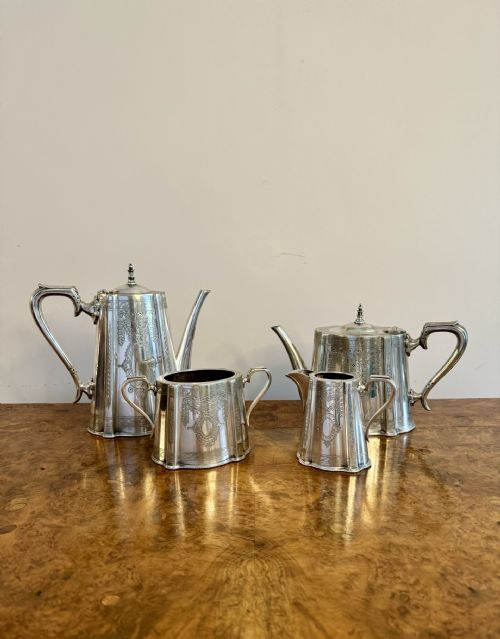
An engraved silver tea set brings heavy Victorian and Edwardian weight and sharp surface chasing straight to the afternoon table.
Engraved Silver Tea Set
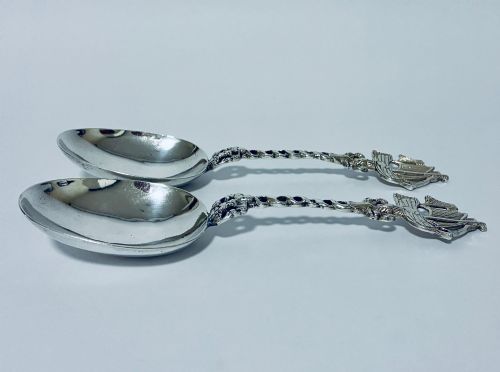
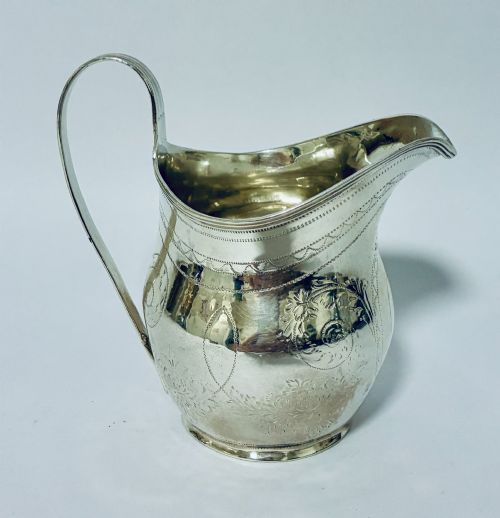
When you search for an engraved silver tea set, you encounter complete services alongside individual cream jugs, sugar bowls and coffee biggins spanning the Georgian, Victorian and Edwardian eras. These collections often include pots, jugs and basins fashioned from solid sterling silver or silver plate, sometimes accompanied by matching spoons and tongs.
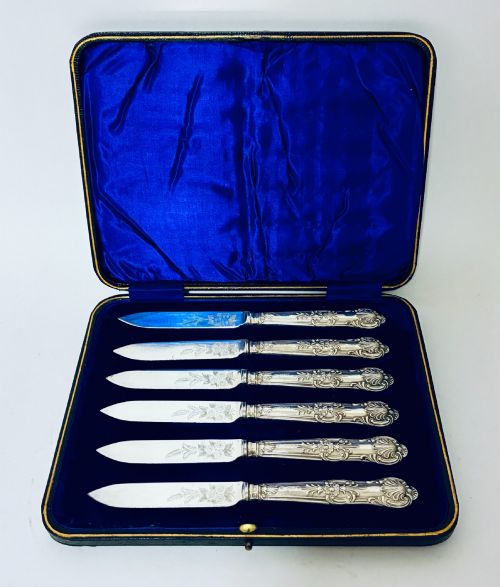
The services on this page range from grand four-piece Victorian spreads down to compact three-piece sets, with regional British pieces originating from makers in London, Glasgow and Newcastle. Alongside full services, related table items such as individual cups, saucers and fruit knives appear frequently within the listings.
What varies in quality
The depth and clarity of the hand-engraving distinguish finer services from simpler plated wares, as sharp, well-defined floral and swag motifs demand considerable skill from the silversmith. Heavy-gauge sterling silver provides a substantial feel and structural rigidity that lighter plated alternatives lack.
Maker marks and legible hallmarks stamped into the metal verify the origin and silver standard, adding historical weight to pieces by known workshops. The integrity of internal joints, matching components across a service, and the retention of original ebony handle fittings further separate standard production items from masterworks.
The evidence records production across Georgian, Victorian, Edwardian, Regency and Dutch Regional Neo-Renaissance styles.
Walker and Hall·Paul Storr·Robert Stebbings·Robert Hennel·John Walton·Benetfink London
The Engraved Silver Tea Set Glossary
- Sterling silver
- An alloy consisting of pure silver and other metals, typically copper, standardised at a specific purity for durability and strength. It forms the primary material for high-grade antique tea services.
- Silver plate
- A base metal, such as nickel silver, coated with a thin layer of pure silver through electroplating or mechanical bonding. This technique offered an accessible alternative to solid silver during the nineteenth century.
- Silver-gilt
- Silver that has been coated with a thin layer of gold on its surface, often applied to the interior bowls of sugar basins and cream jugs. This process protected the silver from tarnishing when exposed to acidic contents.
- Coffee biggin
- A tall coffee pot fitted with an internal fabric or metal filter bag, frequently raised on a matching metal stand with a spirit lamp. These pieces represent the more elaborate end of nineteenth-century beverage services.
- Hallmark
- A series of official stamps applied to precious metal items by an assay office to indicate the purity, origin year and maker. British pieces commonly display town marks and maker initials alongside the lion passant.
Engraved Silver Tea Set: Frequently Asked Questions
What pieces comprise a complete tea set?
A standard antique service typically includes a teapot, a cream jug and a sugar basin, while larger Edwardian and Victorian arrangements often expand to four pieces by adding a dedicated hot water pot or coffee pot.
Matching auxiliary items such as silver tongs or teaspoons sometimes accompany these groupings, though many services evolved as composite sets gathered over time.
How do I care for antique silver?
Regular, gentle dusting with a soft cloth prevents surface grime from accumulating within the intricate engraved crevices of the metal. When polishing becomes necessary, a reputable non-abrasive silver cream applied sparingly preserves the crispness of the hand-chased decoration without thinning the underlying plate or sterling.
Storing pieces in dry environments away from direct sunlight protects any original wooden handles and velvet or silk linings from degrading.
How can I date my tea set?
British silver incorporates assay office hallmarks that decode directly into specific production years, featuring sovereign duty marks, date letters and maker initials. Stylistic shifts also offer clear chronological markers, moving from the restrained neoclassical lines of the Georgian period to the ornate, heavy floral chasing of the Victorian era and the lighter Edwardian forms.
Were these sets used daily?
Nineteenth-century households deployed these silver and plated services primarily for formal afternoon tea gatherings and hosting visitors in the drawing room. The inclusion of ebony handle insulators and heat-resistant stands indicates they were fully functional for serving hot beverages rather than functioning as purely decorative cabinet displays.