


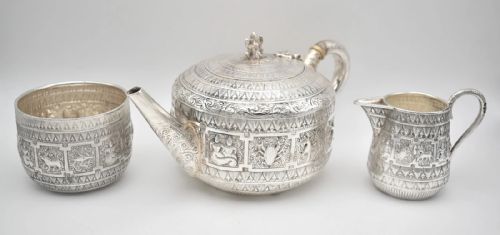

Silver Milk Jug and Sugar Bowl
These silver milk jug and sugar bowl sets bring period elegance to the table, combining functional service with traditional craftsmanship.
Silver Milk Jug and Sugar Bowl
A silver milk jug and sugar bowl set forms the core of traditional teaware, designed to accompany tea or coffee service on the dining table. These matching or complementary pairs appear in configurations ranging from simple two-piece sets to larger four-piece tea services.
The pieces on this page span several distinct eras, including Georgian, Victorian, and Edwardian periods. Buyers will encounter both solid sterling silver pairs and silver-plated metal versions, reflecting the diverse manufacturing practices of their respective times.
Forms vary from restrained classical profiles to ornate Edwardian Rococo Revival and Victorian Anglo-Indian styles. Most examples originate from English workshops, showcasing the traditional forms used in domestic tea service throughout the nineteenth and early twentieth centuries.
Materials and construction methods
Silversmiths utilised solid sterling silver for high-end pieces, while electroplated nickel silver and standard silver plate provided durable alternatives for everyday households. Copper sometimes formed the base metal beneath silver plating, particularly in older Sheffield plated items.
Decorative techniques include ornate grapevine detailing, embossing, and chased patterns that define styles like Edwardian Rococo Revival and Indianesque designs. Internal elements occasionally incorporate materials such as ebony handles or gold gilt interiors to enhance utility and visual contrast.
Some sugar bowls feature gilded interiors designed to withstand the corrosive nature of loose sugar crystals.
Assessing quality in service sets
The weight of the metal and the crispness of the chased or embossed detailing separate standard sets from superior examples. Heavy gauge silver plate or solid sterling silver maintains structural integrity and resists denting through years of use.
Artisanal execution in decorative elements, such as detailed grapevine motifs or bespoke handles, indicates higher workshop standards. The preservation of original gold gilt interiors or ebony components also influences the overall integrity of a set.
George Fox·Robert Hennell·Goldsmiths & Silversmiths·Liberty
The Silver Milk Jug and Sugar Bowl Glossary
- Silver Plate
- A thin layer of silver applied to a base metal such as copper or nickel silver. This technique offered the appearance of solid silver at a lower cost.
- Sterling Silver
- An alloy consisting of pure silver and other metals, typically copper, standardly marked for its high purity. Solid sterling silver sets represent the highest tier of teaware production.
- Electroplated Nickel Silver
- A base metal alloy of copper, nickel, and zinc coated with a layer of pure silver using an electrical process. This material became widespread for durable tableware.
- Gilt
- A thin coating of gold applied to the interior surface of a sugar bowl or milk jug. This finish protected the metal from tarnishing due to sugar or dairy.
- Rococo Revival
- A nineteenth-century design style characterised by asymmetrical scrollwork, floral motifs, and ornate relief ornamentation. Sets in this style display high levels of decorative detail.
Silver Milk Jug and Sugar Bowl: Frequently Asked Questions
How do I clean antique silver teaware?
Use a soft cloth and a specialised silver cleaner designed to remove tarnish without abrading the metal surface. Avoid harsh chemical dips, especially on plated items where the base metal might become exposed.
Rinse the pieces thoroughly in warm water and dry them completely with a soft lint-free cloth to maintain their lustre between uses.
Can I use these sets for daily tea service?
Many silver-plated and solid silver sets remain sturdy enough for regular domestic use, provided they receive careful handling and prompt cleaning after use. Dairy and sugar residues should not sit in the vessels for extended periods to protect the interior finishes.
Solid silver and high-quality plated sets tolerate gentle everyday handling well, though antique gilt interiors require extra care to prevent wear.
How do I distinguish sterling silver from silver plate?
Examine the pieces closely for official hallmarks, which include symbols indicating solid sterling silver standards such as a lion passant in English pieces. Silver-plated items generally carry manufacturer marks denoting electroplating rather than assay office guarantees.
Weight and wear patterns also offer clues, as worn plating may reveal a yellowish or copper-coloured base metal underneath.
What period do most of these sets come from?
The available pieces span the nineteenth and early twentieth centuries, with strong representation from the Victorian and Edwardian eras. Georgian examples also appear alongside later twentieth-century service pieces.
Stylistic cues such as heavy embossing or sleek profiles help assign sets to specific decades like the eighteen-eighties or nineteen-twenties.