
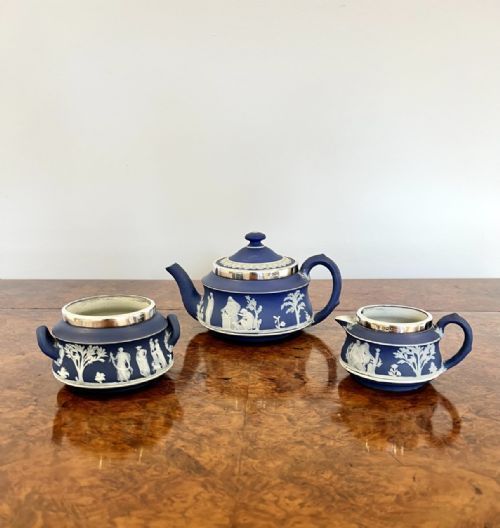


Silver Teapot Set
A silver teapot set brings domestic ritual to the table, uniting the pot, cream jug and sugar basin in matching metal or ceramic.

Silver Teapot Set
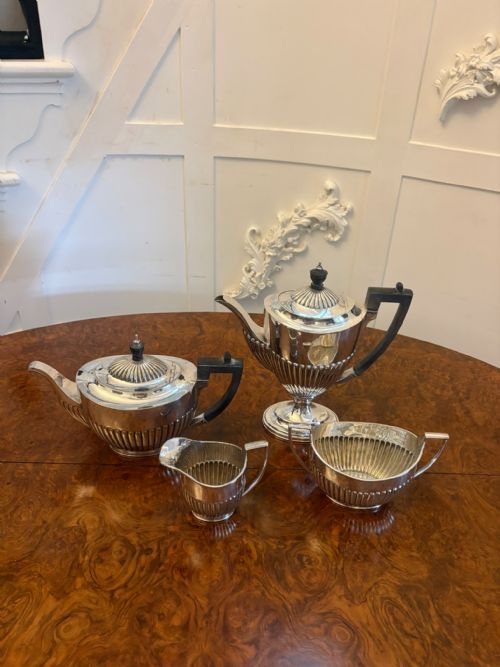
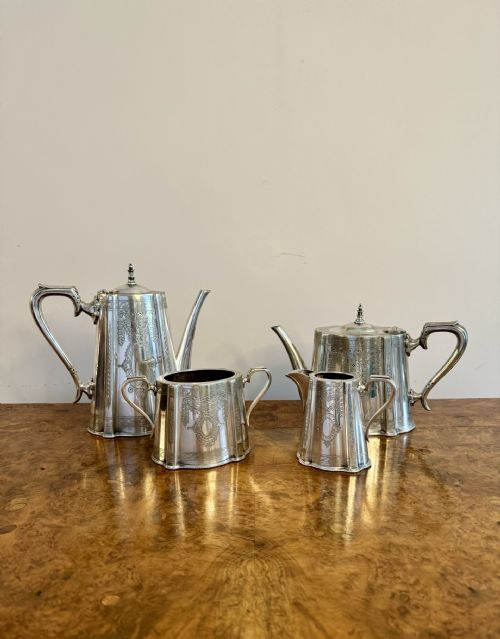
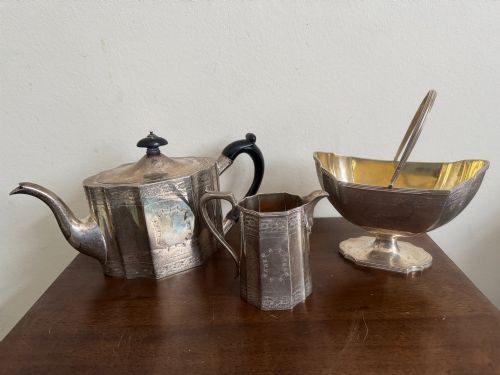
A silver teapot set appears primarily in Edwardian silver plate and sterling silver, alongside Georgian, Victorian, and later twentieth-century examples. The selection ranges from three-piece configurations to expansive six-piece services that include dedicated coffee pots and kettles.
Most pieces on this page stem from the Edwardian period, often realised in silver plate with ornate detailing such as grapevine motifs. Earlier Georgian and Victorian iterations bring sterling silver, alongside occasional integrations of ceramic elements like Wedgwood Jasperware.
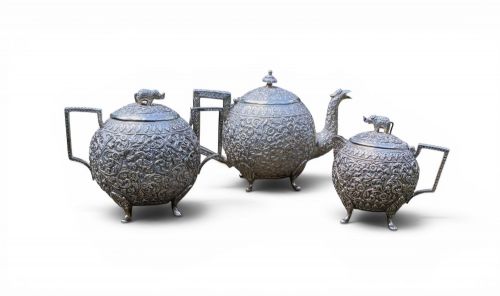
The services encompass various designations, including tea services, tea and coffee sets, and specialised formats like The Cube. Buyers encounter domestic English work alongside regional expressions such as Kutch Indian silver teasets and Scottish sterling silver services.
Materials and construction
Makers construct these sets using sterling silver, silver plate, and electroplated nickel silver as the foundational metals. Components frequently incorporate insulating elements such as ebony and ebonised wood for handles and finials to prevent heat transfer during pouring.
Craftsmen employ specialist techniques to achieve decorative surfaces, spanning from Neoclassical and Edwardian Rococo Revival styling to embossed Indianesque Zodiac motifs. Metal is shaped, chased, and mounted, sometimes combining ceramic bodies with silver mounts.
Silver Teapot Set Retail Price Guide 2026
Typical asking prices for silver teapot set among the pieces listed under this phrase on Sellingantiques today, from the lower quarter to the upper quarter. They describe what is for sale here now, not the wider market.
Materials recorded across the archive range from solid sterling silver and silver plate to ebony, wood, and Jasperware.
Distinctions in manufacture
The hierarchy of quality rests on the weight of the metal and the crispness of chased or embossed ornamentation, such as grapevine detailing. Heavy-gauge sterling silver and substantial silver plate retain structural integrity and detail over generations of daily service.
Maker attribution elevates certain sets, with marked pieces from established workshops and retailers carrying distinct weight. The completeness of matched multi-piece services also governs standing, particularly when matching pots, jugs, and basins survive together.
Walker and Hall·Goldsmiths and Silversmiths Co·Joseph Craddock·Benjamin Smith·George Fox·Mappin and Webb·WMF
The Silver Teapot Set Glossary
- Silver Plate
- A base metal, such as nickel silver, coated with a thin layer of pure silver. This technique provided an accessible alternative to solid sterling silver during the nineteenth and twentieth centuries.
- Sterling Silver
- An alloy comprising ninety-two point five percent silver and seven point five percent other metals, typically copper. It represents the standard for high-grade British domestic silver plate and holloware.
- Electroplated Nickel Silver
- A copper, nickel, and zinc alloy that serves as a robust foundation for silver plating. Abbreviated as EPNS, it gained widespread use in Victorian and Edwardian manufacturing.
- Jasperware
- A type of fine stoneware developed by Josiah Wedgwood, characterised by a matte finish and contrasting white relief figures. It appears mounted in silver within specific tea set iterations.
Silver Teapot Set: Frequently Asked Questions
Can I use my silver teapot set daily?
Many sets were built for robust domestic use, particularly silver-plated Edwardian and Victorian services. Ensure you check for interior cleanliness and test pour spouts gently.
Sterling silver and plated sets handle regular tea service well if treated with care. Avoid boiling water poured directly into unheated antique pots to prevent thermal shock.
What is the difference between a tea set and a tea and coffee set?
A standard tea set typically comprises a teapot, a milk jug or creamer, and a sugar basin. These three pieces focus exclusively on the afternoon tea service.
Tea and coffee sets add a taller coffee pot to the grouping, sometimes alongside a hot water kettle on a stand. This expanded configuration emerged as dining habits shifted towards morning and after-dinner coffee.
How do I identify the period of a silver set?
Examine hallmarks on sterling silver pieces for maker's marks, assay office symbols, and date letters. British silver hallmarks provide exact years of manufacture.
Silver-plated sets rely on style cues, such as Edwardian Rococo Revival curves or Art Deco geometric lines. Maker marks stamped on the base also help date the production era.