


Georgian Silver Tea Set
A georgian silver tea set brings the weight and bright gleam of the eighteenth and nineteenth centuries straight to the table.
Georgian Silver Tea Set
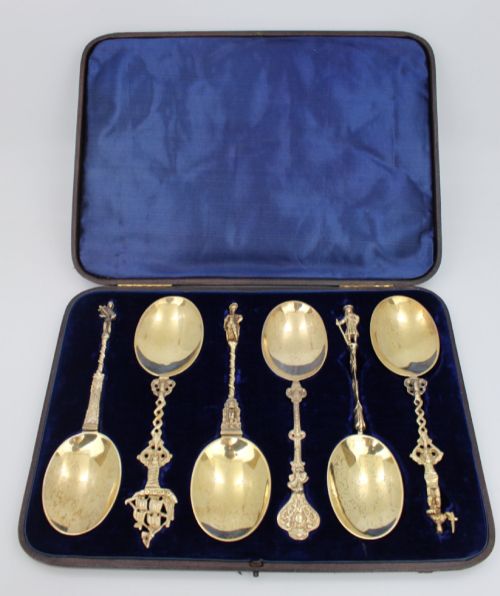
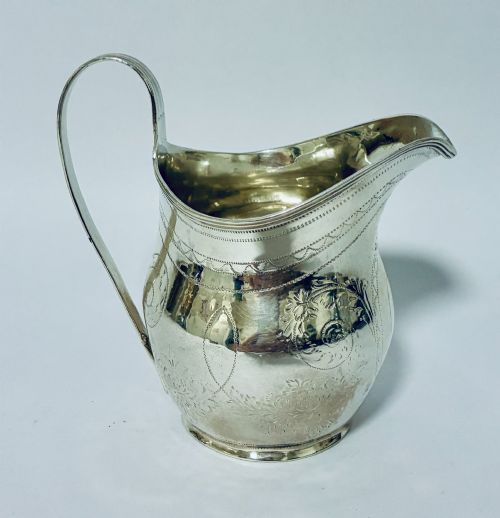
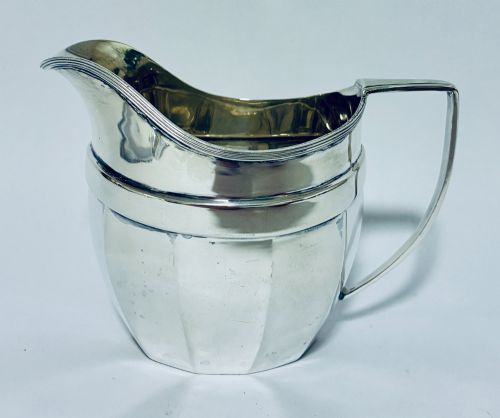
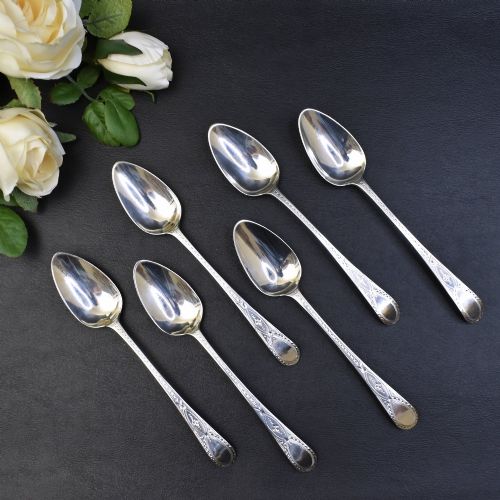
A georgian silver tea set gathers matching or associated vessels for service, most commonly grouping teapots, coffee pots, cream jugs, and sugar bowls together. Buyers searching for a georgian silver tea set will find complete four-piece services alongside individual milk jugs, caddies, and small teaspoons.
The objects span actual Georgian reigns as well as later revivals, including pieces from the Regency and William IV periods, alongside twentieth-century iterations. Most material originates from London, though Irish, Scottish, and provincial makers also appear across the listings.
Materials and construction
Silversmiths constructed these services primarily in sterling silver and silver plate, frequently employing copper cores for plated wares such as Old Sheffield plate. Interiors occasionally incorporate gold gilt, while associated items like caddies combine silver with wood, velvet, and shagreen.
Makers shaped the heavy metal through casting, raising, and chasing, applying decorative motifs like bright-cut engraving, acanthus foliage, and grape vine leaf borders. Individual spoons utilise fiddle patterns and fancy backs, shaped by hammer and die in London and provincial workshops.
Listings feature sterling silver, silver-gilt, Old Sheffield plate, copper, wood, velvet, and shagreen.
Judging quality and completeness
Quality rests heavily upon the harmony of the service and the crispness of the hand-chased decoration, such as floral motifs or melon-shaped bodies. Pieces retaining their original matching stands and uniform maker marks hold greater integrity than composite sets assembled later.
The depth and legibility of hallmarks stamped into the sterling metal indicate the original standard of the silversmith's output. Substantial gauge silver resists dents and maintains structural balance across spouts, handles, and heavy coffee biggins.
P A W Bateman·Joseph Craddock·Benjamin Smith·Paul Storr·Barnard·Robert Hennell·Bateman Family·JOHN LIAS II
The Georgian Silver Tea Set Glossary
- Hallmark
- Official stamps struck into precious metal indicating the maker, assay office, and date of manufacture. These marks allow a buyer to date a georgian silver tea set down to a specific year.
- Bright-cut engraving
- A surface decoration technique utilising faceted cuts that reflect light from various angles. Silversmiths used this method to adorn teaspoons and hollowware with geometric borders.
- Coffee biggin
- A tall coffee pot fitted with a lamp stand or designed to hold an internal straining mechanism. They appear in Regency collections alongside standard tea services.
- Sheffield plate
- A fused composite material made by melting a thin sheet of silver onto a thicker copper base. It predates electroplating and forms the body of several Georgian tea bowls and jugs.
- Shagreen
- Prepared shark or ray skin used to cover luxury containers. It frequently wraps around wooden tea caddies from the eighteenth century.
Georgian Silver Tea Set: Frequently Asked Questions
What pieces belong in a tea set?
A standard service comprises a teapot, a milk or cream jug, and a sugar bowl, often accompanied by a matching coffee pot. Many historical listings expand this grouping to include slop basins, tea caddies, and specialised spoons.
Buyers also encounter smaller three-piece configurations or individual pieces that replicate the styling of a full service. These combinations reflect the evolving social rituals of tea drinking across different households.
How do I know the date?
London and provincial silversmiths stamped their work with date letters alongside city marks and maker initials. These punch marks provide the precise year a spoon or pot passed through the assay office.
When a service spans multiple years or makers, the hallmarks reveal whether the pieces were matched at a later date or commissioned as a unified suite.
Are these sets safe for daily use?
Solid sterling silver and heavy plate withstand regular handling if washed gently by hand without harsh abrasives. Owners frequently use these vessels for modern dining, treating the antique metal with practical care.
Internal gilt surfaces on cream jugs help protect the silver from acidic contents, though delicate hinges on older pots require mindful attention.
What is Old Sheffield plate?
Old Sheffield plate is an early form of plating created by fusing a sheet of silver to a copper ingot before rolling them into sheets. This technique produces durable items with a warm visual depth that differs from modern electroplate.
Pieces made this way show subtle traces of copper where the silver layer thins near high-friction edges over generations of use.