






George III Silver Service
These pieces of george iii silver service are Georgian tableware items forged from sterling silver, offering a glimpse into elite dining tables of the eighteenth and early nineteenth centuries.
George III Silver Service
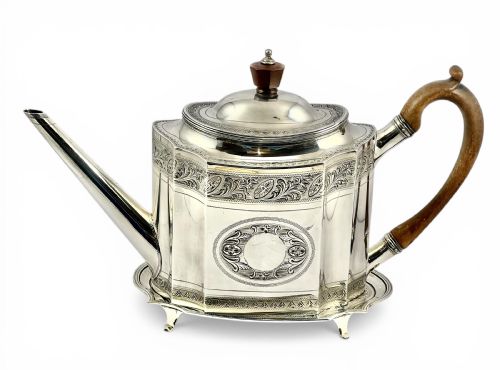
Buyers browsing george iii silver service encounter a range of functional tableware items originating from the Georgian period, specifically spanning the late eighteenth century and the early decades of the eighteen hundreds. The selection predominantly includes cream jugs, teapots, sauce boats, and sugar tongs, alongside egg cruet sets and tea sets.
These items emerge from British provincial workshops as well as London makers, reflecting the refined tastes of Neoclassical and Regency design movements. Most examples date from the latter half of the eighteenth century up to the first decade of the nineteenth century, showcasing sterling silver as the primary medium.
Materials and construction
Makers shaped these items primarily from solid sterling silver, occasionally incorporating wood elements or applying silver gilt and gold gilt highlights to enrich the surfaces. Silversmiths utilised traditional forging and casting methods to create sturdy domestic vessels designed for daily use.
Provincial and London workshops stamped their creations with hallmarks indicating the year of production, the town of origin, and the maker's mark, ensuring a clear record of provenance.
Styles represented across the pieces include Georgian, George III, Neoclassical, and Regency designs.
Indicators of standard
Quality in these items rests upon the clarity of the hallmarks, the crispness of the Neoclassical or Regency ornamentation, and the balance of the form. Pieces bearing legible maker marks and town stamps hold distinct advantages over those with worn stamps.
The weight of the sterling silver and the precision of the handle attachment or pedestal foot also separate standard domestic vessels from exceptional examples produced by prominent silversmiths.
Robert Hennell I London·John Emes·Thomas Tookey·Benjamin Smith
The George III Silver Service Glossary
- Sterling silver
- A standard alloy consisting of ninety-two point five percent silver and seven point five percent other metals, typically copper. This alloy provides the durability required for functional tableware.
- Hallmark
- An official stamp applied to precious metals indicating the standard of purity, the assay office, and the date letter. These marks allow collectors to date pieces accurately.
- Silver gilt
- Sterling silver that has been coated with a thin layer of gold on the interior or exterior surfaces. This technique adds warmth and protects the silver from tarnishing.
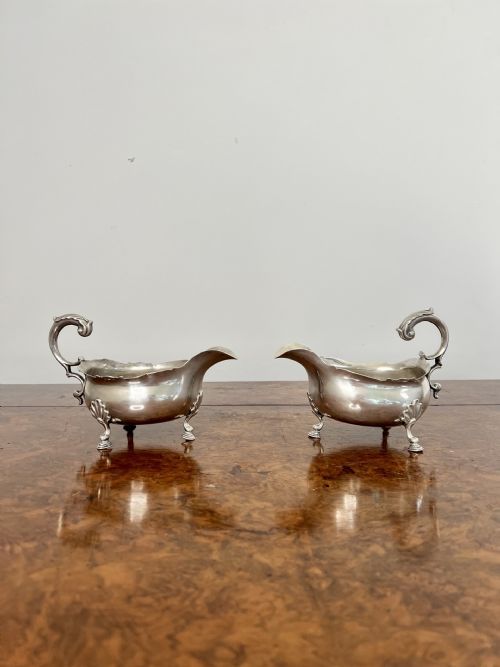
- Sauce boat
- An open vessel with a lip and handle used for serving gravies or sauces at the dining table. Georgian examples often feature shaped rims and distinct pedestal bases.
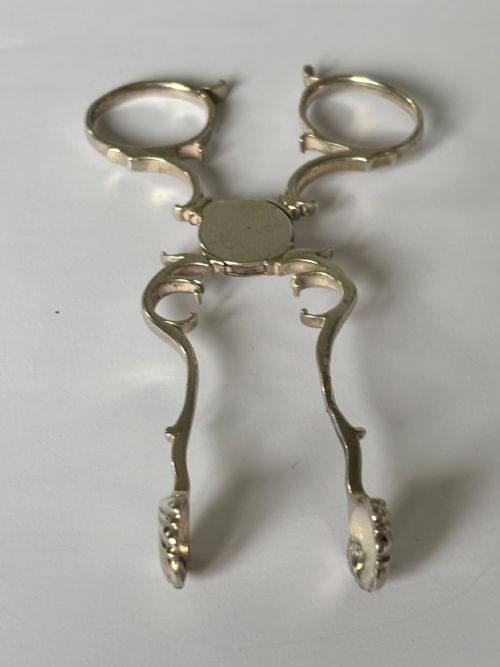
- Sugar tongs
- Small spring or scissor-form utensils designed for lifting sugar lumps into a teacup. Eighteenth-century versions often display delicate pierced decoration.
George III Silver Service: Frequently Asked Questions
What is a george iii silver service?
A george iii silver service comprises individual tableware vessels and utensils made during the reign of King George III. These items include teapots, cream jugs, and sugar tongs.
They reflect the dominant Neoclassical and Regency styles of the late eighteenth and early nineteenth centuries, fashioned in solid sterling silver.
How do I date a silver teapot?
Dating a silver teapot involves examining the hallmarks stamped onto the metal. These official marks typically reveal the assay office, the year letter, and the silversmith's mark.
Comparing these stamps against standard historical tables provides the exact year of manufacture.
What is provincial silver?
Provincial silver refers to items manufactured outside of London in regional British assay offices such as Newcastle. These pieces often bear distinct regional hallmarks.
Collectors value provincial items for their local character and the variety of regional silversmithing traditions they represent.