
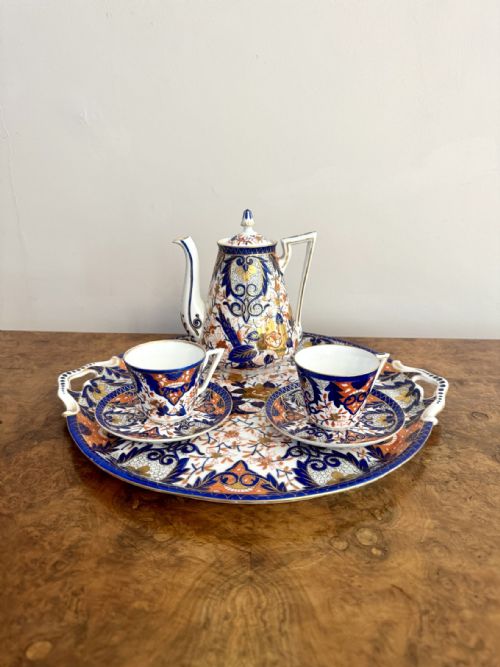


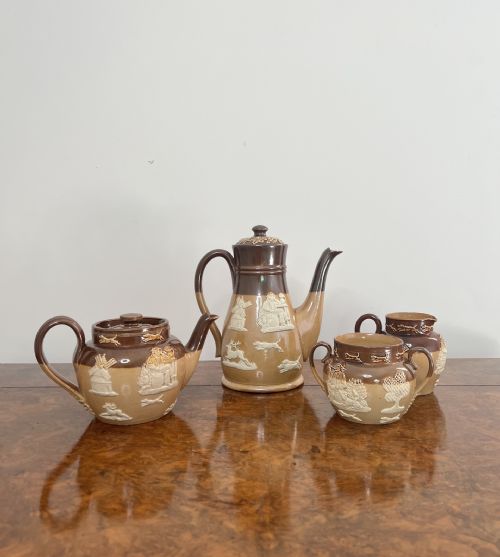


Victorian Coffee Pot
A victorian coffee pot brings nineteenth-century weight and domestic ritual to the table, whether cast in sterling silver or formed in porcelain.
Victorian Coffee Pot
A victorian coffee pot appears as a standalone vessel or as part of larger tea and coffee sets, alongside related forms such as hot water pots and jugs. The evidence shows these vessels span the nineteenth century into the early twentieth century, incorporating periods like the Edwardian era and specific dates from the eighteen-forties onward.
Stand-alone pieces range in capacity up to three pints, sometimes accompanied by crests, inscriptions, or presentation engravings. Buyers frequently encounter silver plated examples alongside sterling silver and porcelain bodies, reflecting the varied social uses of the period.
Materials and construction
Makers utilised sterling silver and silver plate over base metals, often employing electroplated nickel silver for plated wares. Ceramic examples rely on porcelain bodies, sometimes decorated with gold leaf, enamel, or patterns such as Victorian Imari.
Handles incorporate insulating materials like wood or cane to manage heat, while lids feature cast finials shaped as birds, eagles, or simple knobs. Surface decoration relies on hand-engraved floral designs, crests, and chased or ornate revival styles.
A bird or an eagle perches atop several nineteenth-century lids, serving as a functional finial.
Assessing the standard
Quality rests on the heaviness of the metal gauge, the crispness of hand-engraved details, and the integrity of applied or cast decorative elements like finials and handles. Substantial sterling silver vessels with clear hallmarks demonstrate superior material investment compared to lighter plated alternatives.
The precision of porcelain bodies and the application of enamel, gold leaf, or cobalt blue influence the standing of ceramic pieces. Maker attribution, such as documented works by firms like Elkington or Doulton, further distinguishes individual examples.
Boardman Glossop And Co·Elkington And Co·Dobson Piccadilly·Doulton·Royal Worcester·Davenport
The Victorian Coffee Pot Glossary
- Sterling silver
- A silver alloy containing 925 parts per. Thousand of pure silver, standard for British silver pieces.
- Silver plate
- A layer of silver fused to a base metal core, common in nineteenth-century domestic wares.
- Electroplated nickel silver
- A base metal alloy of copper, nickel, and zinc coated with silver through an electrical process.
- Imari
- A style of ceramic decoration originating in Japan, characterised by cobalt blue, red, and gold leaf on porcelain.
- Finial
- A decorative knob or sculpted form attached to the top of a coffee pot lid.
Victorian Coffee Pot: Frequently Asked Questions
How do I date a silver coffee pot?
Examine the hallmarks stamped on the metal, which typically include a date letter, a town mark, and a lion passant indicating sterling standard.
Matching these symbols against standard maker and date tables reveals the exact year of assay and the silversmith responsible.
Were these pots used daily?
Nineteenth-century households utilised these vessels for formal dining and drawing room hospitality, often as part of matching tea and coffee services.
Many bear presentation inscriptions or family crests, indicating they also served as commemorative gifts or prized household possessions.
What is the difference between silver and plated pots?
Solid sterling silver pots consist of precious metal throughout and carry official assay office hallmarks for purity.
Silver plated versions use a base metal foundation, such as nickel silver, coated with a thin layer of real silver.
How do I clean antique silver?
Wash silver pieces gently in warm water with mild soap, avoiding harsh abrasive cloths that can damage hand-engraved floral patterns.
Allow the metal to retain a natural, gentle polish rather than aggressive scrubbing which removes historic patination.