



Engraved Silver Pot
An engraved silver pot brings together disciplined metalwork and daily hospitality, spanning tea sets, mustard pots, and coffee vessels across Georgian, Victorian, and Edwardian periods.
Engraved Silver Pot
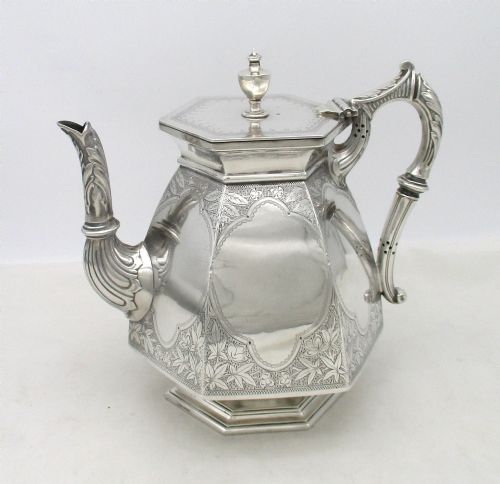
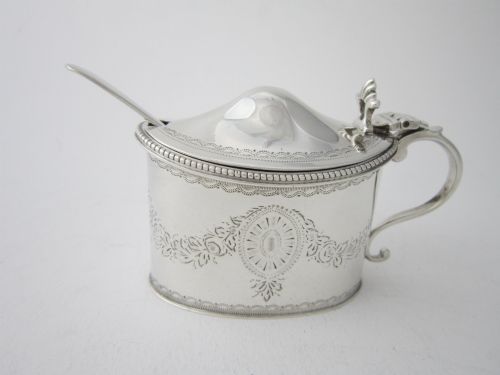
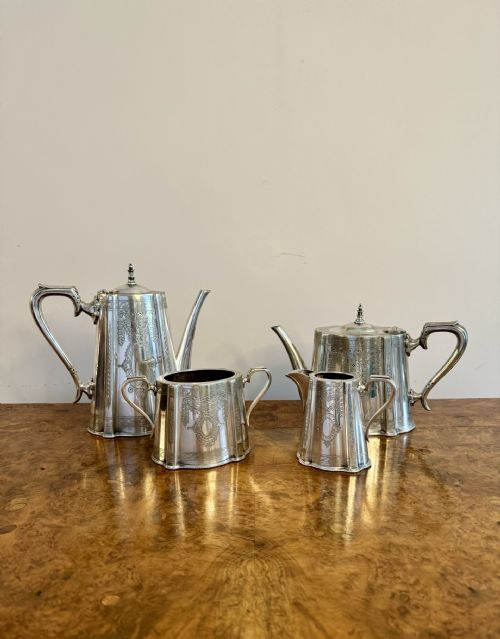
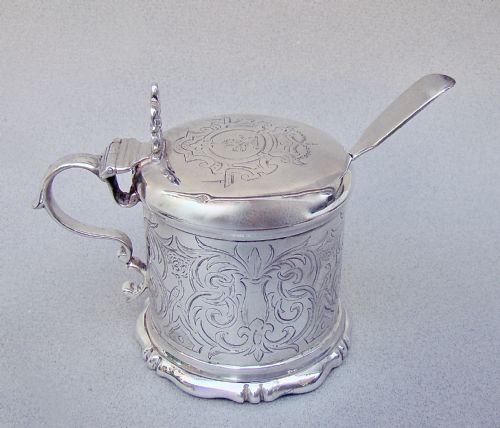
When you search for an engraved silver pot, you encounter an array of functional vessels spanning tea, coffee, mustard, and condiment service. The selection draws heavily from Georgian and Victorian periods, alongside Edwardian examples and Ottoman pieces.
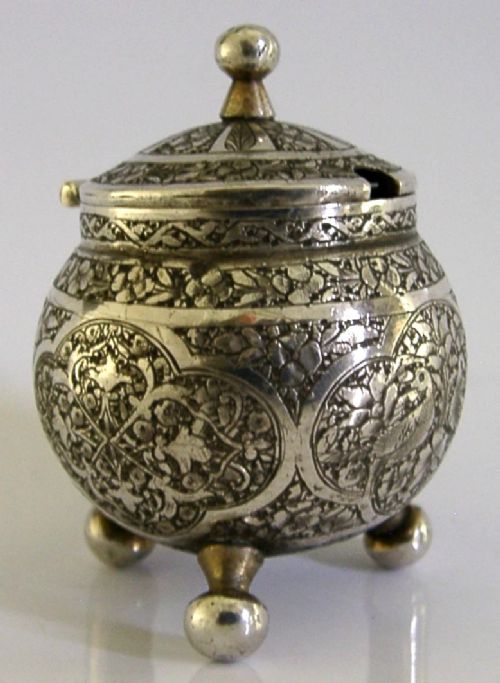
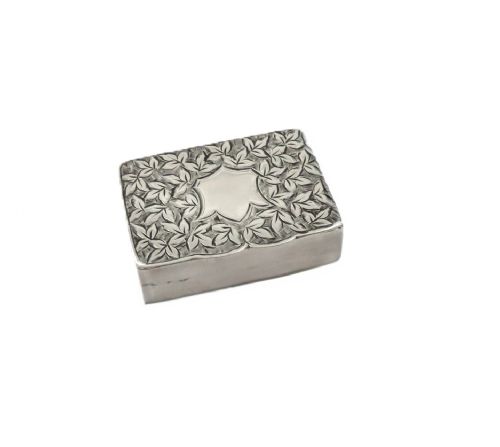
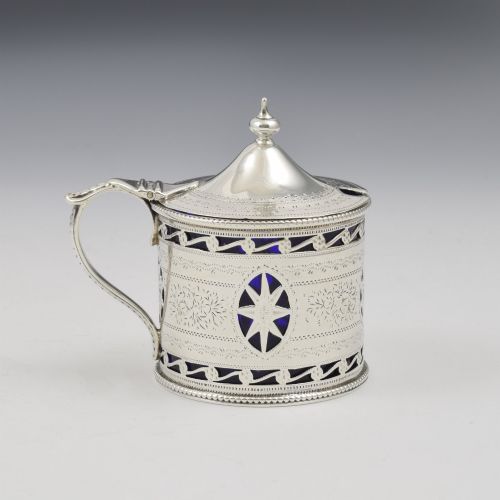
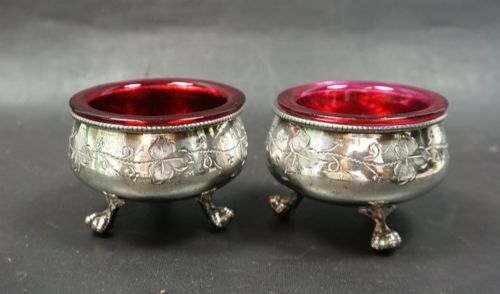
Mustard pots dominate the smaller forms, often paired with glass liners or pierced bodies, while larger coffee pots, teapots, and ewers represent the heavier domestic service wares. You also meet cruet sets, trinket boxes, and inkwells sharing similar decorative engraving.
Origins stretch from English provincial centres like Newcastle to London workshops, alongside Old Sheffield plating and Eastern Islamic Ottoman production. These objects reflect the changing dining habits and social rituals of the eighteenth, nineteenth, and early twentieth centuries.
Materials and Technique
The objects are constructed from sterling silver, solid silver, silver plate, and Old Sheffield plate, occasionally incorporating wood, glass, cobalt glass, and cut glass liners. Metalsmiths shaped these materials through casting, raising, and piercing before applying surface decoration.
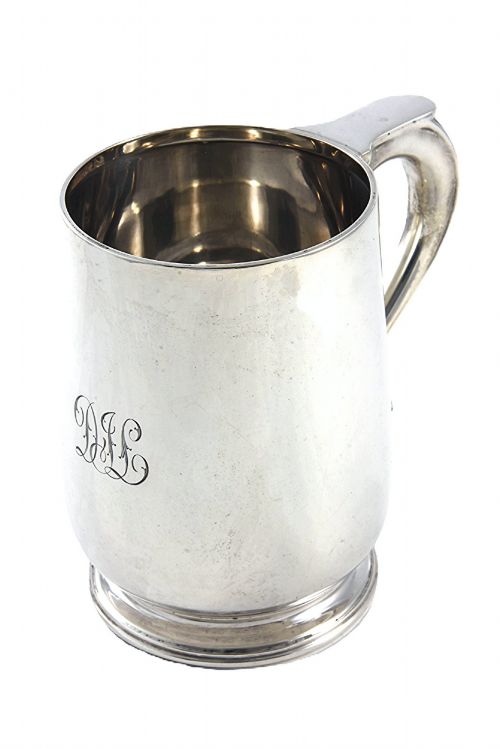
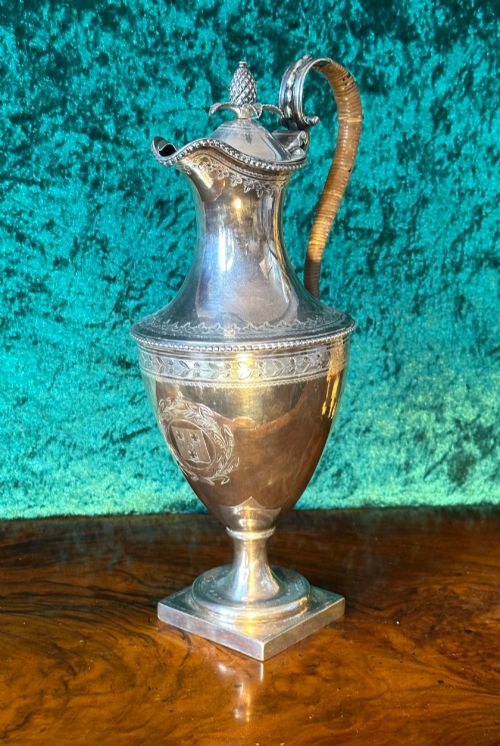
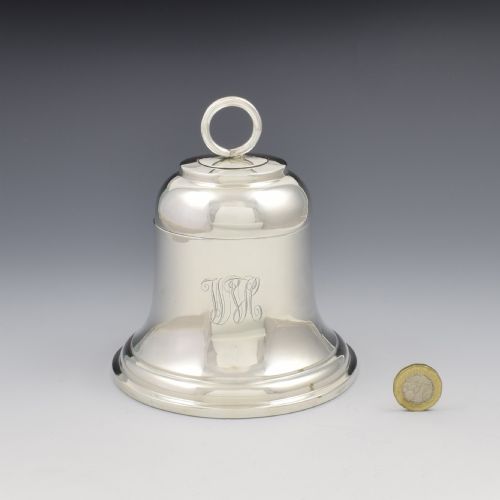
Engraving forms the primary decorative technique across the pieces, executed by hand to create floral designs, crests, and geometric panels. Artisans also utilised chasing and repoussé methods to add relief work, matching the Victorian Rococo Revival and Aesthetic Movement styles seen in the record.
Object forms range from small mustard pots and pill boxes to large tea sets and coffee ewers.
The Measure of Quality
Quality rests upon the crispness of the hand-engraving and the structural integrity of the vessel, whether solid sterling or plated copper. Crisp, deep lines in floral and crest motifs separate superior metalwork from flat, mechanical scratching.
The weight of the metal and the balance of handles, spouts, and finials dictate the maker's success. Furthermore, surviving original components, such as matching glass liners in mustard pots and salt cellars, elevate the standing of the piece.
Nathan and Hayes·Walker and Hall·Charles and George Fox·Padley Parkin and Staniforth·Matthew Boulton·Robert Hennell I·William Neale and Son·Charles Stuart Harris·Paul Storr·John and George Angell
The Engraved Silver Pot Glossary
- Sterling silver
- A silver alloy containing 92.5 percent pure silver by mass, with the remainder consisting of other metals like copper for durability.
- Old Sheffield plate
- An early method of fusing a thin sheet of silver to a thicker copper base, producing distinct layered edges visible on older wares.
- Silver plate
- A layer of silver applied to a base metal, such as nickel silver or copper, utilising electroplating techniques developed in the nineteenth century.
- Pierced work
- A decorative technique where metal is cut through to create openwork patterns, frequently seen on Victorian mustard pots and baskets.
- Mustard pot
- A small lidded container designed for table service of prepared mustard, traditionally fitted with a blue glass liner and a small spoon.
Engraved Silver Pot: Frequently Asked Questions
How do I date an engraved silver pot?
Dating relies primarily on hallmarks stamped into the metal, which record the assay office, date letter, and maker's mark. Stylistic cues like Victorian Rococo Revival or Aesthetic Movement motifs offer additional chronological markers.
Matching the engraved patterns and construction techniques against known periods provides further confirmation when marks are rubbed or absent.
Were these pots used for tea or coffee?
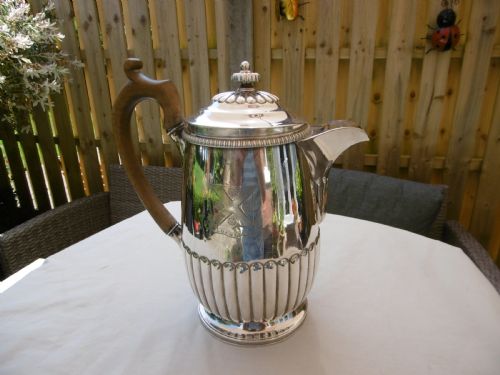
The listings include dedicated teapots, coffee pots, ewers, and coffee biggins, each proportioned for specific hot beverages. Coffee vessels generally feature taller, more slender bodies than the lower, wider forms used for brewing tea.
Many larger nineteenth-century sets combine both beverage pots alongside sugar basins and cream jugs for complete formal service.
Why do some mustard pots have coloured glass liners?
Blue cobalt or cranberry glass liners protected the silver interior from the corrosive properties of mustard and vinegar. These removable glass inserts also made cleaning straightforward after dining.
Many surviving pots retain their original fitted glass liners, though replacements were common in subsequent generations.
How should I clean an engraved silver pot?
Maintenance requires gentle washing in warm, soapy water followed by thorough drying with a soft cloth to protect the metal surface. Avoid harsh abrasive dips that strip the dark patina from hand-engraved grooves.
Applying a specialist silver polish sparingly helps preserve the crispness of floral and crest engravings over years of handling.