
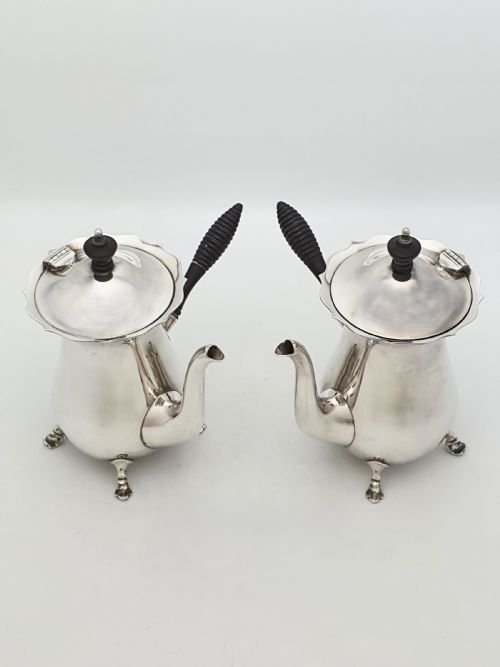


Silver Plated Milk Jug
A silver plated milk jug completes a tea service, offering the gleam of metal without the weight or cost of solid sterling.
Silver Plated Milk Jug
A silver plated milk jug is a practical vessel for serving milk or cream during tea and coffee service, appearing across various forms on this page. These pieces range from standalone cream jugs to integral components of larger tea sets, tea and coffee services, and cafe au lait pots.
The versions most commonly met here belong to the Edwardian and Victorian periods, alongside occasional Georgian Sheffield plated examples and pieces from the early twentieth century. These items span simple utilitarian forms and ornate designs featuring grapevine detailing or multi-piece settings.
Makers designed these jugs to accompany sugar bowls and teapots, creating matched sets for the table. Whether found alone or as part of a four piece tea service, each piece reflects the domestic hospitality of its era.
How they were made
Makers produced these vessels using base metals such as copper or nickel silver, coated with a layer of silver through plating techniques like electroplated nickel silver. This method provided the durable finish required for daily dining table use.
Craftsmen incorporated secondary materials on specific components, utilising ebony for handles to prevent heat transfer during use. Some luxury examples also received gold gilt interiors to protect the metal from acidic dairy products.
Some Edwardian tea sets arrive boasting ornate grapevine detailing so enthusiastic that even the handle appears ready to sprout fruit.
What varies in quality
Quality varies according to the thickness of the silver application over the base metal and the crispness of decorative elements like Edwardian Rococo Revival chasing. Finer examples display deeper hand-worked details, particularly around handles and rims.
The integrity of the construction distinguishes standard domestic wares from superior sets. Substantial weight, balanced proportions, and well-fitted components indicate higher standards of manufacturing.
The Silver Plated Milk Jug Glossary
- Electroplated nickel silver
- A base alloy of copper, nickel, and zinc coated with a layer of pure silver through an electrical process. This technique became widespread during the nineteenth century for tableware.
- Sheffield plate
- An early form of plating where a sheet of silver was fused to a copper core by heat and pressure before being shaped. This method predates modern electroplating.
- Cafe au lait pot
- A specialised vessel designed for serving coffee alongside hot milk simultaneously. These often appear in matched pairs or larger breakfast services.
- Gold gilt
- A thin coating of gold applied to the interior surface of a metal jug. This treatment prevented tarnish and chemical reaction with dairy contents.
Silver Plated Milk Jug: Frequently Asked Questions
What is a silver plated milk jug?
A silver plated milk jug is a tabletop container used for pouring milk or cream during tea and coffee service. These vessels replicate the appearance of solid silver through a coating applied over a base metal.
They appear both as individual cream jugs and as matching components within larger Victorian and Edwardian tea services.
How do I clean my jug?
Cleaning requires warm soapy water and a soft cloth to preserve the delicate metal surface. Avoid harsh abrasive dips that strip the thin silver layer over time.
Regular gentle polishing maintains the shine without wearing down the underlying plate on high points and decorative motifs.
Can I use it for daily tea?
These vessels suit daily use provided you handle them with reasonable care and wash them promptly after serving. The durable metal construction withstands regular handling when cleaned without harsh chemicals.
Ensure you dry the piece thoroughly after washing to prevent water spotting on the plated finish.
How do I date an Edwardian jug?
Dating relies on stylistic clues, hallmarks, and manufacturing methods typical of the period between nineteen hundred and nineteen ten. Edwardian pieces often exhibit lighter neoclassical motifs or restrained revival styles compared to heavy Victorian designs.
Makers' marks stamped into the base frequently provide additional clues regarding the workshop of origin.