


Silver Coffee Pot Set
A silver coffee pot set brings together matching vessels for hot service, built around periods from the nineteenth century onward in silver plate and sterling silver.
Silver Coffee Pot Set
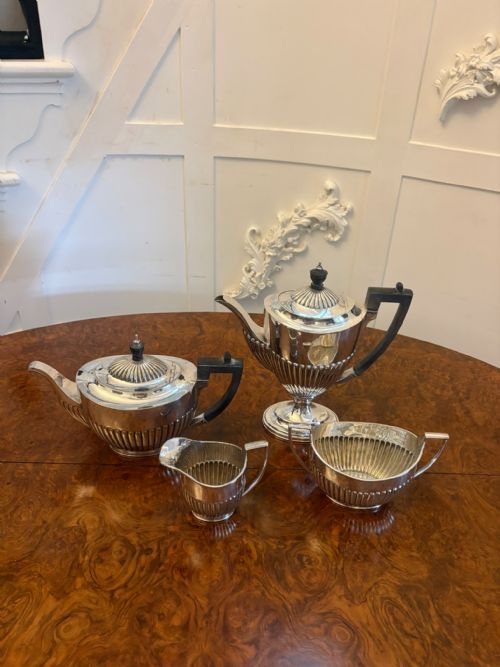
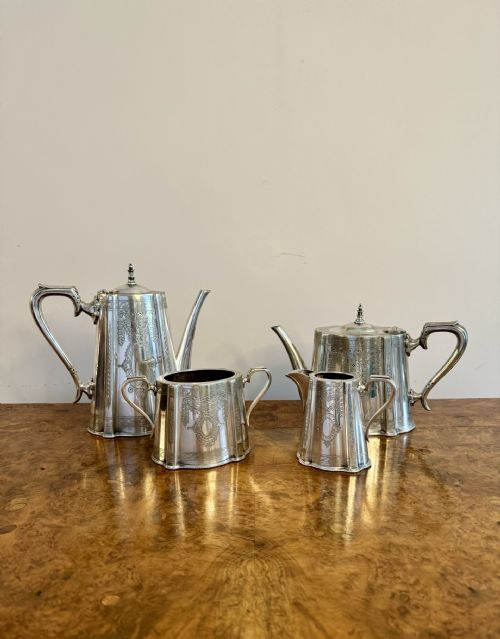
A silver coffee pot set comprises matching vessels for hot service, frequently found as four or five piece suites including tea pots, hot water jugs, creamers and sugar bowls alongside the coffee pot. You are most likely to meet Edwardian silver plated settings from the opening decades of the twentieth century, alongside Victorian and later twentieth century iterations in both plated and solid sterling silver.
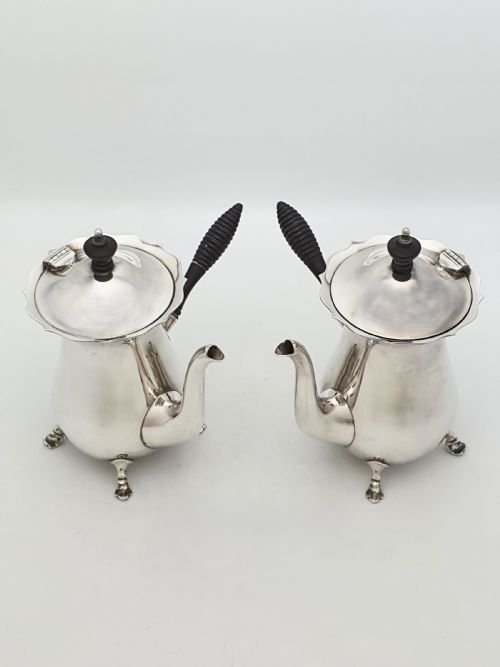
The configurations range from small three piece groupings and side-handled pots to complete tea and coffee services housed in original fitted cases. Forms draw on periods spanning William IV, Regency, and Art Deco, reflecting the changing domestic fashions of English dining rooms.
How they were made
Silversmiths utilised sterling silver and silver plate over base metals, shaping bodies through spinning or hammering before applying decorative chased and embossed motifs. Handles and finials frequently incorporate insulating materials such as wood, ebony, ebonised wood or bone to prevent heat transfer during service.
Plated wares often employ electroplated nickel silver as a durable base beneath the silver layer, while select pieces feature internal gilding to sugar pots and cream jugs for protection against acidic contents.
Listings feature periods from George III and the nineteenth century through Edwardian and Art Deco revivals.
What varies in quality
The distinction between standard commercial output and superior craftsmanship rests on the weight of the metal, the crispness of chased ornamentation, and the integrity of the matching components. Complete services retaining every original piece, down to the lidded sugar pot and fitted box, command greater attention than assembled groupings.
Maker attribution plays a decisive role, with recognised silversmiths demonstrating superior hand-finishing, balanced handle proportions, and robust hinge construction on pot lids.
Walker and Hall·Joseph Craddock·Harrison Brothers and Howson·Paul Storr·Harry Atkin·Elkington·Gorham
The Silver Coffee Pot Set Glossary
- Sterling silver
- A silver alloy containing 92.5 percent pure silver and 7.5 percent other metals, usually copper, ensuring structural durability for holloware.
- Silver plate
- A base metal such as nickel silver coated with a thin layer of pure silver through electroplating or older Sheffield plating techniques.
- Coffee biggin
- A tall coffee pot fitted with an internal fabric or metal sack strainer through which boiling water was poured.
- Electroplated nickel silver
- A copper, nickel, and zinc alloy base that receives a chemical deposition of silver, commonly abbreviated as EPNS.
- Ebonised wood
- Timber treated with a dark stain or finish to imitate true ebony, frequently used for insulating pot handles and thumbpieces.
Silver Coffee Pot Set: Frequently Asked Questions
What pieces belong in a set?
A standard set typically includes a coffee pot, tea pot, creamer jug, and sugar bowl, though larger services may add hot water jugs and matching trays.
Counts vary from three to five pieces depending on the period and the scale of domestic hospitality intended.
How do I clean silver plate?
Maintenance requires specialised silver polish and a soft cloth to remove tarnish without wearing through the thin plated surface to the base metal underneath.
Harsh abrasive dips should be avoided, particularly on pieces with ebonised wooden handles or bone insulators.
Are these sets safe to use?
Most antique sets remain functional for serving hot beverages, provided the interior surfaces are thoroughly washed and free of historical tarnish or residue.
Silver plated interiors should be inspected to ensure the base metal has not exposed itself through heavy past cleaning.
How do I date a set?
Hallmarks stamped on sterling silver pieces provide exact assay office symbols, date letters, and maker marks to determine the year of manufacture.
Silver plated items rely on maker catalogue styles, typography, and stylistic cues such as Edwardian rococo revival or Art Deco geometry.