


Silver Plated Coffee Service
These silver plated coffee service pieces combine the elegance of formal hospitality with durable base metals, offering a lasting centrepiece for the table.

Silver Plated Coffee Service
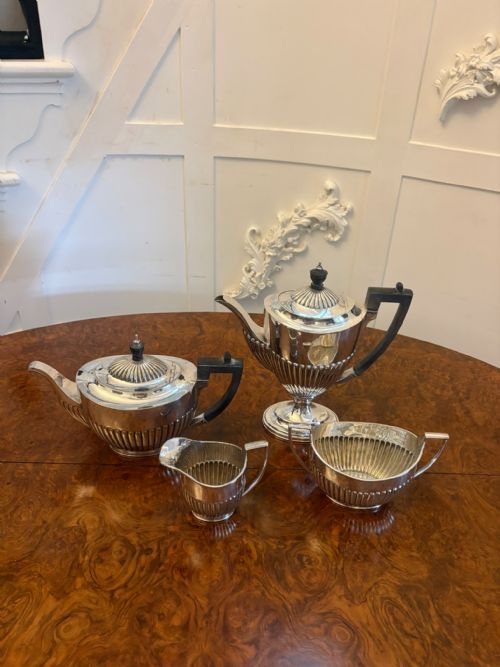
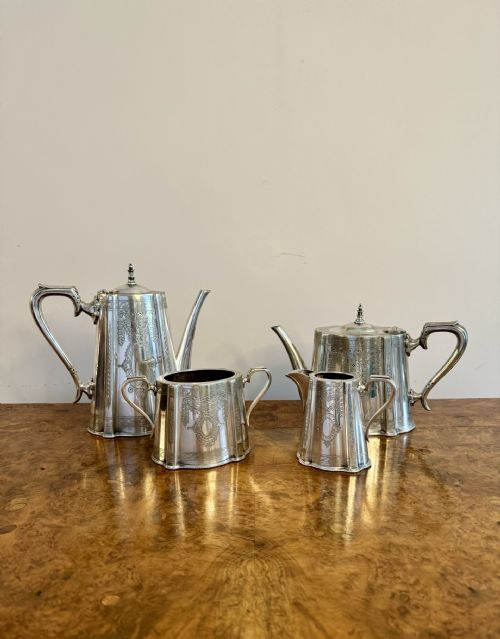
A silver plated coffee service brings together matching vessels such as coffee pots, teapots, creamers, and sugar basins designed for formal entertaining. These sets frequently date from the Victorian, Edwardian, and Art Deco periods, spanning the nineteenth and twentieth centuries.
Most examples found here originate from English workshops and utilise silver plate over a sturdy metal base. Buyers encounter three-piece, four-piece, and larger six-piece services that often include matching trays or specialised pots.
The aesthetic ranges from ornate Edwardian Rococo Revival and Late Victorian styling to clean, geometric Art Deco lines. Each configuration serves the traditional ritual of after-dinner coffee or afternoon tea with matching tableware.
Materials and construction methods
Manufacturers built these sets using silver plate and electroplated nickel silver over robust base metals like copper and white metal. This technique provided the lustrous appearance of solid silver at a more accessible cost for middle-class households.
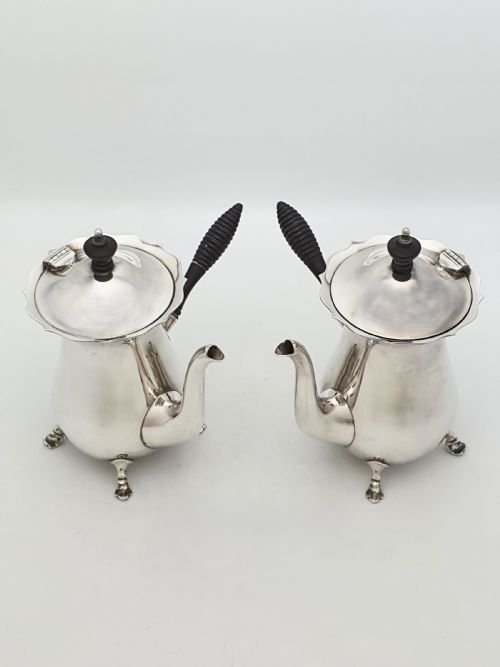
Handles and insulators on pots often incorporate contrasting natural materials such as ebony, ebonised wood, and bone to prevent heat transfer during pouring. Artisans applied ornamentation through casting, chasing, and stamping to achieve floral motifs or geometric borders.
Some Edwardian sets include tiny bone spacers tucked inside handles, quietly stopping morning coffee heat from scorching fingers.
Assessing craftsmanship and condition
Quality in a silver plated coffee service depends on the crispness of the decorative chasing and the retention of the original silver layer over the base metal. Superior sets display balanced proportions, substantial weight, and well-fitted hinged lids that close flush against the body.
The integration of heat-insulating handles made from bone or ebony indicates higher manufacturing standards. Maker marks stamped into the metal distinguish workshop production from anonymous commercial output.
Walker and Hall·Elkington·Frank Cobb and Co·Stower and Wragg
The Silver Plated Coffee Service Glossary
- Silver Plate
- A thin layer of silver bonded to a base metal core such as copper or nickel silver. This technique became widespread during the nineteenth century following the invention of electroplating.
- Electroplated Nickel Silver
- A copper, nickel, and zinc alloy coated with silver through an electrical process. This material formed the durable foundation for many Edwardian and later domestic services.
- Old Sheffield Plate
- An earlier method of fusing a sheet of sterling silver to a copper ingot before rolling them together. Pieces made this way often reveal a thin line of copper along exposed edges.
- Demitasse
- A small cup used for serving strong black coffee after a meal. Services featuring demitasse cups often include specialised pots designed for smaller portions.
- Cafe Au Lait
- A style of dual pot arrangement designed for simultaneously pouring hot coffee and warm milk into large cups. These pots appear in pairs within select Edwardian dining services.
Silver Plated Coffee Service: Frequently Asked Questions
What pieces comprise a standard service?
A standard set generally includes a coffee pot alongside a matching teapot, sugar bowl, and cream jug. Larger services may expand to include a hot water kettle on a stand or matching serving trays.
Configuration sizes vary according to the period of manufacture, ranging from compact three-piece groups to extensive six-person arrangements.
How do I identify the date of a set?
Stylistic indicators provide the clearest guide, moving from ornate Victorian floral engraving to streamlined Art Deco geometric forms. Maker marks and registration numbers stamped on the base offer further chronological clues.
Matching components usually share identical hallmarks and manufacturing ciphers stamped directly into the metal undersides.
Are these sets suitable for daily use?
These services function well for occasional entertaining when handled with appropriate care for the historic silver surface. Hand washing prevents damage to the delicate plating and protects insulating handle materials.
Harsh abrasive cleaners wear away the silver layer over time, so specialised metal polishes are recommended for routine maintenance.
What is Old Sheffield Plate?
Old Sheffield Plate is an early fusing technique where a sheet of silver is mechanically bonded to a copper base prior to shaping. This predates nineteenth-century electroplating methods.
Items produced this way display exceptional heft and distinct physical characteristics around their rims where the underlying copper shows.