

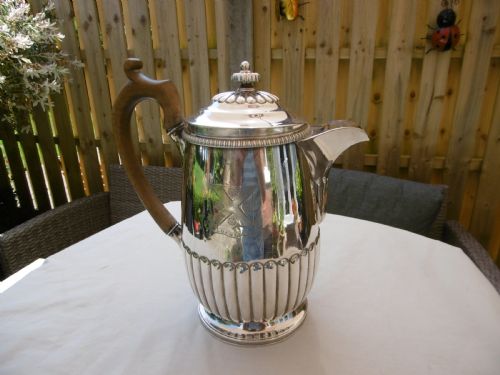


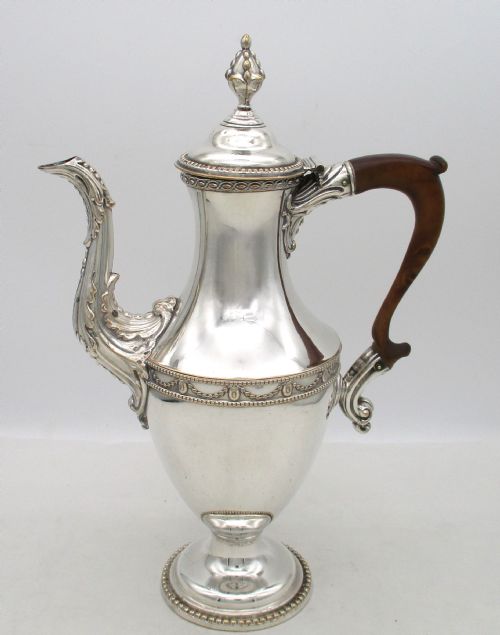


Sheffield Plate Coffee Pot
These pieces of sheffield plate coffee pot are clever fusions of copper and silver that bring Georgian elegance to the table without solid metal prices.
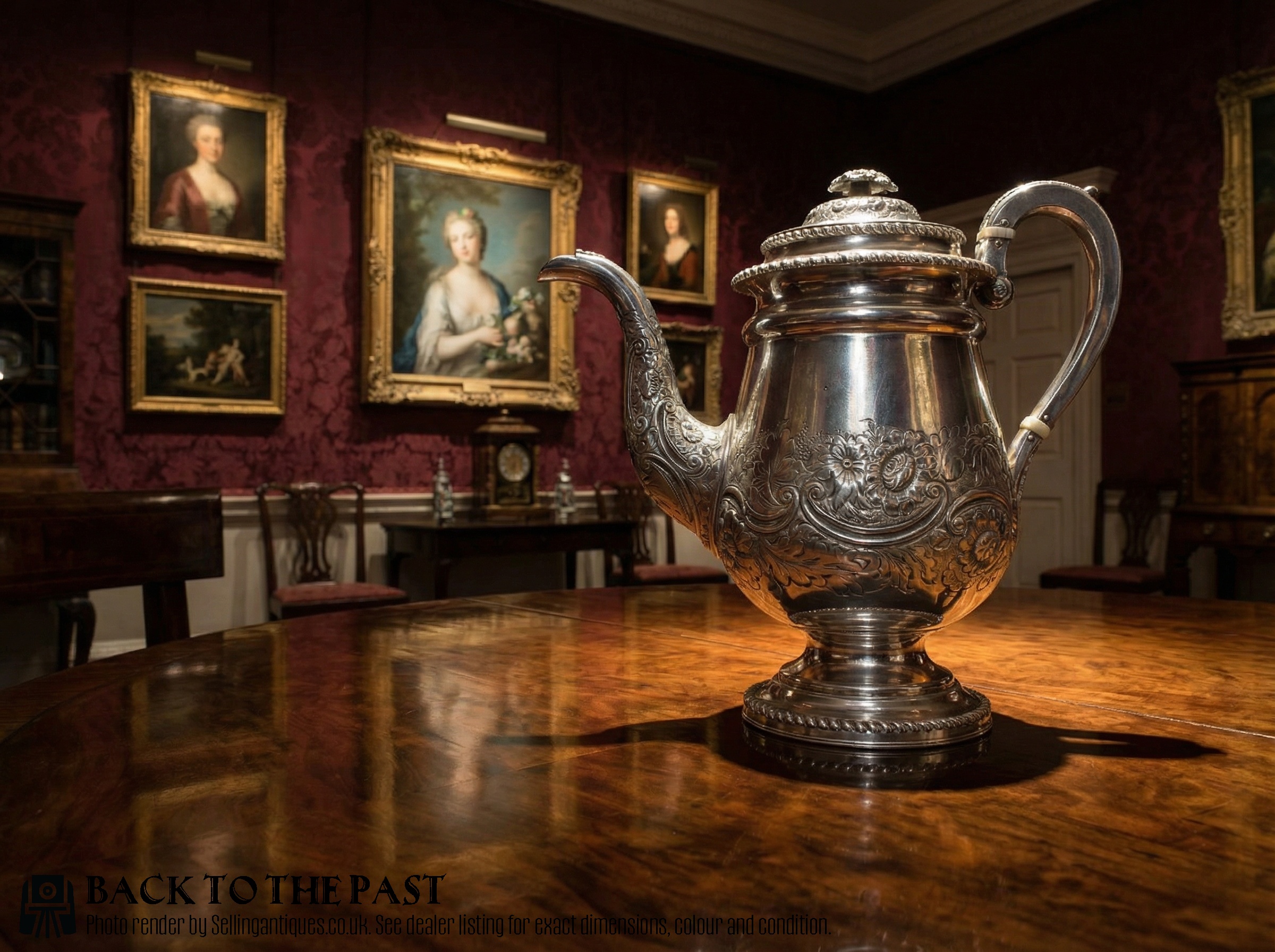
Sheffield Plate Coffee Pot
A sheffield plate coffee pot represents a sophisticated drinking vessel created during the eighteenth and nineteenth centuries, predominantly spanning the Georgian and Regency periods. These domestic objects take the form of tall coffee pots, jugs, pitchers, and biggins designed for pouring hot beverages.
The versions most commonly met on this page date from the eighteenth century up to the eighteen-thirties, showing classic baluster shapes and substantial proportions. Makers produced these wares to mimic solid silver while remaining accessible to the Regency dining room.
How They Were Made
The underlying structure relies on a thick core of copper fused with a thin sheet of sterling silver, a technique developed in Sheffield that predates modern electroplating. Artisans often shaped the body from this fused metal sheet before soldering decorative mounts and spouts.
Handles frequently incorporate insulating materials such as wood, hardwood, fruitwood, or bone to protect the hand from heat during service. Surviving examples regularly display early maker marks punched into the copper base beneath the silver layer.
Sheffield Plate Coffee Pot Retail Price Guide 2026
Typical asking prices for sheffield plate coffee pot among the pieces listed under this phrase on Sellingantiques today, from the lower quarter to the upper quarter. They describe what is for sale here now, not the wider market.
Listings feature coffee pots spanning the eighteenth and nineteenth centuries, incorporating materials like copper, silver, hardwood, and bone.
What Varies in Quality
Quality rests upon the preservation of the original silver sheet over the copper core, where heavier plating withstands generations of polishing. The crispness of chased or embossed decorative motifs also separates utilitarian vessels from masterwork productions.
The integrity of the insulating handle joints and the balance of the spout relative to the baluster body dictate the overall execution. Pieces bearing clear maker marks from prominent workshops command greater attention than unmarked domestic counterparts.
Matthew Boulton·John Hoyland·Henry Tudor·Roberts Smith·Richard Morton·Henry Wilkinson·Walker And Hall
The Sheffield Plate Coffee Pot Glossary
- Sheffield Plate
- An early form of silver plating created by fusing a sheet of silver to a copper ingot before rolling them into thin sheets together.
- Baluster
- A curved, vase-like architectural form commonly used for the body of eighteenth-century coffee pots and jugs.
- Biggin
- A tall pot equipped with an internal wire or cloth bag for brewing coffee directly inside the vessel.
- Fruitwood
- Dense timber derived from fruit-bearing trees, frequently turned to form the insulating handles of Georgian pots.
- Georgian
- The stylistic and historical period spanning the reigns of the four King Georges, noted for refined classical design.
Sheffield Plate Coffee Pot: Frequently Asked Questions
Are these coffee pots safe to use daily?
While these pots were originally designed for beverage service, modern users generally treat them as decorative antiques due to age and silver wear.
Displaying them on a sideboard or table preserves the fragile fused metal surface from aggressive daily cleaning.
How do I clean a sheffield plate pot?
Gentle dusting and occasional use of non-abrasive silver cream maintain the shine without exposing the underlying copper core.
Aggressive rubbing wears away the historical silver layer permanently, so restraint yields the best preservation.
What is the difference between Georgian and Regency styles?
Georgian coffee pots often feature ornate baluster shapes and traditional chased floral or scroll decoration from the eighteenth century.
Regency examples lean towards stricter classical proportions and cleaner lines influenced by Greek and Roman revival aesthetics.
Why do some pots have wooden handles?
Wood, fruitwood, and bone serve as natural thermal insulators to prevent heat from transferring from boiling coffee to the handler.
Metal handles would become uncomfortably hot during service, making these organic materials a practical necessity.