
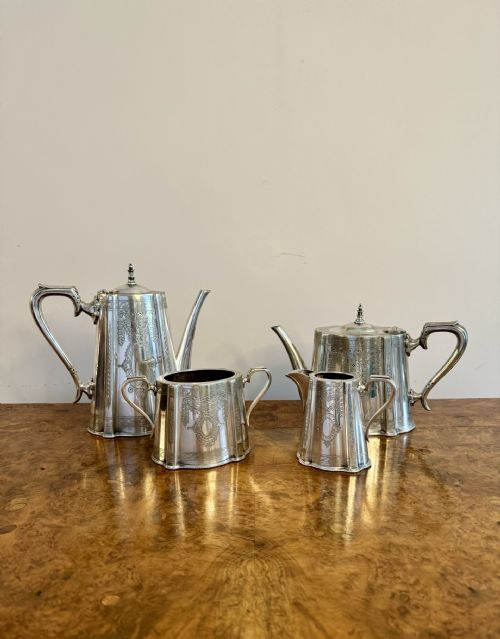


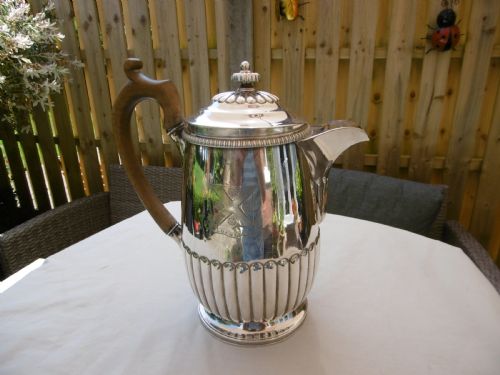


Silver Plated Hot Water Jug
These silver plated hot water jug examples bring period elegance to the table, offering a practical vessel for serving guests with traditional style.
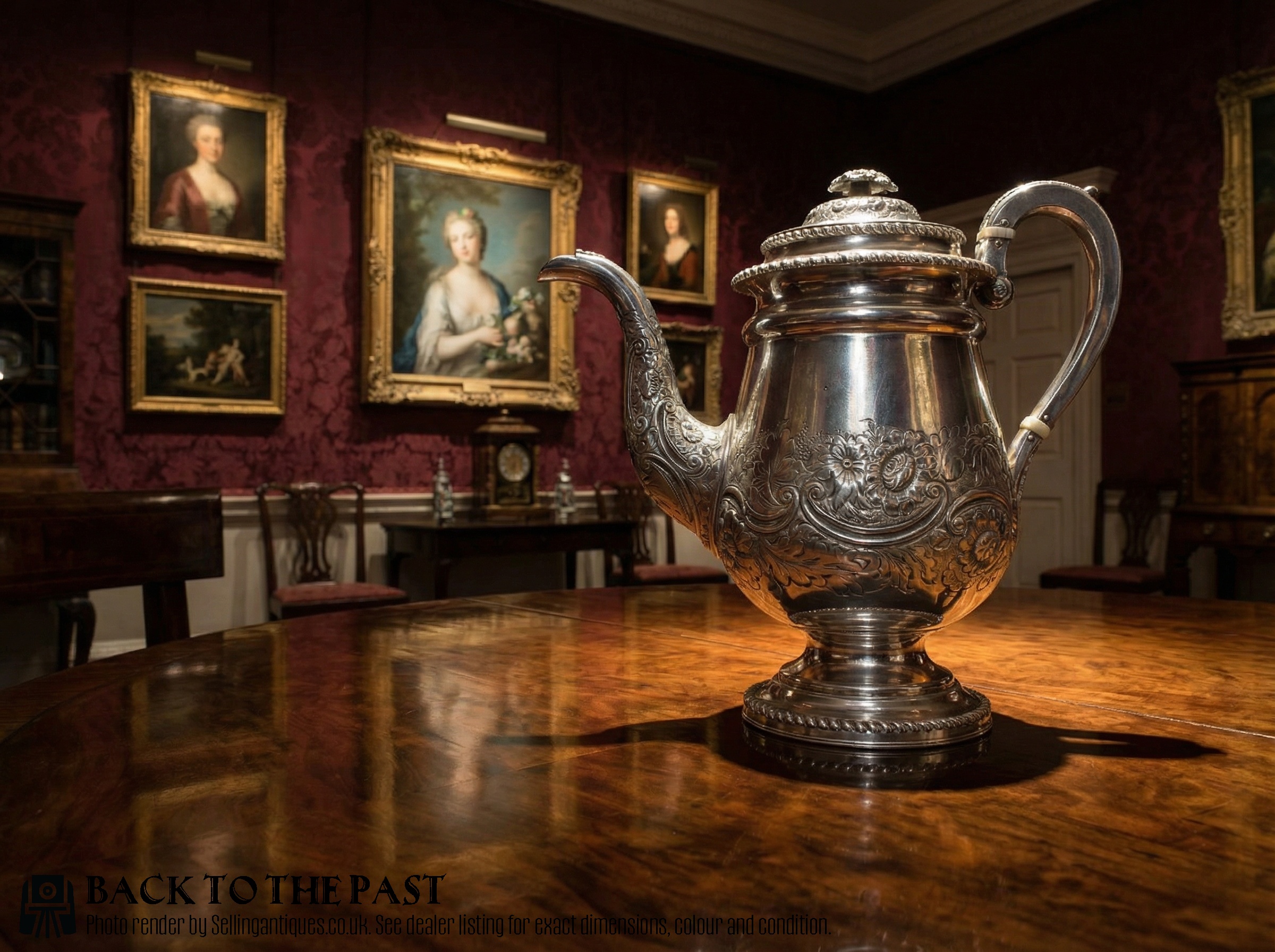
Silver Plated Hot Water Jug
A silver plated hot water jug is a serving vessel designed to keep water hot for tea and coffee service, appearing frequently alongside larger tea and coffee sets or as an individual piece. The selections on this page span the 18th century, 19th century, Georgian, Regency, Victorian, and Edwardian periods.
Buyers will encounter single coffee pots, tea sets, and spirit kettles alongside dedicated water jugs. The forms range from plain Georgian cylinders to ornate Victorian Rococo revival shapes and Edwardian service pieces.
Materials and Methods
The pieces on record are constructed from silver plate, Old Sheffield plate, and electroplated nickel silver, often combined with copper, metal, wood, bone, or ebony for handles and insulators. Old Sheffield plate involves fusing a thin sheet of silver to a copper base.
Makers utilised electroplating techniques in later periods to bond a layer of silver over base metals like nickel silver. Insulating spacers made from bone or wood were fitted to handles to prevent heat transfer during use.
Object forms recorded on this site include standalone coffee pots, multi-piece tea sets, spirit kettles, and dedicated water jugs.
Judging Quality and Craftsmanship
Quality rests in the weight of the metal, the crispness of chased or engraved crests, and the structural integrity of the handle joints. Pieces by notable workshops display superior balance and more refined decorative detailing.
The preservation of the silver layer over the underlying copper or nickel silver determines the longevity of the finish. Early fusion plating methods on Old Sheffield pieces create a distinct visual depth that differs from later electroplated wares.
Walker and Hall·Matthew Boulton·John Hoyland·Boardman Glossop and Co
The Silver Plated Hot Water Jug Glossary
- Old Sheffield Plate
- An early method of fusing silver to a copper core before the invention of electroplating. The copper often shows subtly through wear at high points.
- Electroplated Nickel Silver
- A base metal alloy of copper, nickel, and zinc coated with a layer of pure silver through electrolysis. This technique became common during the 19th century.
- Rococo Revival
- A 19th-century design style characterised by asymmetrical scrolls, floral motifs, and shell work. Vessels in this style exhibit high relief ornamentation.
- Spirit Kettle
- A water kettle mounted on a metal stand above a small burner. These were used to keep water hot at the dining or tea table.
Silver Plated Hot Water Jug: Frequently Asked Questions
What is a silver plated hot water jug used for?
These vessels were designed to supply freshly boiled water at the tea or coffee table, topping up brewed pots as needed during meals or gatherings.
They formed part of larger silver service suites or served as standalone table accessories in wealthy households.
How do I clean a silver plated hot water jug?
Cleaning requires a soft cloth and a specialised silver polish formulated to protect plated surfaces from abrasion. Harsh chemical dips can strip the thin silver layer.
Washing by hand in warm soapy water immediately after use prevents tea and coffee residues from dulling the interior.
Can I use an antique jug for daily service?
Many of these pieces remain structurally sound for regular dining table use, provided they are handled with care and washed gently by hand.
Insulated handles protect users from heat, though care must be taken with delicate joints and historical silver plating.
How do I date a silver plated hot water jug?
Dating relies on stylistic clues such as the ornate curves of Victorian Rococo revival designs or the cleaner lines typical of the Georgian and Regency periods.
Maker marks, early fusion plating characteristics on Old Sheffield pieces, and material choices like bone or ebony insulators also help narrow the production era.