
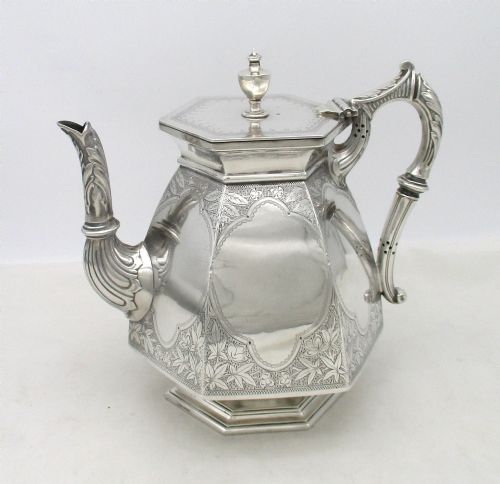

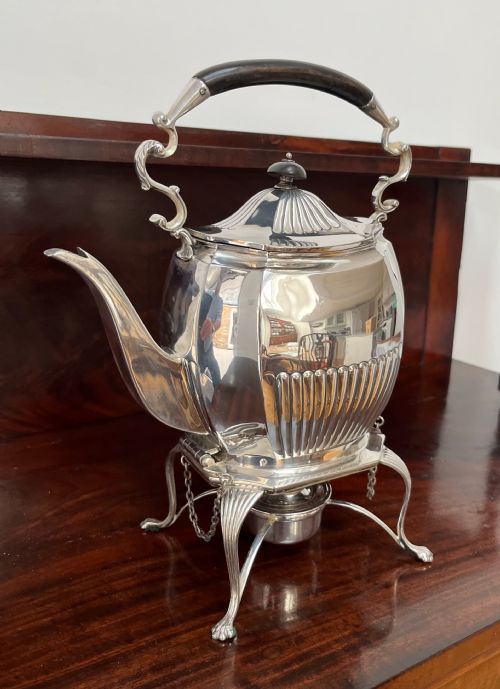


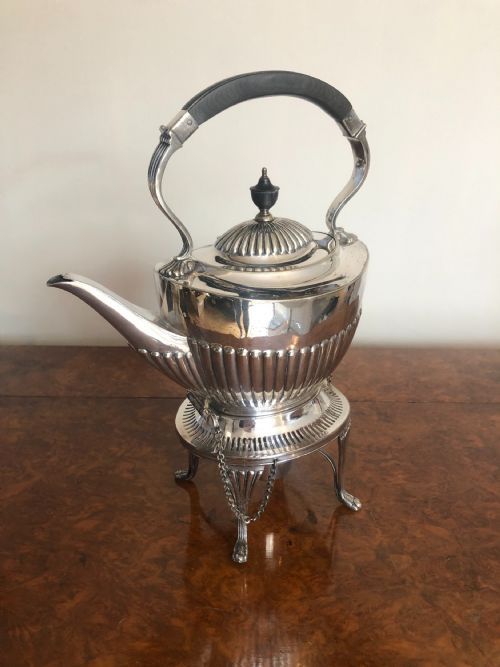

Silver Plate Tea Kettle
These silver plate tea kettle pieces bring warm hospitality to a room, offering the gleaming surface and portable heat of historic tea service.
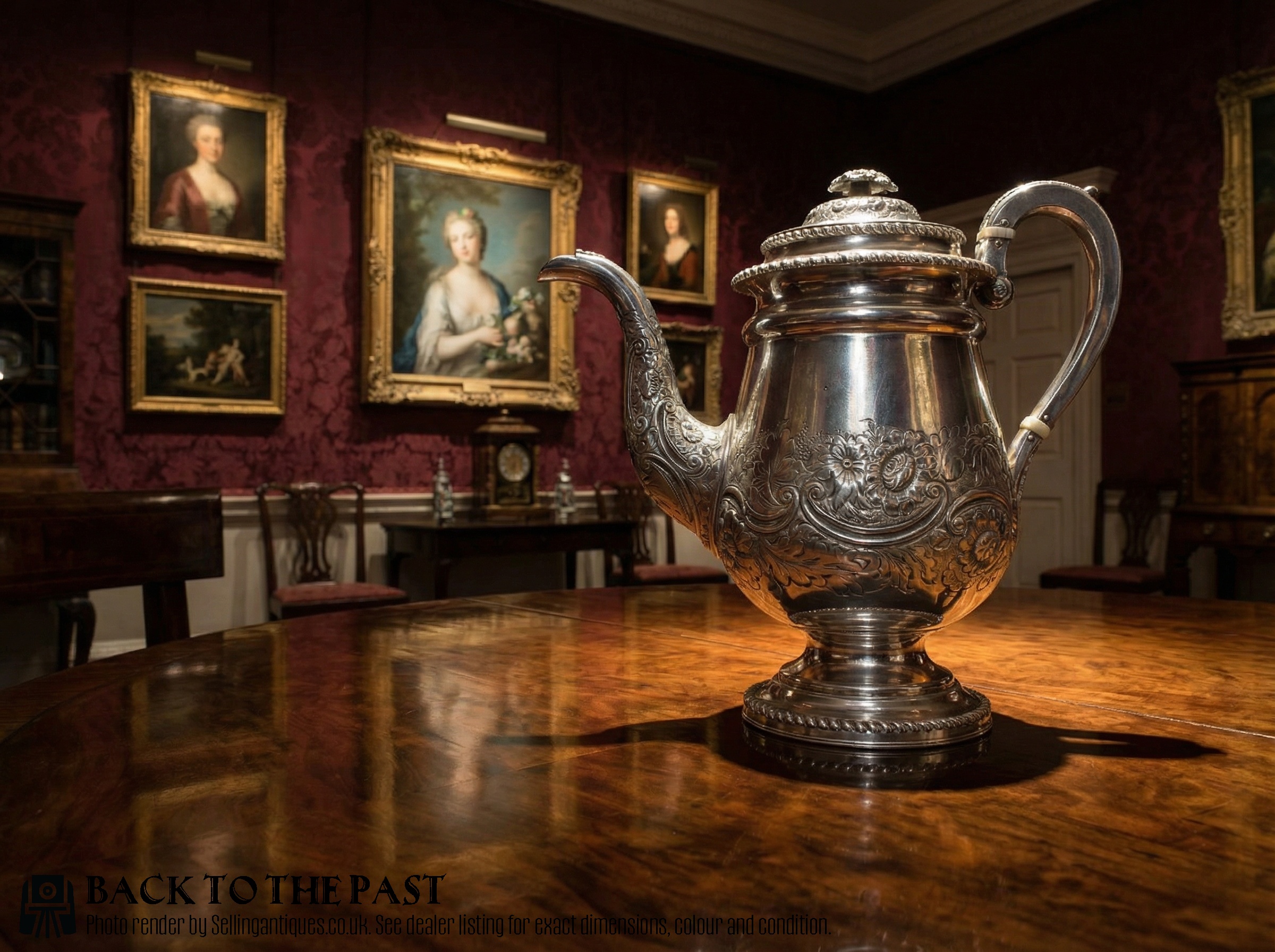
Silver Plate Tea Kettle
A silver plate tea kettle brings together the comforting ritual of tea and the elegance of historic metalwork. When searching this phrase, a buyer encounters forms ranging from simple teapots to elaborate spirit kettles mounted on stands with burners, alongside tea urns and samovars.
What varies in quality
The distinction between standard items and superior examples lies in the integrity of the plating and the heaviness of the underlying metal. Thicker silver layers resist wear from polishing, while robust frames and stands ensure stability during service.
Refinement of detail also separates the grades, visible in the turning of wooden handles, the crispness of engraved decoration, and the solid construction of taps and burners on samovars and spirit kettles.
Several kettles arrive with tiny matching burners, ready to host a Victorian tea party in your dining room.
Walker & Hall·Fenton Brothers·Frederik Ellis Tim & Co
The Silver Plate Tea Kettle Glossary
- Silver plate
- A thin coating of silver bonded to a base metal such as copper or nickel silver. This technique allowed makers to produce vessels with the appearance of solid silver at a lower cost.
- Spirit kettle
- A kettle mounted on a metal stand with an integrated spirit burner underneath. It kept water hot at the tea table during extended gatherings.
- Old Sheffield plate
- An early form of plating created by fusing a sheet of silver to a copper ingot before rolling them together into sheets. This process produces a distinct appearance where copper edges sometimes show through wear.
- Samovar
- A heated metal container traditionally used to boil water for tea. Large examples often feature a spigot or tap near the base for easy pouring.
- Electroplated nickel silver
- A base alloy of copper, nickel, and zinc coated with silver through an electrical process. It became the standard manufacturing method for durable teaware in the later nineteenth century.
Silver Plate Tea Kettle: Frequently Asked Questions
What is the difference between a teapot and a spirit kettle?
A standard teapot is designed to brew and pour tea directly at the table, remaining stationary once filled. A spirit kettle includes a matching stand and an active burner to keep water hot throughout a longer service.
Spirit kettles are generally heavier and more complex in construction, involving frames, chains, and fuel vessels. Teapots rely solely on their own heat retention.
How do I clean silver plate safely?
Wash the piece gently in warm water with a mild, non-abrasive dish soap to remove dust and oils. Dry thoroughly with a soft cloth to prevent water spots.
Apply a dedicated silver polish sparingly if tarnished, using gentle circular motions. Avoid harsh scrubbing that might wear through the thin silver layer to the base metal underneath.
How can I tell the period of a piece?
Examine the overall style, manufacturing marks, and accompanying hardware such as handles and stands. Regency and early nineteenth-century pieces often display heavier copper undertones from old Sheffield plating techniques, while Edwardian items frequently utilise electroplated nickel silver.
Maker stamps and registry numbers stamped on the base provide further clues to exact production decades.