


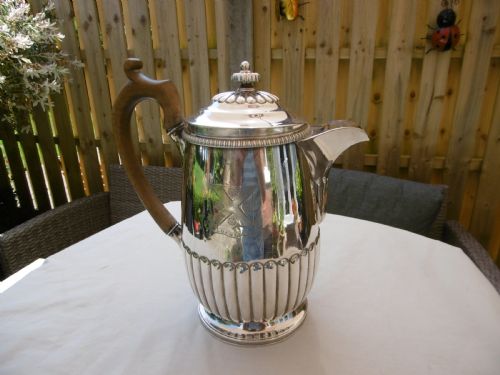


Wooden Handle Silver Jug
These wooden handle silver jug pieces combine functional pouring vessels with tactile timber grips, offering period heft and traditional design.
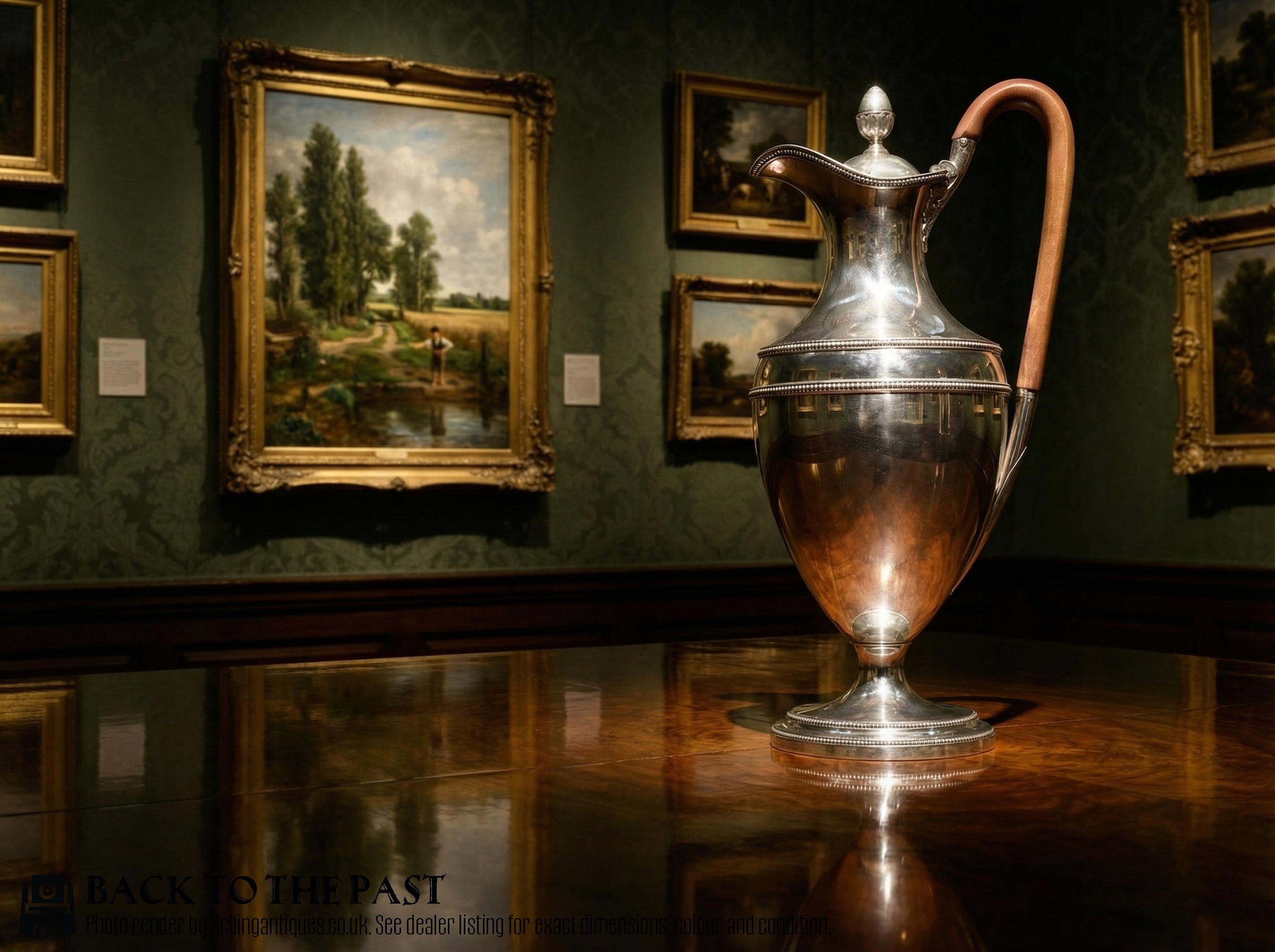
Wooden Handle Silver Jug
A wooden handle silver jug is a pouring vessel designed for hot liquids like coffee or water, combining a metal body with an insulated handle. These objects serve tea and coffee service needs across multiple centuries of dining tradition.
Buyers exploring this selection encounter forms such as coffee pots, ewers, pitchers, and hot water pots. The examples available span periods from the eighteenth century through the twentieth century.
The most frequent variations on this page include Georgian and Victorian silver or silver-plated vessels fitted with hardwood grips. These pieces reflect the shift from formal dining rituals to domestic hospitality.
Materials and construction methods
Makers constructed these vessels using sterling silver, Old Sheffield plate, or silver plate over a copper base, paired with turned wood for the insulating handle. Wood prevented heat transfer from the boiling liquid to the hand during pouring.
Silversmiths shaped the metal bodies through raising and soldering techniques, often incorporating applied cast mounts, crests, and decorative borders. Handles were secured using sockets and pins to attach the timber securely to the metal body.
Listings feature items spanning the Georgian, Victorian, and Art Deco periods, created in sterling silver, silver plate, and Old Sheffield plate.
Factors of quality and execution
Quality in a wooden handle silver jug rests upon the weight of the metal, the crispness of chased or engraved crests, and the proportion of the wooden grip. Substantial gauge metal and well-balanced handles distinguish finer items from simpler utilitarian wares.
The integration of the wooden handle into the silver sockets demonstrates the maker's skill. Tighter joints and superior timber selection separate high-end workshop production from standard domestic utensils.
Matthew Boulton·John Hoyland·John Scofield
The Wooden Handle Silver Jug Glossary
- Sterling silver
- A silver alloy containing 92.5 percent pure silver and 7.5 percent other metals, typically copper. This standard ensures structural durability for daily use.
- Old Sheffield plate
- An early form of plated metal produced by fusing a sheet of silver to a copper ingot before rolling. This technique was widely utilised before electroplating.
- Ewer
- A large jug with a flared spout and a decorative handle, historically used for water or wine. Many surviving examples function as decorative water pitchers.
- Hallmark
- A series of stamped official marks applied to precious metals indicating the assay office, purity, and date letter. These marks authenticate the origin of British silver.
- Crest
- An engraved or applied heraldic device representing a family lineage. Owners frequently added these symbols to personalise domestic silver.
Wooden Handle Silver Jug: Frequently Asked Questions
What are these vessels used for?
These vessels were traditionally used for serving hot water, coffee, or tea during formal meals and gatherings.
Today, collectors use them as decorative display items or functional containers for modern dining.
How do I care for wooden handles?
Wood handles require gentle cleaning with damp cloths to prevent the timber from drying out or splitting.
Avoid immersing wooden components in water or putting them in dishwashers to preserve the original finish.
What is Old Sheffield plate?
Old Sheffield plate is a composite material made by fusing silver onto a thick copper base.
This method predates electroplating and creates a distinct layered appearance visible at unpolished edges.
How are periods identified?
Periods are determined through official hallmarks, stylistic markers such as Neoclassical or Regency shapes, and construction methods.
Documentation and engraved family crests also help trace the era of manufacture.