





Georgian Silver Coffee Server
These georgian silver coffee server pieces combine 18th century elegance with domestic utility, offering a stately centrepiece for the table.
Georgian Silver Coffee Server
A georgian silver coffee server encompasses tall vessels designed for pouring hot brew during the Georgian, Regency and later periods. Collectors search for these items to secure authentic dining ware spanning the eighteenth and nineteenth centuries.
The pieces on this page lean heavily towards Old Sheffield Plate and sterling silver iterations, alongside occasional silver plated alternatives. Forms range from classical coffee pots to ewers and water jugs produced across the Georgian era and the decades following.
Buyers will encounter items bearing specific regional marks, such as Newcastle sterling silver, alongside unmarked Old Sheffield Plate examples. The forms predominantly feature tall, upright bodies designed to keep contents warm over heat sources.
Materials and construction
Makers utilised Sterling silver and Old Sheffield Plate, fusing thin sheets of silver over copper bases to create durable vessels. This fusion technique defines the character of many eighteenth and nineteenth century serving pots.
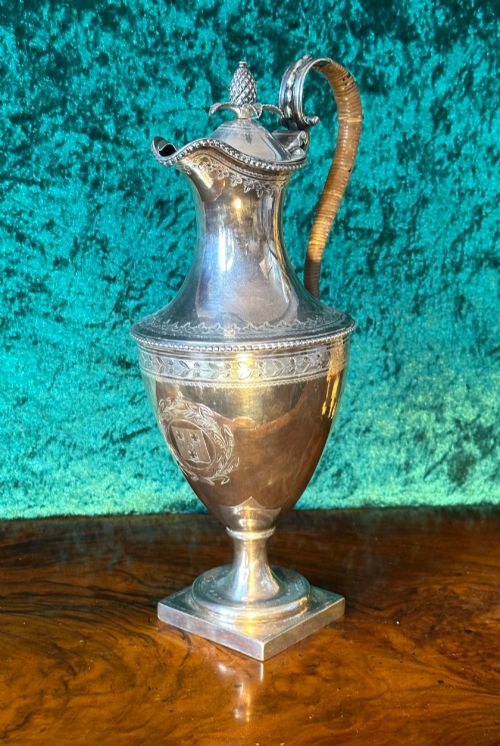
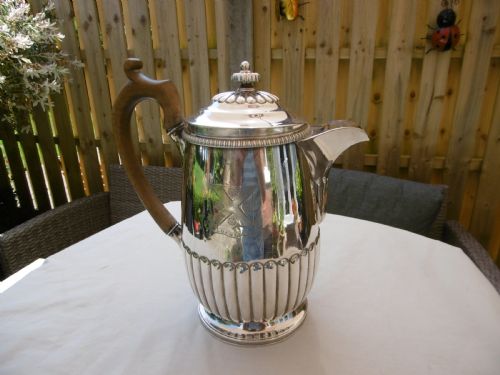
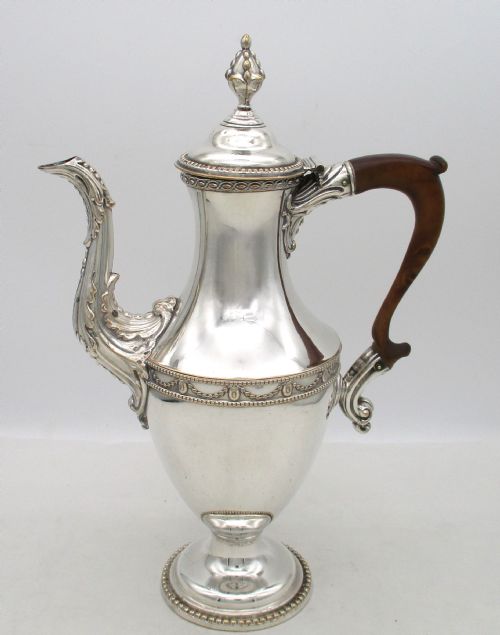
Insulation was essential for practical handling, leading craftsmen to incorporate wood, bone, wicker or hardwood into handles and finials. These organic materials provided a necessary thermal barrier against hot metal.
Materials employed for insulation on handles and lids include bone, wicker and hardwood alongside traditional metals.
Assessing quality in a georgian silver coffee server
Quality rests upon the crispness of maker marks, the preservation of the silver layer over the copper core in plated items, and the integrity of applied crests. Pieces carrying identifiable maker attributions command greater attention.
The balance of the vessel and the retention of original organic elements like wooden or bone insulators dictate the overall standard of survival. Superior execution shows in the weight of the silver and the precision of the form.
Matthew Boulton
The Georgian Silver Coffee Server Glossary
- Old Sheffield Plate
- A method of fusing a thin sheet of silver to a thicker copper ingot before rolling them into sheets for smithing. This technique preceded modern electroplating.
- Sterling Silver
- An alloy consisting of silver and other metals, typically copper, standardised for durability and purity. It forms the solid metal standard for higher tier pots.
- Ewer
- A large pitcher with a flared spout, used for serving liquids. In this context, it doubles as a tall coffee or water container.
- Finial
- A decorative knob attached to the lid of a vessel for lifting. These are frequently turned from hardwood or cast in metal.
Georgian Silver Coffee Server: Frequently Asked Questions
How do I clean a georgian silver coffee server?
Use a gentle silver cloth and avoid abrasive dips that might strip plated surfaces or damage copper layers. Regular, careful dusting preserves the original polish.
Keep organic handle components dry during cleaning to prevent wood or bone from warping over time.
Are these pots safe for daily use?
While structurally sound, antique vessels often bear historic repairs and delicate internal soldering that discourages heavy modern use. Most collectors prefer them for display or gentle occasional service.
Thermal stress from boiling water can also affect centuries old joints, making cautious handling wise.
What is the difference between sterling and plated versions?
Sterling silver pots are solid precious metal throughout, whereas Old Sheffield Plate pieces utilise a thin veneer of silver fused over a base metal core. Both methods yield heavy, durable vessels.
Plated items often reveal a warm copper tone where the outer silver layer has worn thin through centuries of polishing.
How do I date a georgian silver coffee server?
Examination of assay marks, maker stamps and stylistic shifts between Georgian and Regency periods provides reliable dating. Shape evolution from pear forms to cylindrical designs also aids chronological placement.
Weight and construction methods, particularly the transition in plating techniques, offer further clues to the exact decade of manufacture.