


Silver Wine Ewer
A silver wine ewer brings grand proportion and gleaming metal to the table, designed for pouring claret and cordial with ceremony.
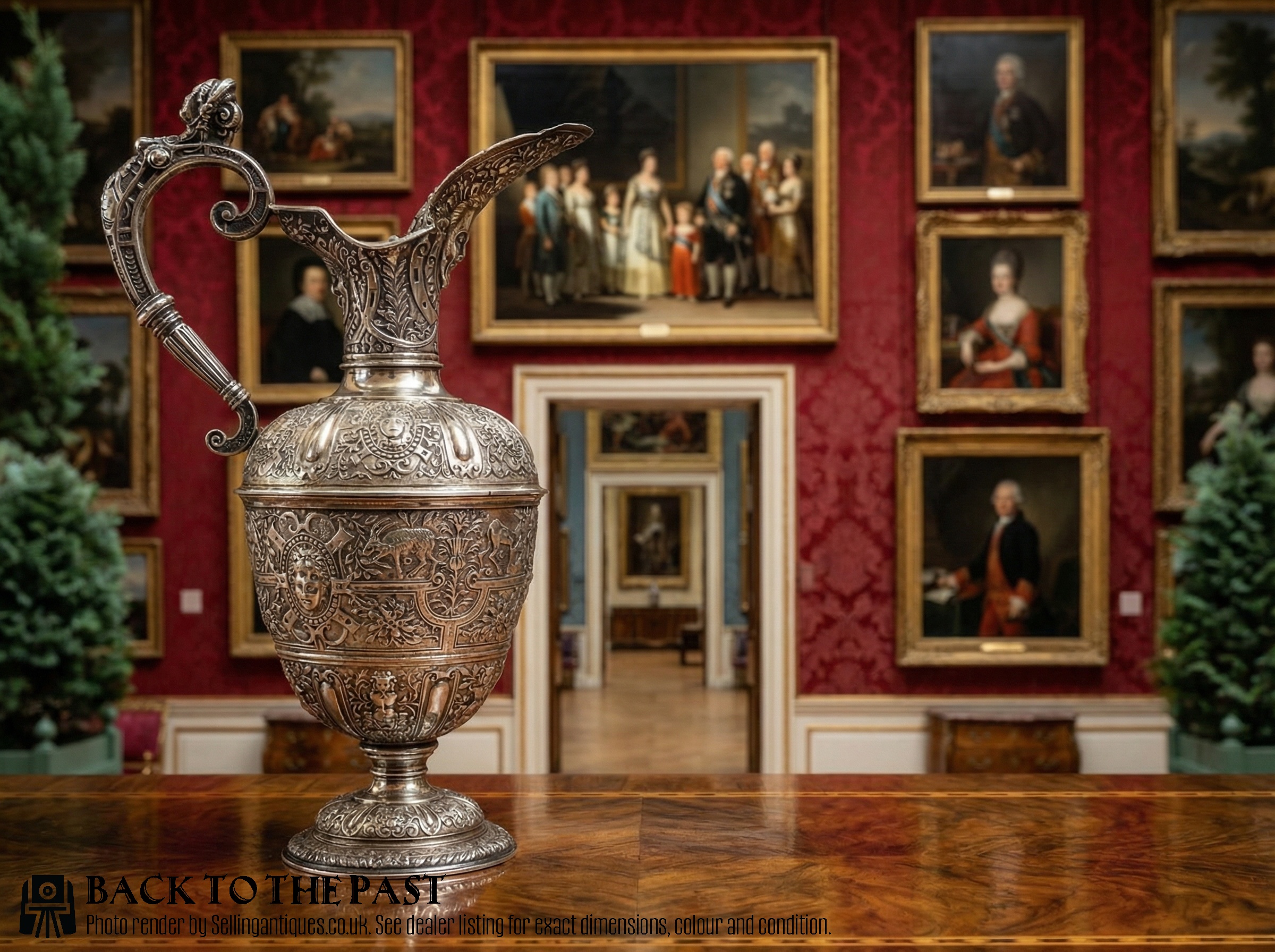
Silver Wine Ewer
A silver wine ewer is a pouring vessel designed for the dining table, taking forms such as claret jugs, flagons, and cordial pitchers. When searching for a silver wine ewer, buyers encounter pieces spanning from the eighteenth century through the Georgian, Victorian, and Edwardian eras, alongside Regency and twentieth-century examples.
The most common versions on this page are Victorian sterling silver and silver-plated claret jugs, often accompanied by nineteenth-century French and English glass and metal hybrids. Makers utilised styles ranging from severe Neoclassical lines to ornate Rococo Revival and Renaissance Revival ornamentation, creating vessels with integrated handles and hinged lids.
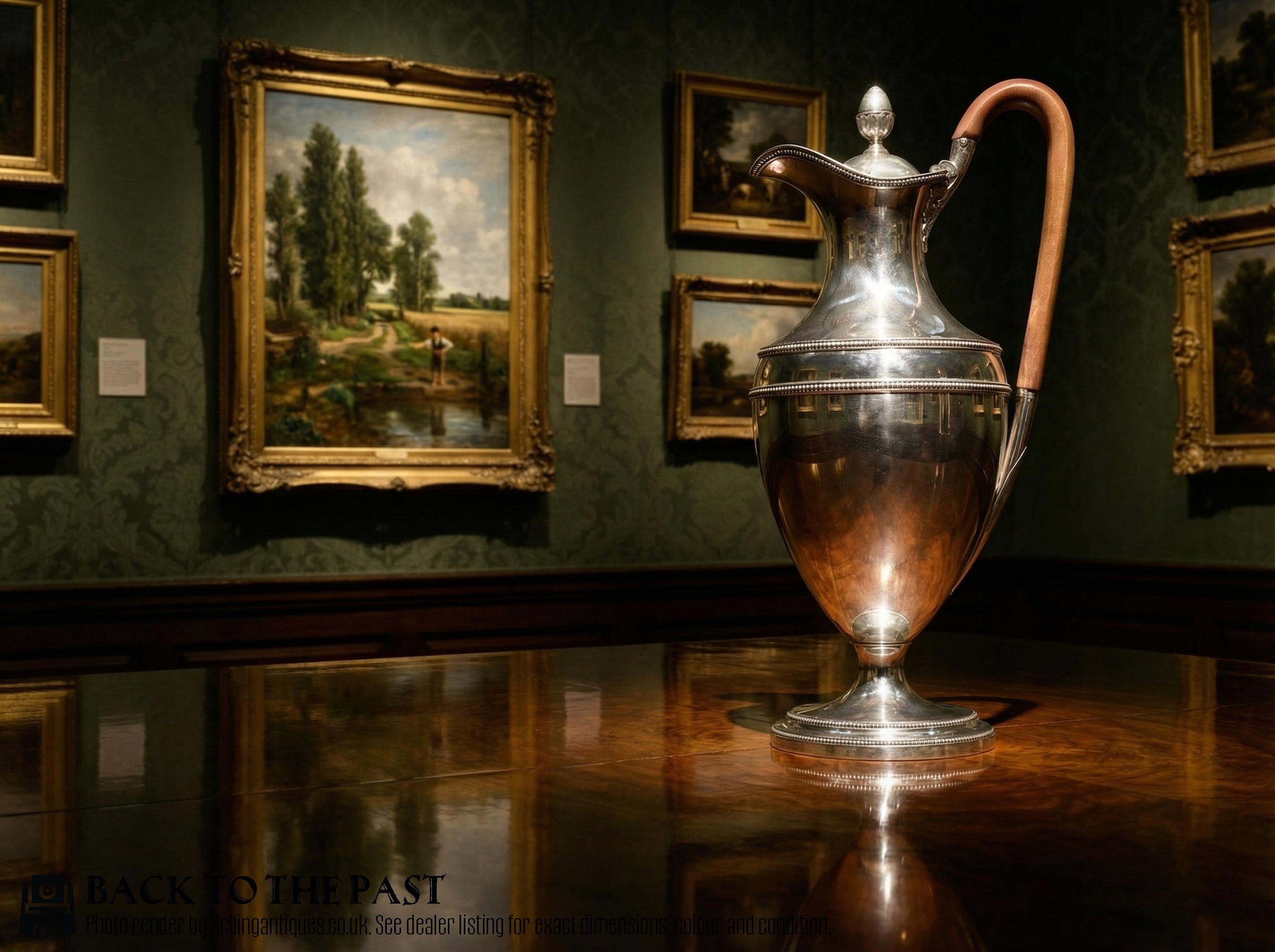
Materials and construction methods
Makers fashioned these vessels from solid sterling silver, Old Sheffield plate, and electrotype metal, frequently combining the metalwork with cut glass or wood. Silversmiths employed techniques like chasing, embossing, and electroplating to build heavy relief ornament such as grape and vine motifs.
Glass bodies appear fitted with cast and pierced silver collars, mounts, and hinged lids, while electrotype metal allowed the replication of complex Renaissance forms. Handles were cast separately and insulated or soldered securely to the main body to withstand the weight of liquid.
Silver Wine Ewer Retail Price Guide 2026
Typical asking prices for silver wine ewer among the pieces listed under this phrase on Sellingantiques today, from the lower quarter to the upper quarter. They describe what is for sale here now, not the wider market.
The documented styles span Neoclassical, Regency, Rococo Revival, and Art Nouveau across English, French, and German origins.
Distinctions in craftsmanship and design
The distinction between standard production and masterwork lies in the crispness of the chased detail and the weight of the metal. Superior pieces display deeply articulated cast mounts, balanced handle proportions, and tight seals on hinged lids.
Makers who registered their work, such as established London silversmiths, imparted rigorous standards of assay and balance. Lesser examples rely on thinner gauge metal and simpler stamped decoration that lacks the sculptural depth found in top-tier presentation pieces.
Henry Bourne·John Scofield·Henry Stratford·Elkington·Edward John William Barnard
The Silver Wine Ewer Glossary
- Claret jug
- A tall pouring vessel specifically designed for serving red wine at the dining table. These pieces often pair a glass body with an elaborate silver mount and handle.
- Electrotype
- A method of depositing silver onto a mould using an electrical current, permitting the creation of highly detailed sculptural reliefs. This technique became popular during the nineteenth century for producing ornate historical revival vessels.
- Old Sheffield plate
- An early form of composite metal created by fusing a thin sheet of silver to a thicker copper base. Pieces made with this method show subtle copper bleed at high-wear edges.
- Hallmark
- A series of stamped official marks indicating the metal standard, assay office, and year of manufacture. These stamps allow collectors to trace the exact origin and maker of a piece.
- Repoussé
- A metalworking technique where the artisan hammers the design from the reverse side to form raised relief on the front. This method creates tactile surface decoration such as floral and fruit swags.
Silver Wine Ewer: Frequently Asked Questions
What is a silver wine ewer used for?
A silver wine ewer serves as a formal vessel for decanting and pouring wine at the dining table, particularly claret and dessert wines.
Historically, hosts used them to transfer wine from storage casks or standard bottles into an ornate receptacle for guests.
How do I clean a silver wine ewer?
Cleaning requires a soft cloth and a specialised silver polish applied gently to avoid wearing away thin plating or fine chasing.
Glass bodies require separate washing with warm soapy water while keeping moisture away from glued or pinned silver mounts.
How do I identify a Victorian silver wine ewer?
Victorian examples display heavier ornamentation, including Rococo revival scrolls, Renaissance strapwork, and naturalistic grape vines.
Checking the hallmarks stamped on the silver collar reveals the exact assay office and the year of manufacture during the nineteenth century.
Are glass and silver ewers original?
Many nineteenth-century pieces combine blown glass bodies with sterling silver collars, handles, and hinged lids as part of their original design.
Collectors look for unified patination and matching hallmarks on the metal components to confirm authenticity.