


Victorian Silver Ewer
These victorian silver ewer pieces are commanding pouring vessels designed for wine, water, or claret, sought after for their sculptural presence on a dining table.
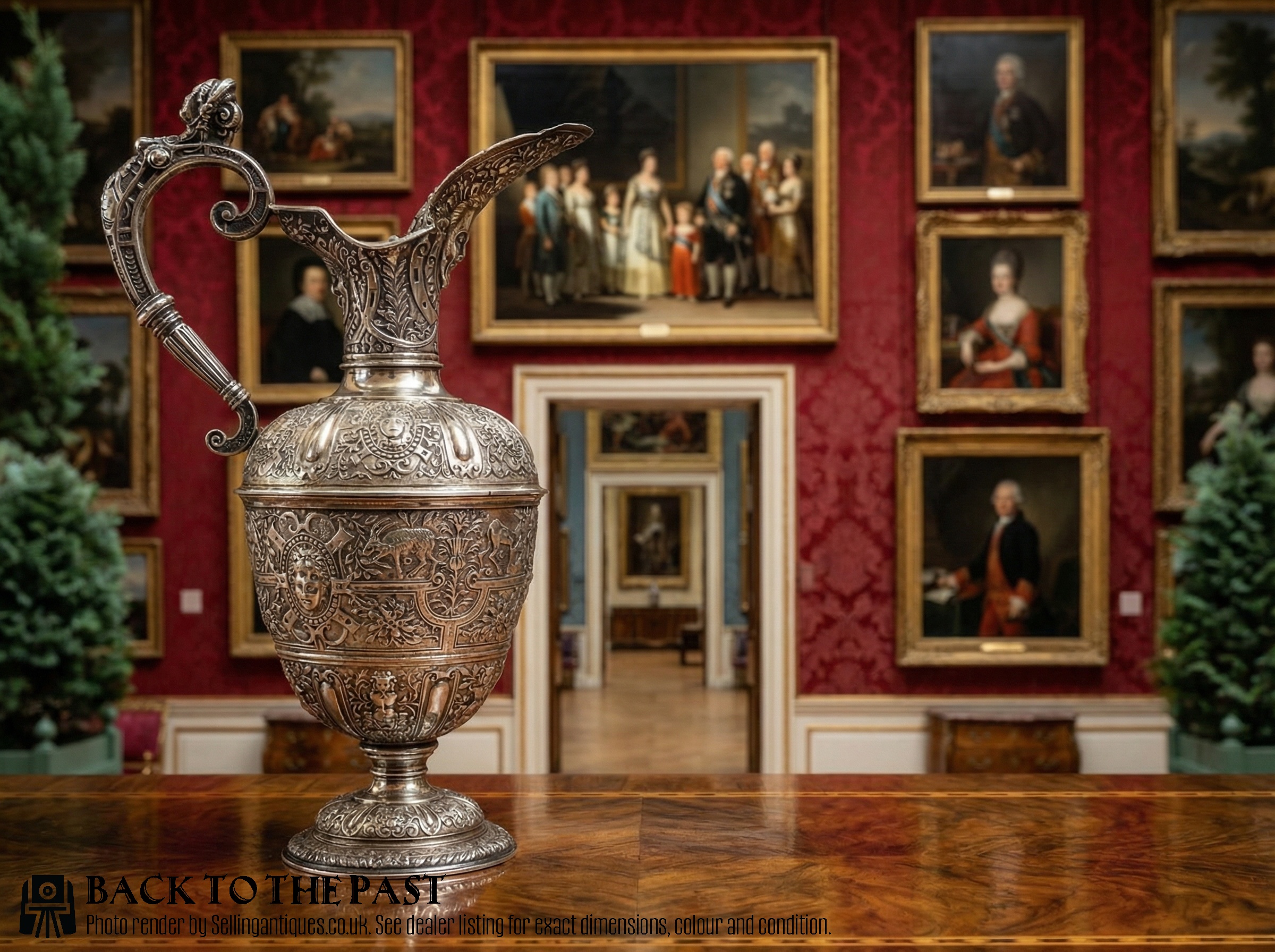
Victorian Silver Ewer
A victorian silver ewer is a pouring vessel characterised by a bulbous or elongated body, a narrow neck, an articulated spout, and a sweeping handle. These objects frequently take the form of claret jugs, wine flagons, and decorative pitchers intended for formal service.
The versions most commonly met on this page span the mid to late nineteenth century, reflecting the ornate revival tastes of the period. Forms range from classical silhouettes to heavily embellished vessels incorporating glass bodies and metal mounts.
Makers utilised these vessels for dining and display, pairing silver with cut glass or crystal to create functional serving pieces. Surviving examples demonstrate diverse functional roles, from oil and vinegar bottles to large presentation ewers.
Materials and Technique
Silversmiths employed sterling silver, silver plate, and electrotype metal, frequently combining metal components with clear or cut glass bodies. Vessels often feature parcel gilt interiors and intricate surface treatments including figural engravings and cast ornamentation.
Construction techniques combined traditional hammer work with casting and electrotyping, allowing for complex relief decoration such as grape and vine motifs. Silver mounts and hinged lids were soldered or secured to glass vessels with precision.
Several makers applied grape and vine motifs to claret jugs, ensuring the vessels matched the spirits poured within them.
Evaluating Quality
Quality rests in the crispness of the chasing and the weight of the silver or metal used in the construction of the ewer. Finer examples display balanced proportions, secure handle attachments, and well-executed figural engravings rather than purely mechanical stamping.
The integration between glass and silver mounts distinguishes superior pieces from standard production. Master silversmiths ensured that hinged lids aligned tightly and that cast handle details remained sharp and deep.
Henry Bourne·Colen Hewer Cheshire·Robert Garrard·John and Henry Lias·Henry Stratford·James Charles Edington·Elkington·Barnard·Edward John and William Barnard·W and G Sissons
The Victorian Silver Ewer Glossary
- Ewer
- A large jug or pitcher with a wide spout and handle, traditionally used for pouring water or wine at the table. These vessels became increasingly decorative during the nineteenth century.
- Claret Jug
- A specialised pouring vessel designed specifically for serving red wine, typically featuring a glass body with silver mounts and a hinged lid. Many examples from this era incorporate elaborate grapevine ornamentation.
- Electrotype
- A method of reproducing metal objects through the deposition of copper or silver via an electrolytic process. This technique enabled makers to produce highly detailed relief decoration without extensive hand carving.
- Parcel Gilt
- Silverwork that is partially gilded with gold on specific interior or exterior areas to create a two-tone decorative effect. This treatment highlights engraved details and protects the metal from wine acids.
- Silver Plate
- A base metal coated with a thin layer of silver, offering the appearance of solid silver at a different scale of production. Manufacturers utilised this method extensively for large dining services.
Victorian Silver Ewer: Frequently Asked Questions
What is a victorian silver ewer used for?
These vessels were originally designed to serve wine, claret, water, or oil and vinegar during formal meals.
Today they function primarily as decorative display pieces or sculptural centerpieces on sideboards and dining tables.
How do I clean a silver ewer?
Use a specialised silver polish applied softly with a cloth, avoiding abrasive pads that can damage engraved details.
Take care around glass bodies and mounted handles to prevent moisture from seeping into joined areas.
Are these ewers made of solid silver?
The listings include both solid sterling silver pieces and silver plated or electrotype metal examples.
Hallmarks stamped on the metal components typically indicate the purity standard and the year of manufacture.
What styles are common in these pieces?
The designs frequently draw upon Victorian Rococo Revival, Renaissance Revival, and Neoclassical aesthetic movements.
Later examples occasionally incorporate organic Art Nouveau contours alongside traditional classical silhouettes.